


Green Marble Lamp
A green marble lamp brings mineral weight and classical line to a room, turning natural stone into a solid plinth for light.
Green Marble Lamp
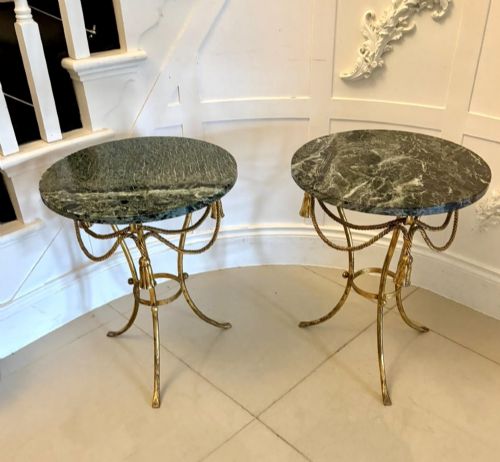
A green marble lamp combines heavy polished stone with metal mounts, functioning as a practical light source and a sculptural object. When searching for a green marble lamp, buyers encounter pieces ranging from compact desk lights to tall figural torcheres.
The selection on this page draws primarily from nineteenth-century revival styles and the interwar period. French and Italian workshops dominate, alongside English pieces, using dense green stone blocks or turned columns paired with metal bases.
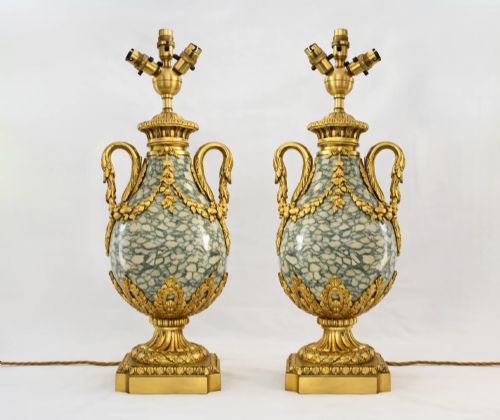
Table lamps and side lamps appear most frequently, often accompanied by matching pairs of urns adapted for lighting. The forms lean heavily on classical vocabulary, particularly Louis XVI revival details and Art Deco geometry.
Materials and construction
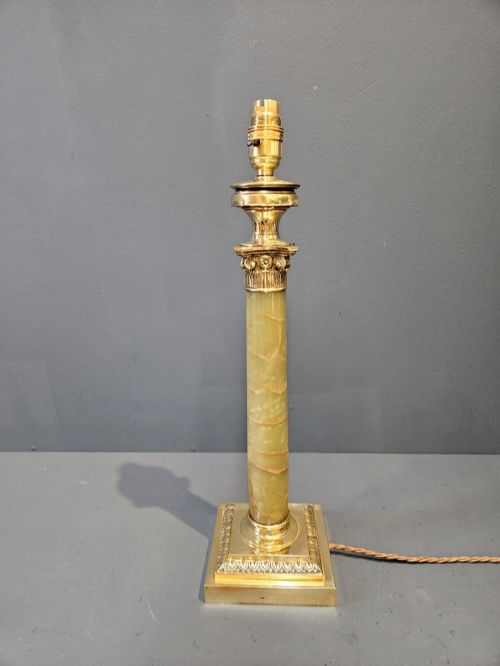
The primary material is natural stone, specifically green marble or onyx, shaped on a lathe into columns and urns or cut into square plinths. Workshops paired this cold, heavy stone with warm metals including brass, ormolu, gilt bronze, and cast spelter.
Mounts and feet were cast separately and fixed to the stone bodies using threaded rods or pins. Wiring and electrical components were added later to older oil lamps, decorative cassolettes, and carved vases originally designed for other purposes.
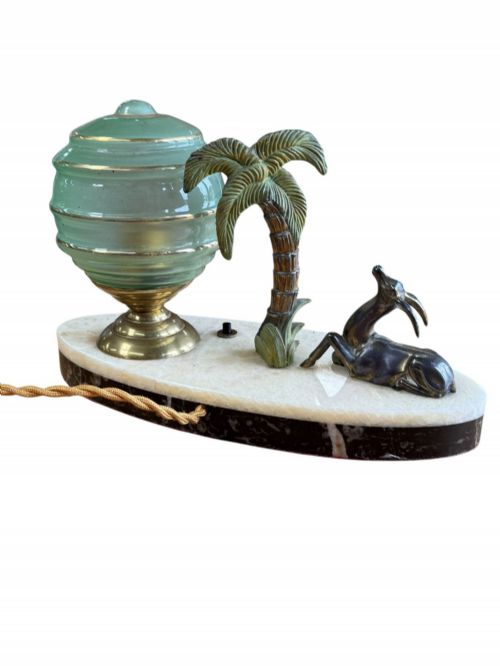
Dogs and fruit occasionally join the classical urns and columns, proving that even heavy green stone needs a touch of levity.
Distinctions in quality
Quality rests upon the depth and grain of the stone matched with the crispness of the metal mounts. Heavy, finely polished verde marble with varied natural veining signals a better object than uniform or painted alternatives.
The proportion between the stone body and the metal fittings dictates the visual balance. Finer pieces feature fire-gilded ormolu and heavy cast bronze mounts rather than lightweight plated metals, showing deliberate design rather than hurried assembly.
E Kahn·F De Luca
The Green Marble Lamp Glossary
- Verde marble
- A dark green decorative stone often marked with white or lighter mineral veins. It provides the deep chromatic base for many nineteenth-century French and Italian table lamps.
- Ormolu
- Gilt bronze produced by applying a mercury and gold amalgam to cast bronze. This technique creates a durable, warm metallic surface found on classical revival mountings.
- Cassolette
- A decorative vessel shaped like a vase or urn with a removable or reversible lid. These objects were frequently converted into lamp bases during later periods.
- Spelter
- A zinc alloy used as a cheaper alternative to bronze for cast figures and mounts. It appears in several twentieth-century decorative mood pieces.
- Campana urn
- A bell-shaped classical vessel with a flaring rim and a footed base. This form often serves as the central body for alabaster and stone lamp assemblies.
Green Marble Lamp: Frequently Asked Questions
How do I date a marble lamp?
Dating relies on the combination of styles, materials, and electrical fittings. Pieces from the nineteenth century often show Louis XVI or classical revival motifs with heavy bronze or ormolu mounts.
Twentieth-century examples transition toward cleaner Art Deco geometric lines or simpler brass mountings. Examining the wiring holes and internal fixings also helps establish the approximate period of manufacture.
Were these always electric lamps?
Many older pieces began life as oil lamps, decorative cassolettes, marble vases, or architectural ornaments. Workshops converted these objects into lighting as electricity became standard in homes.
This adaptation means a nineteenth-century body often carries twentieth-century wiring and hardware. The conversion process preserves the decorative stone work while updating its utility.
How do I style a stone lamp?
The substantial weight and polished surface of green marble suit dark wood side tables, desks, and classical mantelpieces. They anchor a scheme by adding a distinct vertical element and a rich natural texture.
Pairing them with fabric shades diffuses the light while keeping the stone base visually prominent. They work well in both traditional period rooms and structured modern interiors.
What is the difference between marble and onyx?
Marble is a metamorphic rock formed from limestone, known for its dense crystalline structure and varied veining. Onyx is a banded variety of chalcedony quartz that often allows light to pass through its translucent layers.
Both materials appear across the listings, yielding different surface patterns and weights. Onyx components frequently feature in twentieth-century pieces alongside polished brass.