
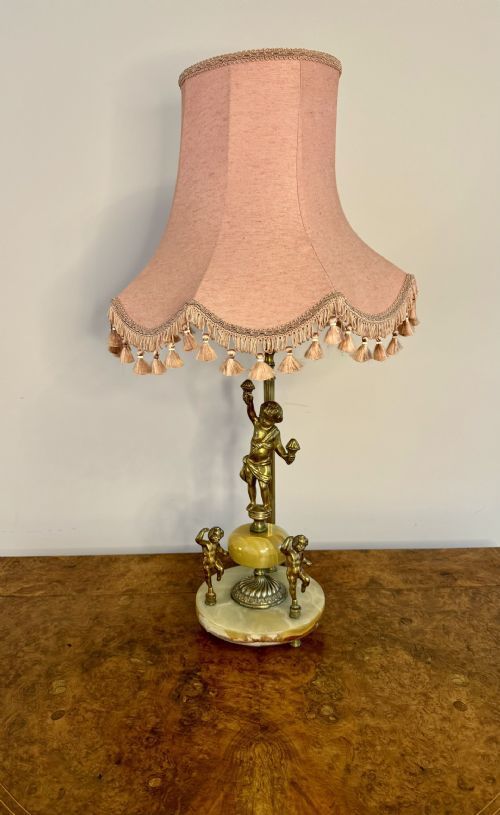


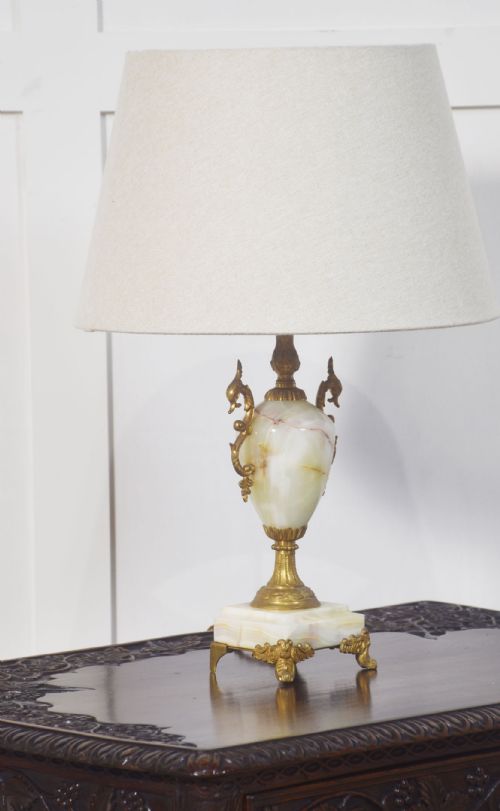


Brass and Onyx Light
These brass and onyx light pieces combine polished stone shafts with metal mounts, offering practical illumination and heavy classical presence.
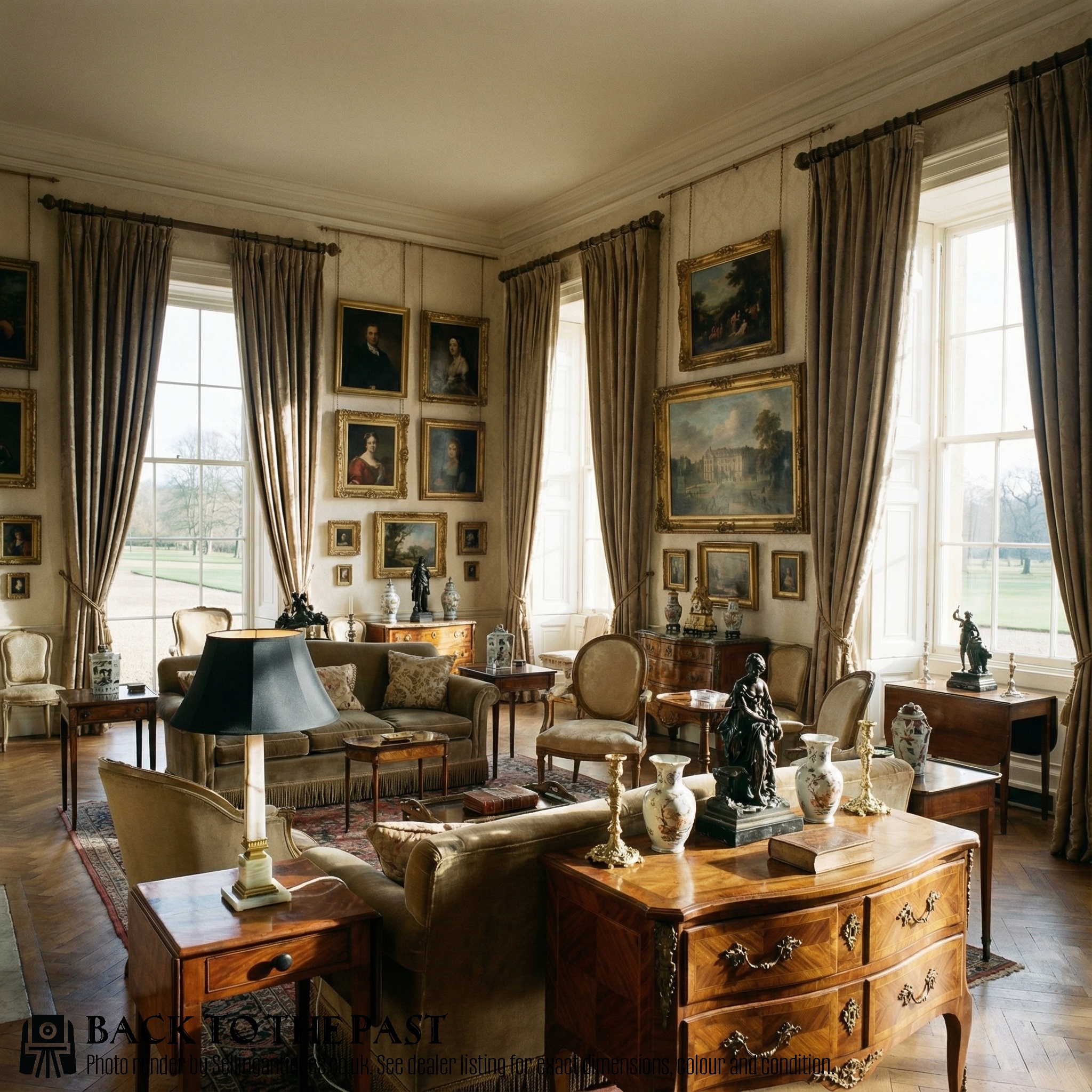
Brass and Onyx Light
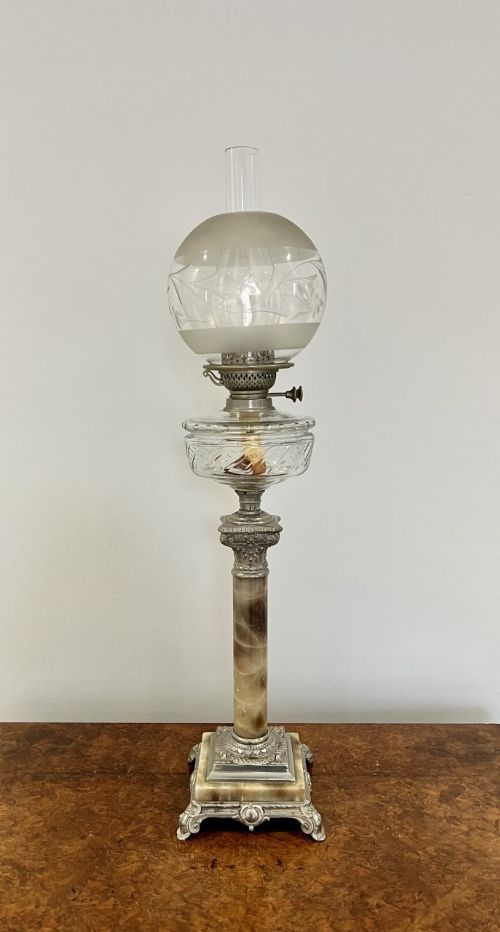
A brass and onyx light brings together natural banded stone and metallic structure, appearing in forms such as table lamps, floor lamps, and converted oil lamps. These decorative objects draw heavily on nineteenth-century and early twentieth-century design, reflecting periods from Victorian and Edwardian eras up to Art Deco.
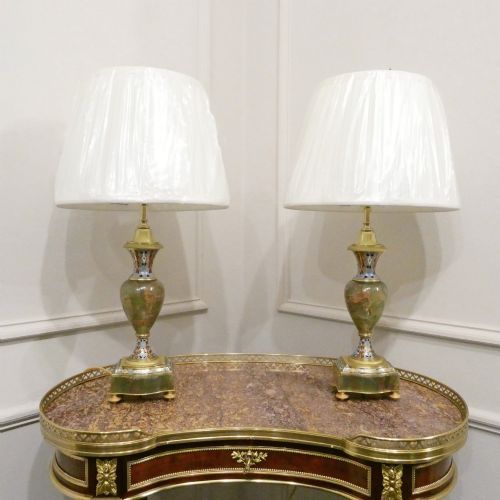
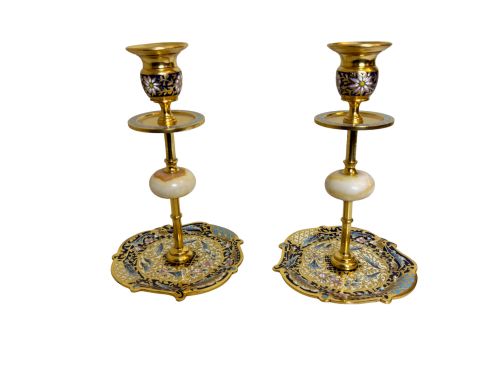
Buyers will encounter tall standard lamps designed to stand beside armchairs alongside smaller table versions intended for sideboards and desks. Many examples incorporate pairs of matching candlesticks or cassolettes adapted for electrical illumination.
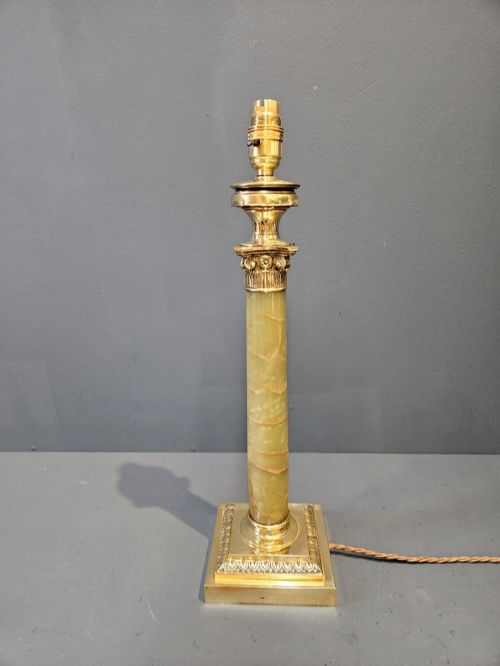
French neoclassical influences dominate the selection, often utilising columnar shafts with Corinthian capitals or decorative paw feet. The integration of stone and metal creates a substantial piece that anchors the styling of a room.
Defining quality in execution
Quality rests in the crispness of the metal chasing and the depth of the natural stone patterning. Finer pieces display finely detailed ormolu mounts, intricate champlevé enamel work, and carefully matched stone shafts rather than plain turned cylinders.
Proportion and weight indicate superior production, particularly in extending floor lamps and Corinthian column table lamps. Heavier metal castings and solid brass components ensure long-term stability and a more refined appearance.
Several Victorian standard lamps feature hidden extension mechanisms, allowing them to stretch upward to chase retreating daylight.
The Brass and Onyx Light Glossary
- Ormolu
- Gilt bronze mounted onto furniture or lighting fixtures. This technique involves applying a gold-mercury amalgam to bronze.
- Champlevé
- An enamelling technique where artists hollow out troughs in a metal surface to receive vitreous enamel before firing.
- Cassolette
- A decorative vessel or vase, often mounted in ormolu, which can function as a burner or convert into a lamp base.
- Corinthian column
- A classical architectural column style featuring ornate acanthus leaves on the capital, frequently imitated in lamp shafts.
- Standard lamp
- A tall floor-standing lamp designed to provide ambient room illumination.
Brass and Onyx Light: Frequently Asked Questions
How do I date a brass and onyx lamp?
Dating relies on examining the wiring methods, the style of the metal mounts, and the manufacturing techniques used on the brass components. Victorian and Edwardian examples often display heavier cast ormolu and distinct classical revival motifs.
Later pieces from the Art Deco period tend toward sleeker lines and simplified geometric forms. Comparing the patination of the brass and the wear on the stone helps confirm the age of the piece.
Are these lamps safe for modern use?
Many antique lamps require rewiring to meet current electrical standards. A qualified electrician can easily update internal cords while preserving the original exterior hardware.
Retaining the original sockets and switches is possible when compatible with modern safety requirements. This ensures the historical integrity of the piece remains intact.
How should I clean onyx and brass?
Onyx requires gentle cleaning with a soft, dry cloth to prevent moisture damage to the porous stone surface. Avoid harsh chemical cleaners that can strip the protective finish from the natural banding.
Brass and ormolu components should be dusted carefully without aggressive polishing that removes the aged patina. Preserving this surface sheen maintains the visual character of the metal.
Can I replace the fabric shade safely?
Replacing fabric shades is straightforward and allows you to adjust the lighting effect to suit your interior space. Ensure the new shade matches the structural proportions and weight capacity of the lamp fitting.
Matching the shade style to the historical period of the base enhances the overall display. Clip-on or spider fitter designs are widely available for vintage fixtures.