



Green Marble Base Ornament
A green marble base ornament brings heavy stone and cast metal together, offering a solid architectural foundation that elevates figural bronze sculpture.
Green Marble Base Ornament
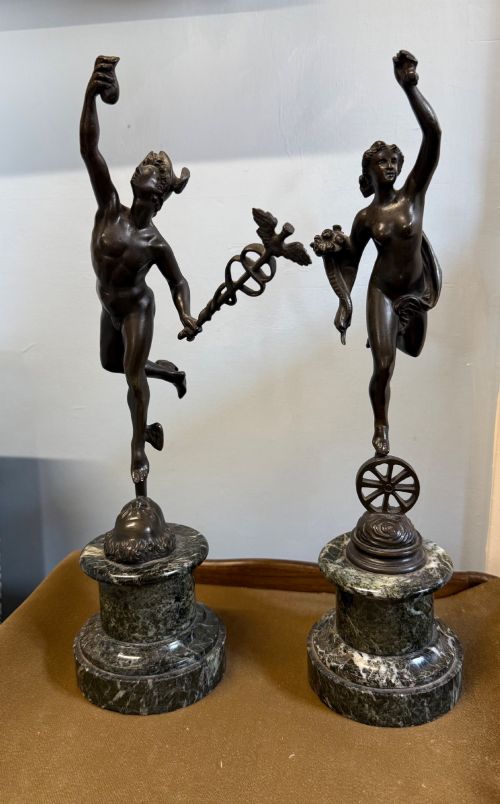
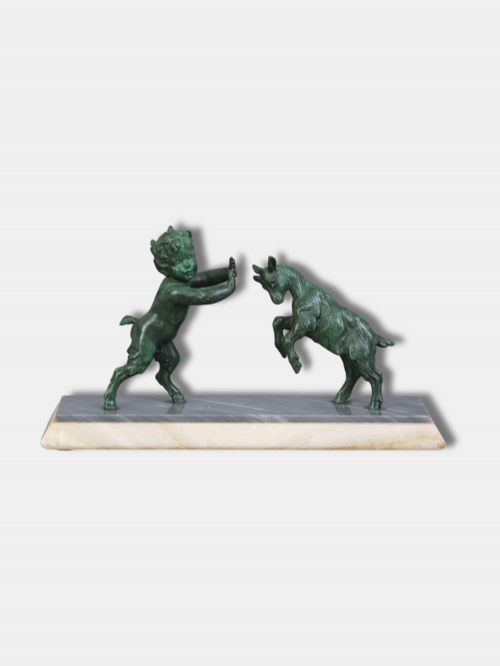
A green marble base ornament combines a substantial stone plinth with a cast metal subject, ranging from classical figures to Art Deco animals. When searching for a green marble base ornament, buyers encounter works spanning the nineteenth century through the nineteen-thirties.
The objects on this page primarily take the form of freestanding sculptures, busts, and car mascots mounted on polished stone. These pieces draw upon Neoclassical, French Empire, Animalier, Art Nouveau, and Art Deco styles.
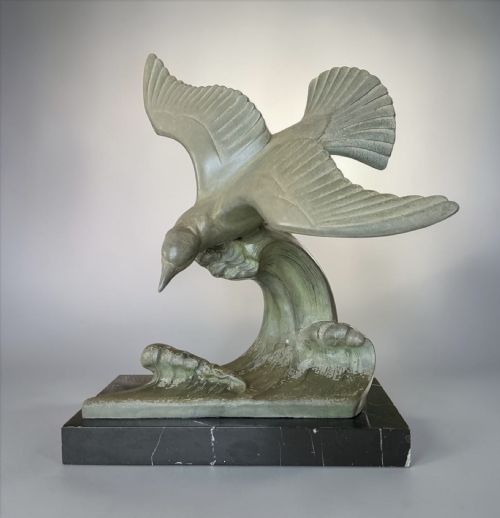
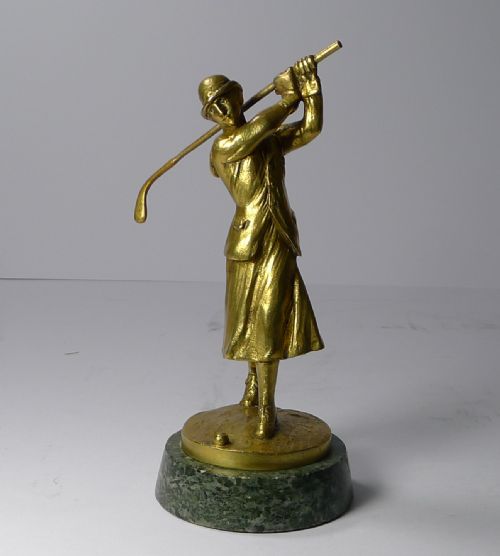
Nineteenth-century examples often feature patinated or gilt bronze historical subjects and classical figures set upon heavy plinths. Twentieth-century iterations lean towards streamlined birds, dancers, and sports figures fixed to contrasting marble blocks.
Materials and Construction
Foundries produced the metal elements using traditional casting methods, capturing fine details in bronze before applying patinated, silvered, or gilt finishes. These metal figures were then permanently secured to cut and polished stone plinths.
The stone bases utilise green marble, black marble, and onyx, shaped into heavy blocks, circular steps, or sweeping plinths to anchor the dynamic metal forms above. Craftsmen polished the stone surfaces to a smooth finish to contrast with the textured metal castings.
Several birds manage to look entirely unimpressed while frozen mid-flight over a stormy bronze wave.
Factors That Separate the Finest Pieces
Quality rests in the crispness of the metal chasing and the depth of the casting, where sharper feather, fur, and facial details indicate a superior foundry process. Lesser works display softer edges and generalized textures that obscure the sculptor's original intent.
The selection and preparation of the stone base heavily influence the overall distinction of the piece, with dense, evenly coloured green marble and precise geometric cutting marking the upper tier. Poorly matched stone with disruptive fissures or clumsy mounting hardware detracts from the sculptural harmony.
Emile Carlier·Paul Édouard Delabrièrre·P. Marec·Pierre le Faguays·Jose Dunach·L. Bureau
The Green Marble Base Ornament Glossary
- Bronze
- An alloy of copper and tin utilised for centuries to cast durable sculptures with high detail retention. It accepts various chemical patinations.
- Patinated Bronze
- Metal treated with chemical solutions to produce a specific surface colour, ranging from deep brown to verdigris. This finish protects the metal and highlights sculptural contours.
- Ormolu
- Gilt bronze produced by applying a finely ground gold-mercury amalgam to a bronze base and heating it. This technique creates a rich, durable golden surface.
- Animalier
- A nineteenth-century artistic movement focused on the realistic depiction of animals in motion or repose. Sculptors in this tradition studied anatomy closely.
- Car Mascot
- A small sculptural ornament mounted on the radiator cap of an automobile, particularly popular during the Art Deco era. Many were cast in bronze and mounted on stone bases for desk display.
Green Marble Base Ornament: Frequently Asked Questions
How do I clean the stone base?
Dust the marble gently with a soft, dry cloth to remove surface particles without scratching the polished finish.
Avoid using water, chemical sprays, or acidic cleaners, as these substances can permanently etch or dull the surface of the green marble.
Were these always meant for display?
Many metal figures and animal studies were cast specifically as mantelpiece ornaments, cabinet sculptures, or architectural decorative objects.
Some smaller twentieth-century figures started as automobile radiator mascots before being mounted on marble bases for interior display.
How do I distinguish nineteenth-century works?
Nineteenth-century pieces frequently favor classical, mythological, or heavily detailed Animalier subjects cast in heavier bronze with deep patination.
The mounting techniques and the choice of darker or multi-toned marble bases also align with the prevailing tastes of the eighteen-fifties through the eighteen-eighties.
What defines the Art Deco style here?
Art Deco examples on these bases typically feature streamlined animal forms, dancers, or sports figures executed around nineteen-thirty.
The metal often receives silvered or gilded finishes, paired with geometric black or green marble plinths that emphasise clean horizontal and vertical lines.