
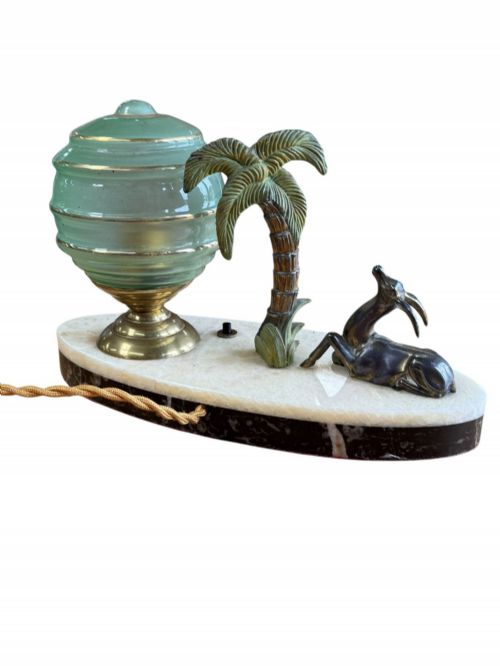


Green Glass Desk Lamp
A green glass desk lamp brings focused light and distinct colour to a workspace, combining brass or metal stands with durable shades.
Green Glass Desk Lamp
When you search for a green glass desk lamp, you encounter utilitarian and decorative lighting solutions spanning the nineteenth century through the mid twentieth century. These objects function primarily as task lighting for reading and writing, utilising distinctive green glass shades paired with metal bases.
The versions most commonly met on this page combine brass, bronze, marble, or patinated metal with glass elements, manifesting in styles from Arts and Crafts and Art Nouveau to Art Deco and Traditional. Forms range from adjustable bankers lamps and swan neck designs to figural bases and architectural table lamps.
How they were made
Maker construction relies heavily on cast and turned brass, bronze, and ormolu combined with durable glass components for shades and bodies. Heavier bases often incorporate marble, spelter, or patinated metal to ensure stability when the arm or shade is adjusted.
Surface finishes involve patinated metals, polished brass, and occasionally silk or glass cabochons to add decorative detail. Manufacturing techniques join metal components through threading, soldering, and casting to support functional desk and table lighting.
Design styles represented in the inventory include Art Deco, Arts and Crafts, Edwardian, Art Nouveau, and Grand Regency.
What varies in quality
Quality rests upon the weight and finish of the metal components, distinguishing heavy cast brass and bronze from lighter plated alternatives. Substantial marble or bronze bases provide better balance and indicate superior material selection.
The sophistication of the design, such as adjustable swan neck mechanisms, integrated clock elements, or figural spelter and bronze work, separates standard utility lamps from more ambitious decorative examples.
The Green Glass Desk Lamp Glossary
- Spelter
- A zinc alloy commonly used as a substitute for bronze in decorative figures and lamp bases, often given a patinated finish. It requires careful handling due to its relative softness compared to bronze or brass.
- Ormolu
- Gilded bronze produced by applying a mercury and gold amalgam to a bronze base, creating a rich golden surface finish. This technique appears on decorative mounts and classical table lamps.
- Patinated metal
- Metal surfaces showing a natural or chemically induced ageing effect that alters the outer colour and tone. This finish protects the underlying material while adding visual depth.
- Cabochon
- A polished, convex gemstone or glass piece lacking facets, frequently set into metalwork for decoration. Art Nouveau lighting frequently employs these elements to catch the light.
- Swan neck
- A curved metal arm configuration that allows the lamp shade to pivot and direct light downward. This functional shape appears on adjustable desk and task lamps.
Green Glass Desk Lamp: Frequently Asked Questions
What periods do these lamps cover?
The pieces span from the nineteenth century through the Edwardian era, Art Nouveau, Arts and Crafts, and Art Deco periods up to the 1940s. Materials range from simple brass and copper to bronze, marble, and patinated metal.
Designs reflect the shifting aesthetic priorities of each decade, moving from utilitarian bankers lamps to sculptural figural and mood lighting.
How were bankers lamps used originally?
Bankers lamps provided focused illumination for reading ledgers and legal documents in offices and legal chambers. The green shade reduced glare while casting direct light onto the desk surface.
They stood on large wooden desks in reception areas, libraries, and counting houses where reliable task lighting was essential.
Are these lamps adjustable?
Many examples feature adjustable swan neck arms or pivoting brass mounts designed to direct the beam of light precisely where needed. Heavy metal and marble bases keep the lamp stable during adjustment.
Simpler fixed forms rely on the overall height and shade angle to cast light across a workspace.
What materials make up the bases?
Bases incorporate cast brass, bronze, copper, patinated metal, ormolu, and heavy marble or spelter. These materials provide the necessary weight to support the glass shades and metal arms.
Some designs combine stone and metal or include sculptural figures cast in spelter or bronze.