
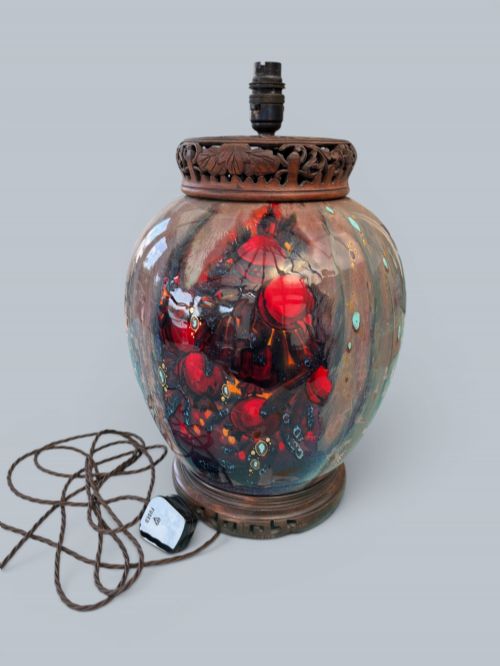


Art Nouveau Bedside Light
An art nouveau bedside light brings organic curves and warm, diffused illumination to a bedroom, offering a distinct departure from plain modern fittings.
Art Nouveau Bedside Light
When you search for an art nouveau bedside light, you are looking for domestic illumination that embodies the fluid, plant-inspired lines of the turn of the twentieth century. The pieces you meet on this page span the late nineteenth century, the Edwardian era, and the early nineteen-thirties, taking the form of table lamps and desk lamps that function well beside a bed.
The selection includes British and continental origins, with French or secessionist influences appearing alongside domestic Arts and Crafts work. Materials range from beaten copper and brass to bronze, earthenware, and frosted glass, creating varied silhouettes from swan necks to figural bronzes.
How they were made
Makers shaped these lamps using metalworking techniques such as casting in bronze, spelter, and brass, or beating copper sheets by hand to achieve textured surfaces. Ormolu and silver plate also provide metallic finishes across the selection.
Glass is integral to the construction, utilising frosted finishes and cabochons to soften the bulb's glow. Earthenware and wood further ground the designs, while fabric shades complete the fixtures.
Listings span periods from the 19th Century through Edwardian years to 1930, utilising brass, bronze, copper, glass, and earthenware.
What varies in quality
Quality rests in the sculptural integrity of the metalwork and the harmony between the base and the glass elements. Heavier castings in bronze or well-executed beaten copper show a crisper definition in their organic motifs than simpler utilitarian stampings.
The integrity of the original materials, whether precious patination on bronze or the subtlety of frosted glass cabochons, dictates the standing of a piece. Modest materials like spelter sit lower in the hierarchy than solid brass or bronze.
The Art Nouveau Bedside Light Glossary
- Ormolu
- Gilded bronze, where a gold-mercury amalgam is applied to a bronze base to give a rich, metallic lustre. It was frequently utilised in late nineteenth-century French lighting.
- Spelter
- A zinc alloy used as a less expensive substitute for bronze in decorative metalwork. It takes patination well but lacks the weight and durability of true bronze.
- Cabochon
- A polished, convex gem or piece of glass cut without facets. In these lamps, they are set directly into metal frames to catch and diffuse the light.
Art Nouveau Bedside Light: Frequently Asked Questions
Are these lamps safe to use today?
Many antique lamps require rewiring to meet current electrical standards before daily use in a modern home. Consult a professional electrician to check the internal wiring and plug.
Some pieces, such as Edwardian silver plated examples, are explicitly noted as rewired, ensuring they are ready for domestic installation.
How do I date an art nouveau lamp?
Dating relies on stylistic markers, manufacturing techniques, and the materials employed across periods like the Edwardian era or the nineteen-thirties. Ormolu and heavy bronze point to the nineteenth century, whilst secessionist influences indicate the turn of the century.
Signatures or pottery marks, such as those found on Moorcroft earthenware bases, provide further clues to the exact year of production.
Can I replace the fabric shade?
Fabric shades on antique table and desk lamps can usually be updated or replaced to match your bedroom decor. Ensure any replacement shade matches the proportionate scale and heat output of the original fitting.
Retaining original glass shades, however, preserves the historical integrity of pieces featuring frosted glass or cabochons.
Where should I place a desk lamp in a bedroom?
Compact desk lamps with swan neck designs or smaller table footprints fit comfortably on bedside tables without dominating the surface. They provide focused directional light for reading or a softer ambient glow.
Ensure the switch and cord reach your bedside socket safely without straining the antique metalwork.