
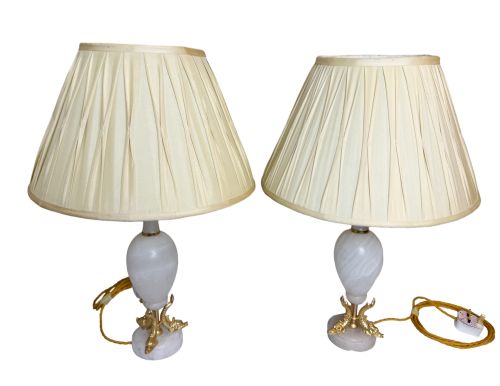
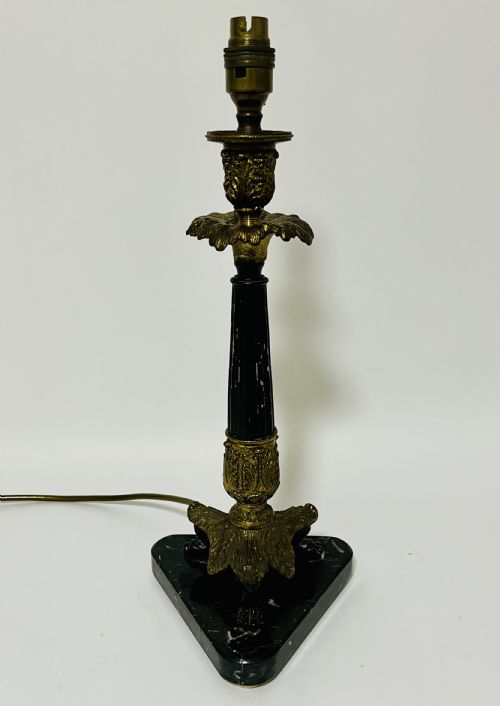


Edwardian Bronze Desk Lamp
An edwardian bronze desk lamp brings period weight and steady illumination to a working surface, combining heavy metal foundations with practical reach.
Edwardian Bronze Desk Lamp
An edwardian bronze desk lamp is a functional lighting piece shaped by the tastes of the early twentieth century, alongside the broader Edwardian era. These pieces appear alongside French Empire, Art Nouveau, and Louis XVI styles, reflecting eclectic continental influences in British and European interiors.
Buyers encounter table lamps and adjustable reading lamps configured for task illumination, often incorporating columns, pivoting arms, or notary formats. The selection spans straightforward bronze and brass column designs to sculptural examples featuring marble bases and glass cabochons.
Makers and workshops from this period drew upon classical motifs and naturalistic curves, resulting in items that served both practical writing tasks and formal display. The surviving pieces demonstrate a persistent reliance on cast metal and heavy stone plinths to maintain stability on a desk.
Materials and construction methods
Foundries cast these lamps using bronze, brass, gilt metal, and ormolu, often mounting the metal shafts onto solid marble or onyx plinths for necessary weight. This combination ensured the upright columns and adjustable arms remained balanced during daily use on a writing desk.
Surface decoration involved chasing, gilding, and enamelling, while specialised fittings incorporated frosted glass shades, opaline glass, or fabric elements to diffuse the light. Artisans applied patination directly to the bronze and spelter frames to achieve deep, dark tones or contrasting metallic highlights.
Cherubs and dolphins occasionally share a bronze column with mahogany, proving that desk lighting in the Edwardian era took inspiration from the ocean.
Judging the quality of these lamps
Quality rests in the crispness of the metal casting and the depth of the hand-chased detail across the bronze or gilt surfaces. Superior examples display clean lines on foliate mounts or figural elements without the softness found in lower-grade reproductions or heavily worn castings.
The choice of secondary materials, such as genuine marble bases, heavy gauge brass columns, and original glass shades, distinguishes high-tier workshop output from standard commercial pieces. Mechanism integrity in adjustable reading lamps further separates utilitarian items from finer maker pieces.
Georges Leleu
The Edwardian Bronze Desk Lamp Glossary
- Ormolu
- Gilt bronze, where a finely ground high-carat gold mercury amalgam is applied to a bronze base. This technique creates a rich, durable golden surface seen on many classical revival table lamps.
- Cabochon
- A polished, convex gem or piece of glass cut without facets. These decorative inserts frequently accent Art Nouveau metalwork.
- Spelter
- A zinc alloy used as a less expensive substitute for bronze. It was often painted or bronzed to simulate heavier metals on turn-of-the-century light bases.
- Opaline glass
- A milky, translucent glass developed in the nineteenth century. It diffuses light effectively and appears often on period reading and library lamps.
- Notary lamp
- A task light designed with an adjustable shade or arm to direct illumination over documents. These functional pieces typically feature heavy metal bases for desk stability.
Edwardian Bronze Desk Lamp: Frequently Asked Questions
How do I wire an antique lamp?
Rewiring requires removing old perished cloth or rubber flex and threading modern insulated wire through the existing metal channels. A qualified electrician can update the internal cord while preserving the original brass bulb holder and switch.
Retaining original key components ensures the antique character remains intact underneath the modern safety updates required for daily desk use.
Are these lamps heavy enough for daily desk work?
These lamps typically feature solid bronze, brass, or weighted marble bases designed to anchor the upward reach of the metal columns. This heft prevents tipping when adjusting swinging arms or swivelling shades during writing tasks.
Heavier models benefit from felt pads added to the underside of the stone plinth to protect fine wooden desk surfaces from scratching.
How do I identify Art Nouveau styling?
Art Nouveau pieces display characteristic whiplash curves, asymmetrical floral motifs, and organic forms drawn from the natural world. In these lamps, bronze frames often mimic climbing stems, while glass cabochons and enamelling add vibrant colour.
This aesthetic contrasts sharply with the strict symmetry of earlier Neoclassical or Louis XVI style columns found in the same period.
Can I adjust the height of these desk lamps?
Certain reading and notary lamps include pivoting joints, sliding collars, or articulated arms designed to alter the reach of the light source. These mechanical adjustments allowed nineteenth and early twentieth-century writers to focus illumination precisely where needed.
Care should be taken when moving aged metal joints to avoid stressing historical screw threads and soldered brass components.