



Green Glass Centerpiece
A green glass centerpiece brings vivid colour and striking presence to a table, combining vibrant hues with historic craft.
Green Glass Centerpiece
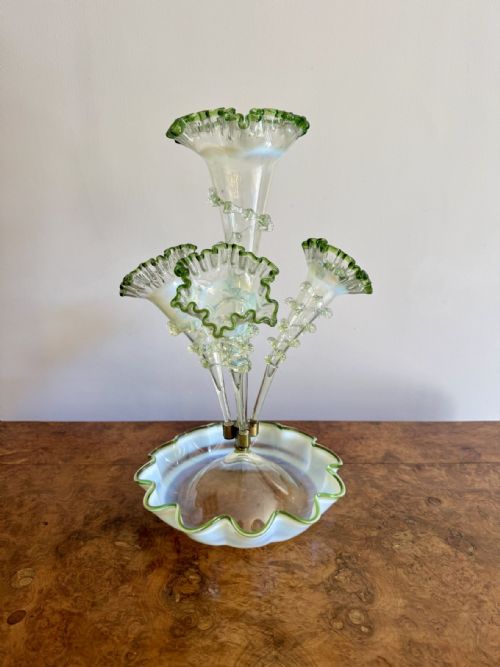
A green glass centerpiece draws the eye through bold colour and sculptural form, often taking the shape of a bowl, dish, or multi-trumpet epergne. When you search for a green glass centerpiece, you encounter items designed to anchor a dining table or sideboard with historic decorative flair.
The pieces span several distinct eras, with Victorian, Edwardian, and early twentieth-century designs appearing frequently alongside 19th-century examples. Forms range from simple pedestals and dishes to complex epergnes featuring multiple trumpets.
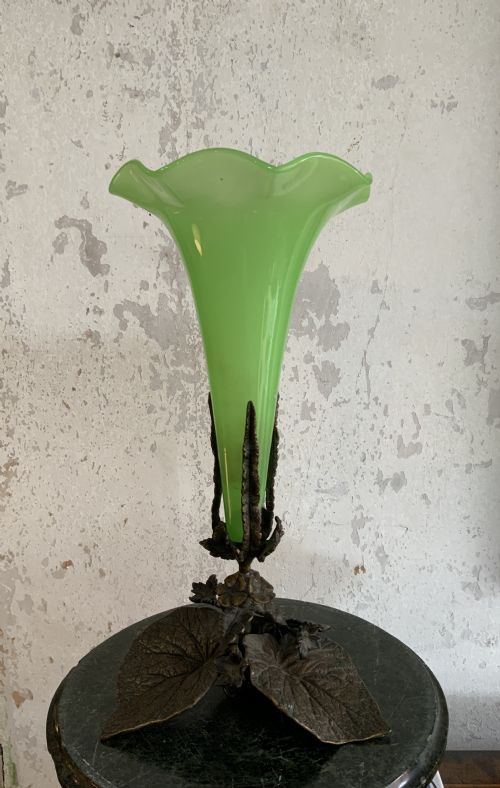
Many of these objects incorporate metal mounts or stands, linking glass production with silver plate, brass, or bronze work. Makers and manufacturers from England, France, Belgium, Scotland, and Bohemia contribute varied regional interpretations to the form.
Materials and methods of production
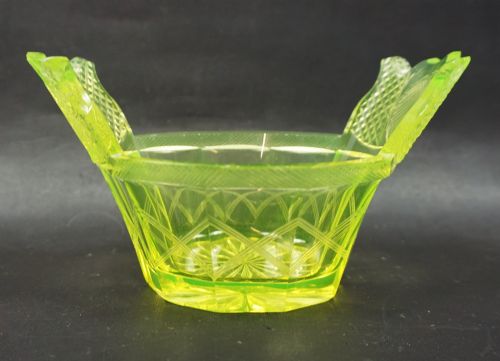
Makers utilised various glass formulations, including Vaseline glass, uranium glass, iridescent glass, and layered crystal over green glass. Hand-blown techniques allowed artisans to shape fluid bowls and stretch delicate trumpets.
Metalwork often complements the glass components, with silver plate, bronze, and brass used for frames, holders, and bases. Decorative elements such as enamel work, cane decoration, and applied peacock eyes further enrich the surfaces.
Green Glass Centerpiece Retail Price Guide 2026
Typical asking prices for green glass centerpiece among the pieces listed under this phrase on Sellingantiques today, from the lower quarter to the upper quarter. They describe what is for sale here now, not the wider market.
Current listings feature glass pieces from the 19th century through the 1930s, incorporating Art Nouveau, Art Arts & Crafts, and Art Deco styles.
Distinctions in quality and execution
Quality rests on the sophistication of the glass manipulation and the precision of the pairing with metal mounts. Superior examples demonstrate expert control over colour saturation, such as distinct dual-layer effects or glowing uranium and Vaseline properties.
The reputation of the designer or factory also marks distinctions in the range, with documented works from notable European makers showing greater refinement in shape and surface finish.
Loetz Witwe·Charles Graffart·Joseph Simon·René Lalique
The Green Glass Centerpiece Glossary
- Epergne
- A multi-tiered centrepiece featuring a central bowl with attached trumpets or baskets, typically used for fruit or flowers.
- Vaseline glass
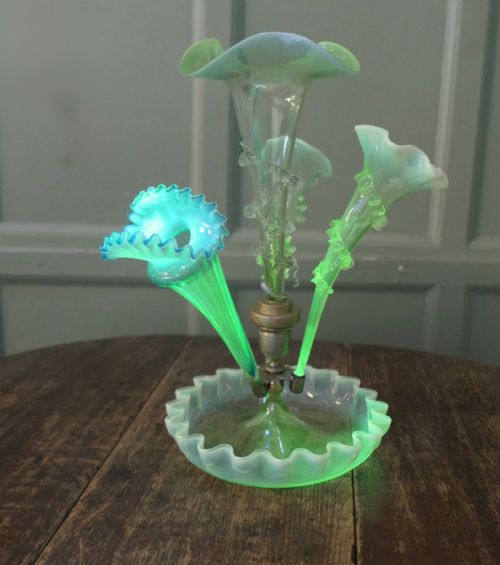
- A type of glass containing uranium dioxide that produces a distinct yellow-green tint and glows under ultraviolet light.
- Uranium glass
- Glass infused with a small amount of uranium to impart a characteristic green colour.
- Phänomen
- An iridescent surface decoration technique associated with Austrian glass production, featuring combed or threaded patterns.
- Cane decoration
- A technique where coloured glass rods are incorporated into the body of a vessel during manufacture.
Green Glass Centerpiece: Frequently Asked Questions
What is an epergne?
An epergne is a decorative centrepiece featuring a central bowl fitted with smaller detachable trumpets or baskets. They served as ornamental table settings for fruit, flowers, or sweetmeats during formal meals.
Victorian dining tables often featured these tall glass structures as focal points. The individual trumpets allowed hosts to arrange flowers at varying heights above the table surface.
How do I identify Vaseline glass?
Vaseline glass displays a characteristic transparent or translucent yellow-green hue resembling petroleum jelly. The colour comes from the inclusion of uranium dioxide in the batch.
Under ultraviolet light, authentic pieces emit a bright green fluorescent glow. The material was widely used in Victorian and Edwardian decorative objects.
Where were Monart glass pieces made?
Monart glass was produced in Scotland by the Moncrieff glassworks, drawing inspiration from Spanish art glass traditions. The factory created distinctive bowls, vases, and baskets using specialised glass-layering techniques.
Early Monart pieces often feature rich mottled colourways and distinctive shapes. Collectors prize these items for their smooth silhouettes and unusual optical effects.
How do I care for antique glass?
Antique glass requires gentle cleaning with lukewarm water and mild soap, avoiding harsh chemicals or abrasive sponges. Metal mounts attached to glass should be kept dry to prevent tarnishing or corrosion.
Display these items away from direct sunlight and sudden temperature shifts. Proper placement protects both the glass body and any delicate silver-plated or bronze fittings.