





Green Garden Watercolour
Green garden watercolour works capture quiet country scenes and vibrant floral beds through delicate pigment washes on paper.
Green Garden Watercolour
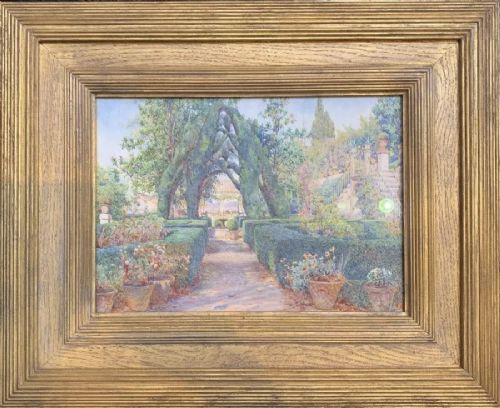
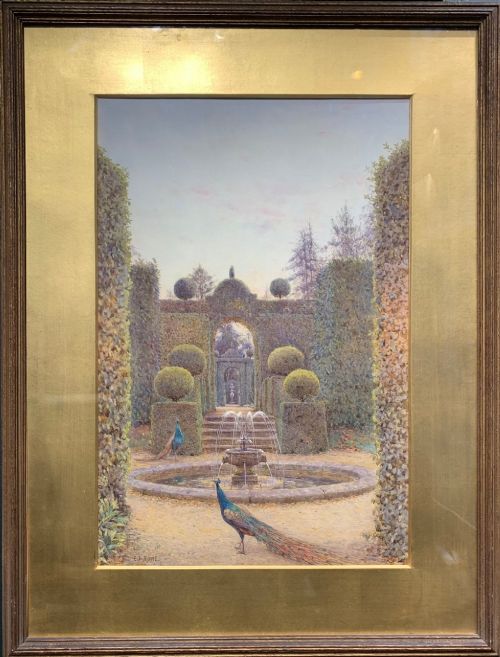
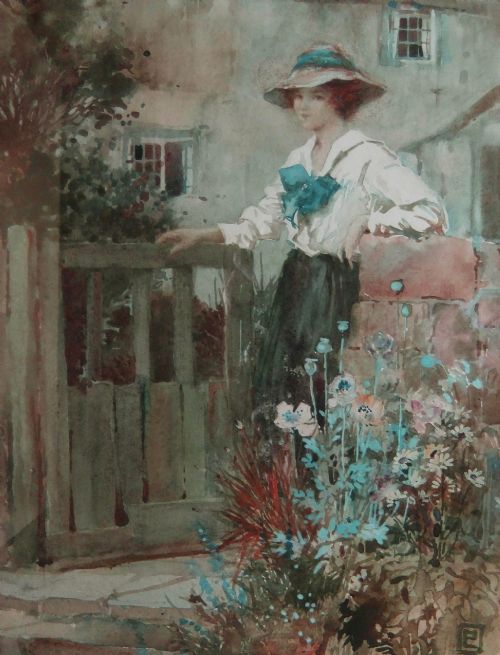
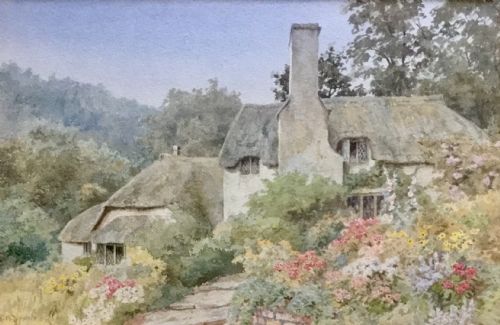
A green garden watercolour presents traditional British pastoral life, featuring cottage gates, walled gardens, and sunlit summer borders. These framed artworks reflect Victorian, Edwardian, and early twentieth-century views of domestic country spaces.
The selections span from the late nineteenth century through to the 1940s, capturing the enduring appeal of manicured lawns, herbaceous borders, and rural retreats. Painters focus heavily on horticultural details such as rudbeckia flowers and Michaelmas daisies.
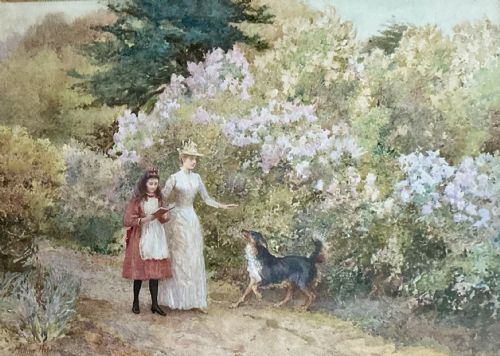
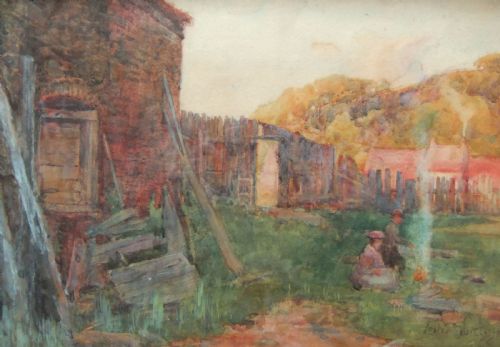
Most examples originate from British Impressionist and pastoral traditions, recording domestic scenes alongside rural landscapes. Viewers encounter frequent depictions of cottage gardens, poultry feeding, and quiet domestic moments outdoors.
Materials and technique
Artists apply watercolour paint and watercolour pigment directly onto paper surfaces, often building up translucent washes to achieve soft light and atmospheric depth. Selected pieces incorporate gold leaf highlights to add subtle luminosity to the composition.
Finished works are typically housed behind glass within wooden frames, protecting the delicate paper supports from environmental moisture and airborne dust.
Listings span the Victorian period through the 1940s, using paper, watercolour pigment, glass, wood, and gold leaf.
Evaluating the work
Quality rests upon the artist's command of light and botanical detail, distinguishing lively, fluid brushwork from stiff or formulaic botanical illustration. Stronger examples balance the architectural elements of the garden with spontaneous passages of colour.
The preservation of the pigment also dictates merit, as exposure to light can diminish delicate hues over decades. Works retaining their original vibrancy and strong tonal contrast stand apart from faded sheets.
Ernest Arthur Rowe·Percy Lancaster·Harry Wanless·Arthur Hopkins·Theresa Stannard·Owen Bowen·Lilian Stannard·David Woodlock·Arthur Claude Strachan·John Abernethy Lynas-Gray·Thomas Nicholson Tyndale·Lester Sutcliffe·Henry John Sylvester Stannard·Benjamin D. Sigmund·Beatrice Parsons·George Frederick Nicholls·Minnie Smythe
The Green Garden Watercolour Glossary
- Watercolour paint
- A water-soluble medium composed of pigment and binder, applied in translucent layers to paper. This medium allows artists to achieve luminous effects and delicate colour transitions.
- Paper
- The primary flat support material used for fine art watercolours throughout the Victorian and Edwardian periods. It requires careful framing behind glass to prevent degradation.
- Gold leaf
- Thin beaten gold applied to specific areas of a painting to create reflective highlights. This material adds a decorative accent to the composition.
- British Impressionism
- A late nineteenth and early twentieth-century painting style focusing on natural light, outdoor settings, and everyday rural life. Practitioners capture transient atmospheric effects with loose brushwork.
- Framed artwork
- A finished painting mounted and secured within a protective wooden case behind glass. This presentation preserves the fragile paper surface from physical damage.
Green Garden Watercolour: Frequently Asked Questions
What periods do these paintings date from?
The works date from the late Victorian era through the Edwardian period and up to the 1940s. This span covers changing artistic interpretations of the British countryside.
Most pieces belong to the early decades of the twentieth century, reflecting a strong cultural interest in domestic gardening and pastoral life.
How should I frame and display these?
Watercolours require mounting behind glass within a wooden frame to shield the paper and pigments from humidity and ultraviolet light. Direct sunlight causes fading over time.
Keep them away from damp walls and direct heat sources to maintain the stability of the paper support.
What subjects typically appear in these scenes?
Common subjects include walled gardens, cottage gates, summer herbaceous borders, and domestic scenes with figures outdoors. Artists frequently painted floral varieties such as rudbeckia and Michaelmas daisies.
Rural tasks like feeding hens or knitting outside a thatched cottage also feature prominently across the works.
How do I identify a Victorian piece?
Victorian examples often display tighter brushwork and heavier narrative elements, such as rural genre scenes or detailed pastoral studies. Their dating relies on signature styles and period framing methods.
Later Edwardian and 1920s pieces tend towards looser impressionistic washes and brighter floral arrangements.