




Green Garden Landscape Art
Green garden landscape art captures verdant outdoor scenes through historical watercolours, oils and tapestries.
Green Garden Landscape Art
Green garden landscape art encompasses paintings and works on paper depicting horticultural subjects, country houses and walled retreats. These pieces emerge predominantly from late nineteenth-century, Edwardian and mid-century periods, capturing verdant English and European flora in diverse settings.
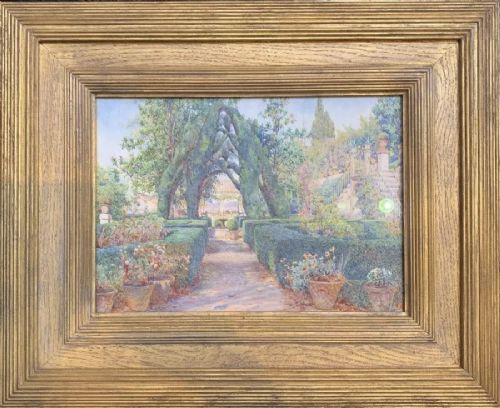
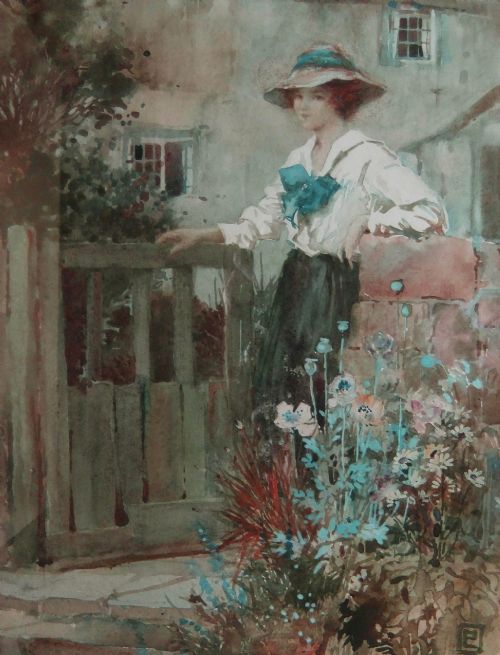
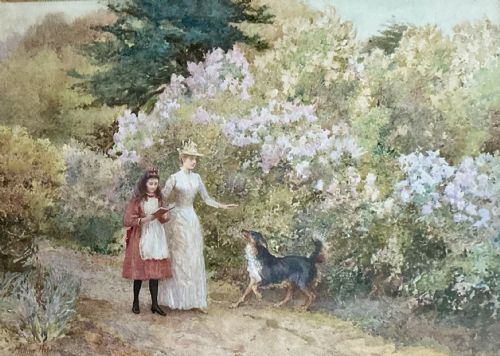
The most common version met on this page is the Edwardian or early twentieth-century watercolour depicting a cottage garden filled with summer blooms. Artists apply watercolour pigment or oil paint to paper and canvas, recording tranquil scenes of rural life and cultivated grounds.
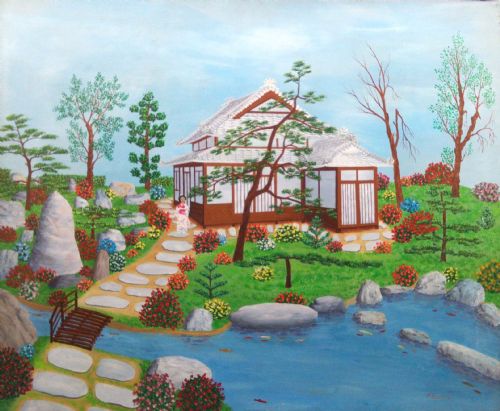
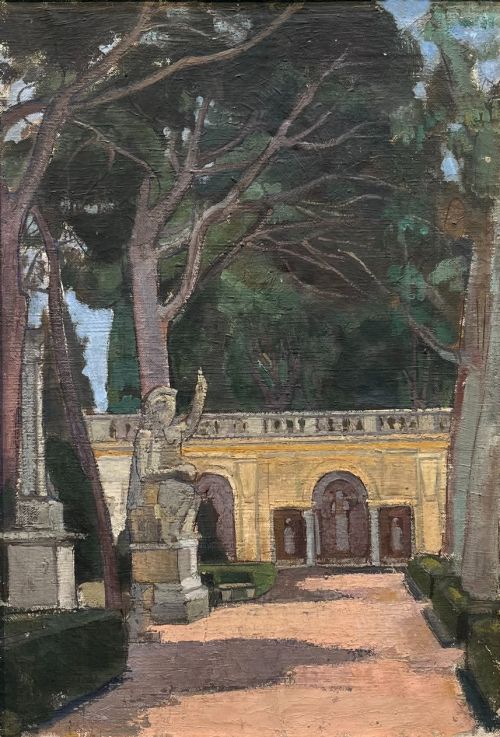
Subjects range from grand formal spaces like the Medici Gardens in Rome to intimate domestic plots featuring thatched cottages, herbaceous borders and local wildlife. Works by named painters sit alongside pieces from the British School and continental naive artists.
Materials and Techniques
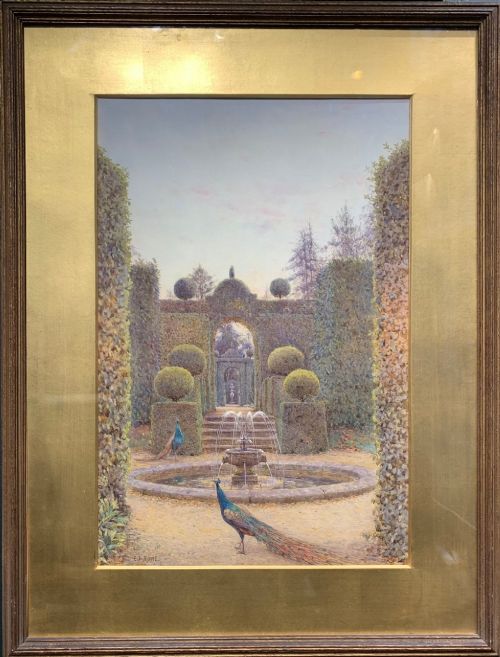
Watercolour pigment on paper forms a significant portion of these works, allowing artists to build delicate translucent washes of green foliage and bright floral accents. Painters frequently utilise fine brushwork on heavy paper to delineate cottage gates, garden seats and stone pathways.
Oil paint on canvas provides a different textural weight, used by artists to build thicker impasto layers representing heavy summer foliage and dense garden beds. Wooden stretcher frames support these canvases, while glass protects sensitive paper watercolours in period frames.
Several pet rabbits and numerous helpful hens make quiet cameo appearances in these peaceful horticultural scenes.
Judging Quality and Execution
Superior works demonstrate a confident handling of light and shadow, particularly in the rendering of dense foliage and sunlit garden paths. The best paintings achieve a natural balance between loose atmospheric washes and precise botanical detail.
Weaker pieces rely on formulaic compositions and rigid colouring that lack the observational depth seen in works by established plein air practitioners. The strength of a piece rests in the artist's ability to convey the specific atmosphere of a particular season and location.
Ernest Arthur Rowe·Percy Lancaster·Harry Wanless·Arthur Hopkins·Theresa Stannard·Owen Bowen·Ernest Higgins Rigg·Kershaw Schofield·Lilian Stannard·Charles E Cundall·John Henry Inskip·William Hatherell·David Woodlock·Herbert Royle·Arthur Claude Strachan·John Abernethy Lynas-Gray·Thomas Nicholson Tyndale·Lester Sutcliffe·Henry John Sylvester Stannard·Benjamin D. Sigmund·Beatrice Parsons·Edgar Bundy·Hermoine Hammond·Theresa Sylvester Stannard·George Frederick Nicholls
The Green Garden Landscape Art Glossary
- Watercolour
- A painting method in which the paints are made of pigments suspended in a water-based solution. This medium allows for luminous, transparent applications of green and floral hues.
- Impasto
- The process of laying on paint thickly so that it stands out from the surface. This technique brings tangible depth to foliage and garden elements in oil paintings.
- Verdure tapestry
- A wall hanging featuring a stylized landscape rich in green foliage and plant motifs. These woven textiles often depict dense woodland and garden scenes.
- Naive art
- Visual art created by a person without formal training or professional education. Such pieces present charming, simplified perspectives of houses and gardens.
- Plein air
- The act of painting outdoors to capture the direct effects of light upon landscape subjects. This method underpins much of the atmospheric garden art from the Edwardian period.
Green Garden Landscape Art: Frequently Asked Questions
What periods do these garden paintings date from?
The works span from the seventeenth century through the Victorian era into the mid-twentieth century. Edwardian examples are particularly common across the selection.
Collectors will also encounter pieces originating from the interwar decades and the 1950s, representing evolving artistic interpretations of cultivated landscapes.
How should I care for a vintage watercolour?
Watercolours on paper require protection from direct sunlight to prevent the fading of delicate pigments. Acid-free mounting and framing behind glass help preserve the paper over time.
Keep these works in stable environmental conditions away from excessive moisture to maintain the integrity of both the paper and the period frame.
What subjects appear most frequently in these artworks?
Cottage gardens, herbaceous borders and rural domestic scenes dominate the subject matter. Artists frequently depicted thatched homes, stone pathways and floral displays.
Urban parks and European garden sites also feature, offering a broader view of formal and informal planting traditions across different regions.
How do oil paintings differ from watercolours here?
Oil paintings utilise pigment bound in drying oils on canvas or wood panels, yielding richer textures and deeper opacity. These pieces often employ impasto techniques for foliage.
Watercolours rely on translucent washes on paper, offering a lighter touch that suits delicate floral studies and bright atmospheric garden views.