




Traditional Floral Landscape
These traditional floral landscape pieces bring garden views and scenic foliage into the home through oils and watercolours.
Traditional Floral Landscape
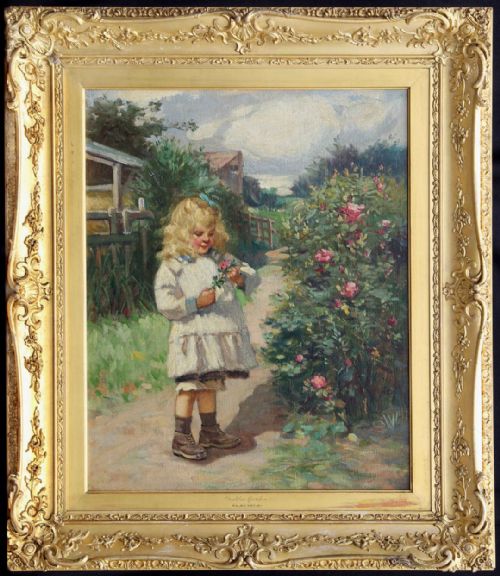
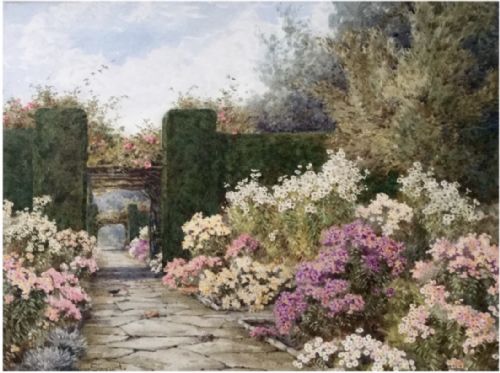
When you search for a traditional floral landscape, you are looking at painted garden views, country cottages, and framed outdoor scenery created across the Victorian, Edwardian, and early twentieth century periods. These works capture pastoral settings, country house gardens, and natural foliage through traditional artistic mediums.
The version you are most likely to meet on this page is a watercolour painting or oil painting on canvas or paper, often framed in wood or gilded wood. Subjects range from cottage gardens and thatched properties to country house grounds depicted by British artists and English school painters.
Alongside paintings, the selection includes decorative objects such as a carved red cinnabar lacquer vase featuring detailed surface work. These pieces span Victorian genre painting, British Impressionism, and Qing Dynasty craftsmanship, offering varied interpretations of landscape and floral themes.
How they were made
Painters utilised watercolour on paper and oil paint on canvas to build these landscapes, applying pigments to capture light and botanical detail in garden scenes. Artists worked within established British and English school traditions to depict foliage, flower beds, and architectural elements such as cottages and country houses.
Framing materials include plain wood and gilded wood, which surround and protect works on paper and canvas. Artisans also employed carving techniques on other items, such as shaping red cinnabar lacquer over a wooden base for decorative vessels.
Listings span the Victorian, Edwardian, and early twentieth century periods, utilising watercolours, oils, canvas, paper, wood, glass, and cinnabar lacquer.
What varies in quality
The distinction between works rests on the artist's handling of light, perspective, and botanical accuracy within the painted scene. Finer watercolours and oil paintings demonstrate greater control over brushwork, colour depth, and the intricate composition of garden foliage and domestic structures.
Physical presentation and material execution also set pieces apart, from the stability and detail of the wooden frames to the precision of surface carving on decorative lacquer items. Superior examples display balanced proportions and well-preserved pigments across paper, canvas, and lacquer surfaces.
Theresa Stannard·Jane Utley·Edgar Bundy·Theresa Sylvester Stannard·George Frederick Nicholls·Ralph Hedley·Lilian Stannard·Fred Merriman·Minnie Smythe
The Traditional Floral Landscape Glossary
- Watercolour
- A painting method where paint is made with water-soluble pigments. Works on paper produced in this medium often capture translucent effects in landscape and floral subjects.
- Oil painting
- A work created using pigments bound with a medium of drying oil. This technique allows for rich colour layering and textured application on canvas.
- Gilded wood
- Wood treated with a thin layer of gold leaf or gold-coloured pigment. It is commonly found on traditional picture frames surrounding fine art.
- Cinnabar lacquer
- A decorative material made from the sap of the lacquer tree mixed with cinnabar powder, applied in multiple layers to a core and carved with detailed designs.
- British Impressionism
- An artistic movement focused on capturing light and daily life through loose brushstrokes. Works in this style often depict outdoor gardens and rural scenery.
Traditional Floral Landscape: Frequently Asked Questions
What is a traditional floral landscape?
A traditional floral landscape is a painted artwork depicting outdoor scenery, gardens, and country properties with an emphasis on floral elements and natural views. These pieces date from the Victorian period through the early twentieth century.
Such works range from detailed watercolours of cottage gardens to larger oil paintings of country house grounds, created by established British artists and painters of the English school.
How were these paintings displayed?
These paintings were traditionally displayed on interior walls within homes, mounted behind glass where appropriate and surrounded by fitted wooden or gilded wood frames. The framing served both to protect the paper or canvas and to complement the domestic decor of the period.
Many works were created by artists associated with British Impressionism and Victorian genre painting, reflecting the interior aesthetic of Edwardian and Victorian households.
What materials are used in these items?
The items utilise materials such as paper, canvas, and wood, combined with watercolours, oil paints, and gold leaf on frames. Other objects incorporate carved red cinnabar lacquer.
These materials reflect the standard artistic and decorative production methods of the nineteenth and early twentieth centuries.
How do I identify the period of a piece?
Period identification relies on stylistic indicators, artist attribution, and framing materials. Victorian and Edwardian works often feature specific palettes and subject matter characteristic of their respective decades.
Signatures, artist names, and specific landscape styles help place items within periods such as the Qing Dynasty or the early twentieth century.