







Green Forest Art
Green forest art brings woodland scenes and verdant landscapes into the interior through oil paintings, watercolours, and tapestries.
Green Forest Art
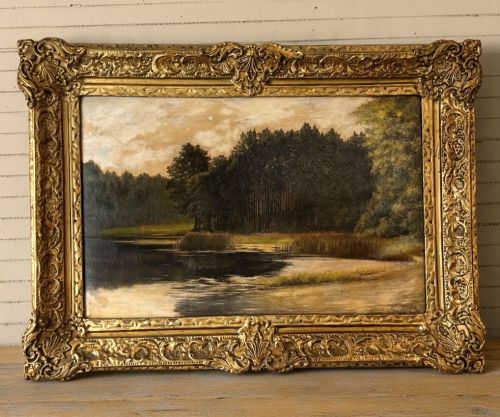
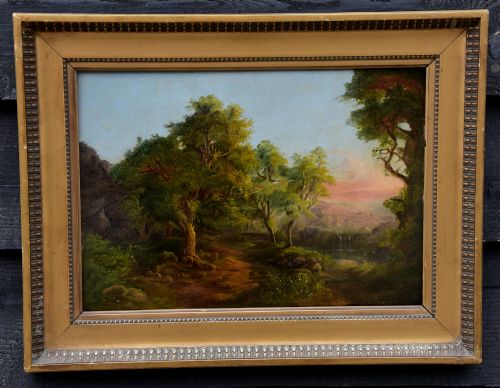
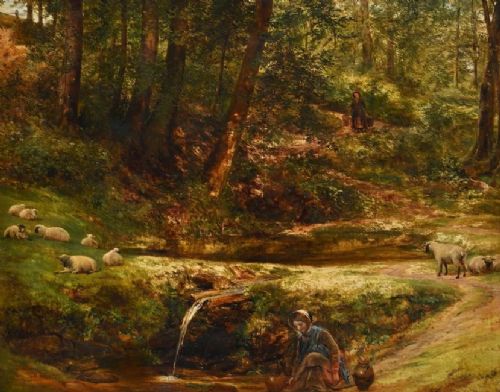
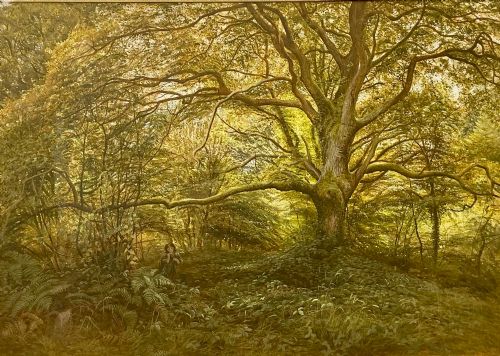
Green forest art gathers woodland scenes, forest paths, and tree-filled landscapes across multiple centuries and mediums. These works capture nature through the eyes of various schools, from British Impressionism to French Baroque.
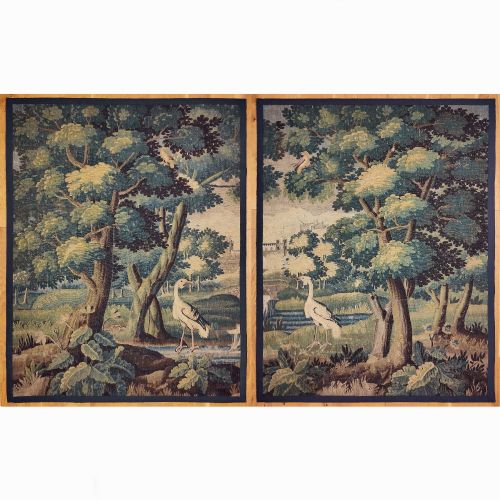
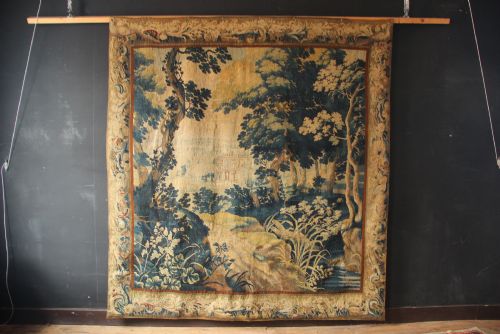
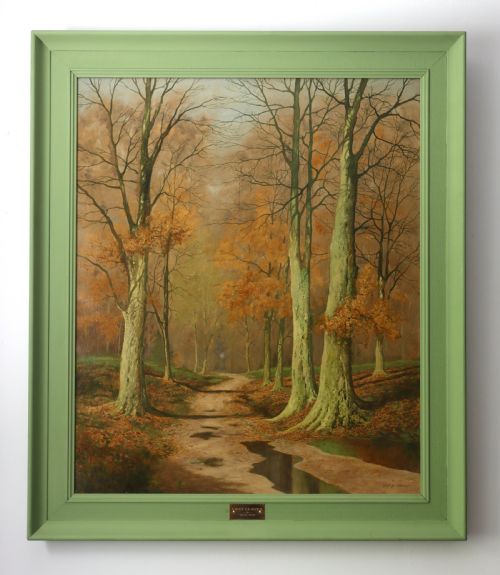
The most common examples on this page are oil paintings on canvas or board and watercolours on paper, often dating from the Victorian and Edwardian eras. Large textile works such as late seventeenth-century verdure tapestries also appear.
Buyers look for these pieces to bring the depth and atmosphere of a woodland into a room. The subjects range from quiet bluebell woods to river landscapes framed by trees.
Materials and techniques
Painters utilised oil paint on canvas, wood panel, and board, applying pigment to build up textured canopies and leafy undergrowths. Watercolour artists worked on paper to achieve lighter, more translucent depictions of foliage and light.
Textile pieces were produced using wool and silk threads, particularly in large-scale wall tapestries depicting verdant forest foliage. Glass works such as miniature cameo glass relied on enamelling techniques to display summer woodland scenes.
Green Forest Art Retail Price Guide 2026
Typical asking prices for green forest art among the pieces listed under this phrase on Sellingantiques today, from the lower quarter to the upper quarter. They describe what is for sale here now, not the wider market.
Listings include works from the seventeenth century up to the nineteen-sixties, utilising canvas, oil paint, paper, wood, wool, silk, and glass.
Judging quality in forest works
Quality rests in the handling of light and depth within the wooded composition. Stronger pieces use brushwork or weave density to create a sense of three-dimensional space beneath the tree branches.
Condition plays a central role, particularly for textiles and works on paper. Well-preserved pigments in oil paintings and intact fibres in wool and silk panels distinguish the finer examples.
William H Myers·Richard Redgrave·Thomas Bromley Blacklock·James Proudfoot·Rowland Henry Hill·Edmund George Warren·Ernest Higgins Rigg·Augustus William Enness·Charles Branwhite·Walter Emsley·Henri Harpignies
The Green Forest Art Glossary
- Verdure tapestry
- A wall hanging woven with a dominant theme of green foliage, trees, and often animals. These textile pieces date primarily to the seventeenth and eighteenth centuries.
- Collotype print
- A photomechanical printing process that uses hardened gelatin to produce detailed photographic reproductions. It allows for subtle tonal gradations in early twentieth-century prints.
- Cameo glass
- Glass formed with multiple layers of different colours, carved or etched to create a raised design. Miniature versions often depict summer scenes.
- Watercolour
- A painting method where coloured pigments are suspended in a water-based solution on paper. It creates transparent washes suited to landscape studies.
Green Forest Art: Frequently Asked Questions
What periods do these woodland pieces cover?
The selection spans from the seventeenth century through to the mid-twentieth century. Earlier examples tend to be woven tapestries, while nineteenth and twentieth-century pieces lean towards oils and watercolours.
Victorian and Edwardian British landscapes form a significant portion of the available paintings, alongside French impressionist works from the nineteen-twenties.
How should I hang a large verdure tapestry?
Large textile panels require even weight distribution across a sturdy hanging rod or wooden batten. Avoid securing tapestries with direct nails or pins that can damage the wool and silk fibres.
Keep textile pieces away from direct sunlight and damp walls to preserve the natural dyed colours of the foliage.
What is the difference between oil on canvas and watercolour?
Oils use thick pigments bound in drying oils, applied to canvas, board, or wood panels. This medium allows for rich texture and deep colour layering in forest scenes.
Watercolour uses water-soluble pigments on paper, producing lighter, more delicate impressions of light filtering through trees.
How do I identify a Victorian landscape painting?
Victorian landscape works often feature detailed brushwork focusing on natural scenery, rural rivers, and wooded paths. Signatures, framing techniques, and exhibition labels on the reverse often help confirm the period.
Subject matter frequently reflects a romanticised view of the British countryside, matching the artistic tastes of the nineteenth century.