
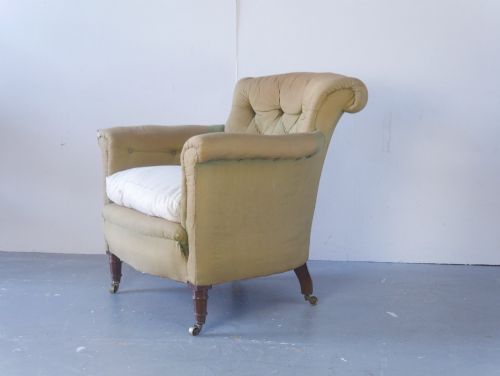
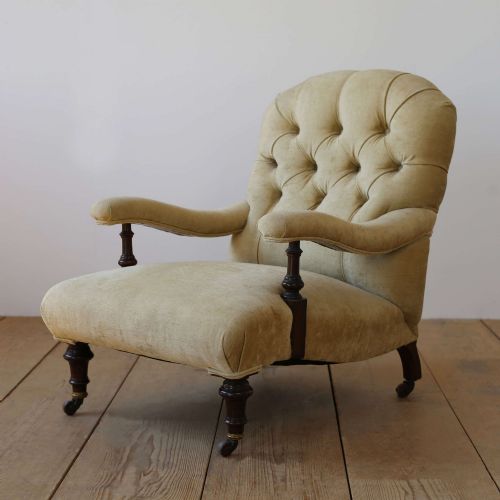
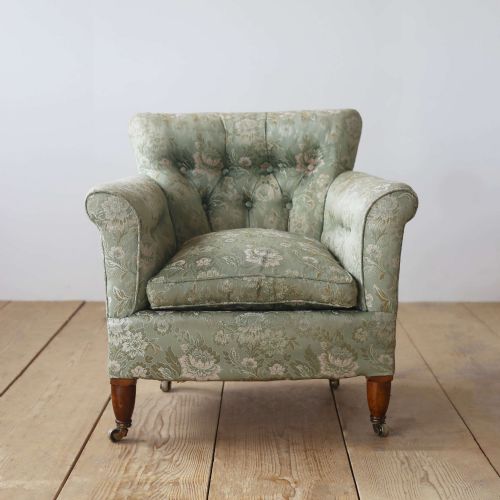

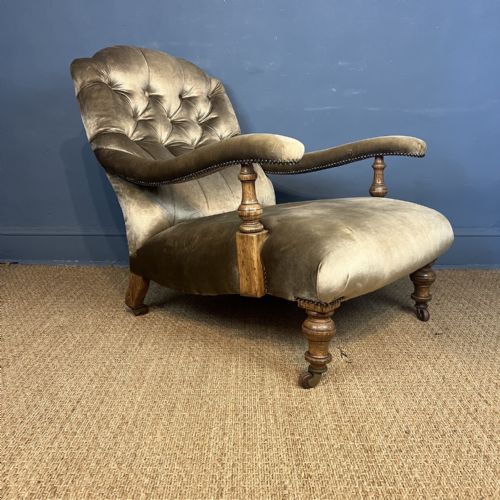
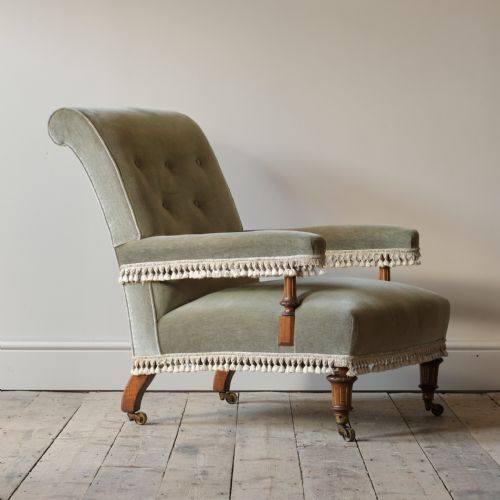
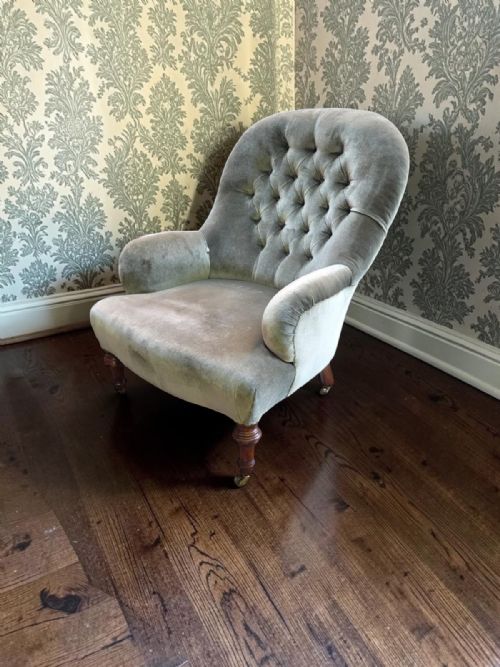
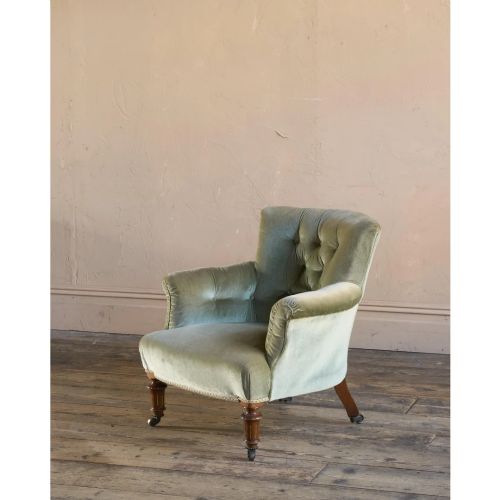
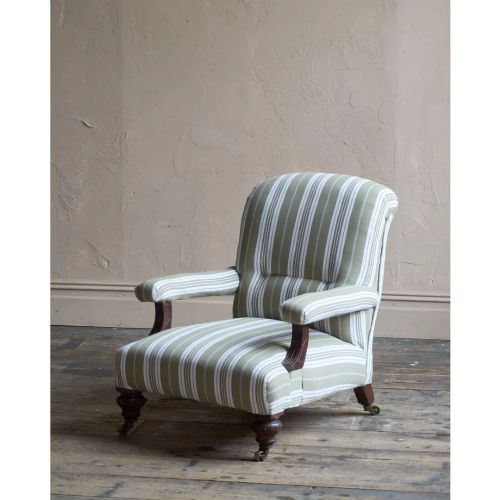
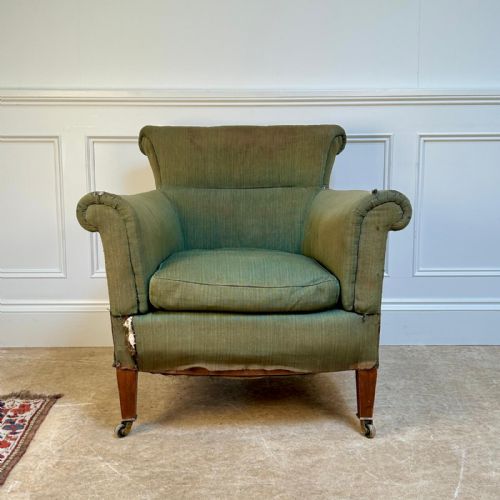
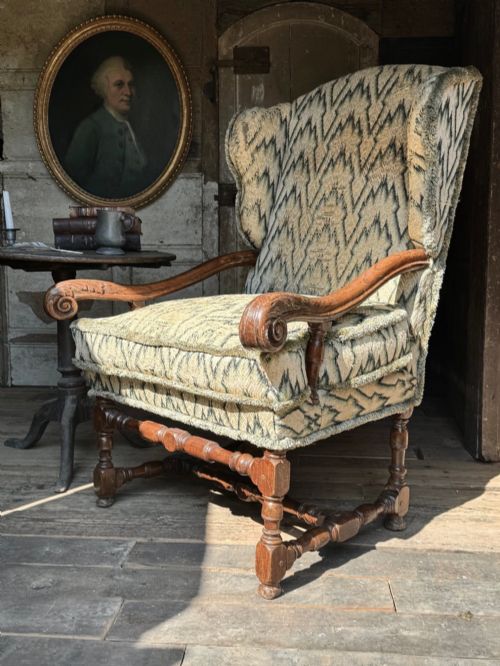
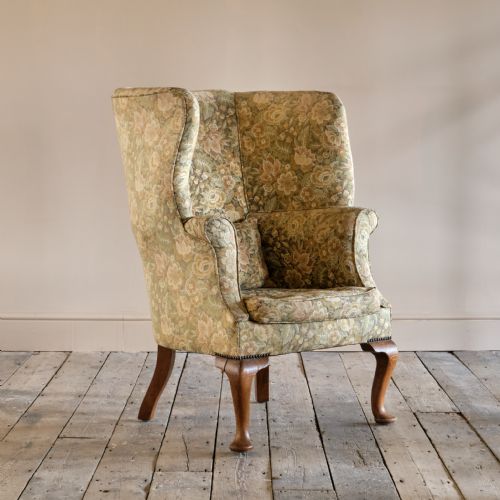
Green Fireside Chair
A green fireside chair provides a comfortable seat by the hearth, drawing on Victorian, Edwardian, and Georgian forms upholstered in velvet, leather, and fabric.
Green Fireside Chair
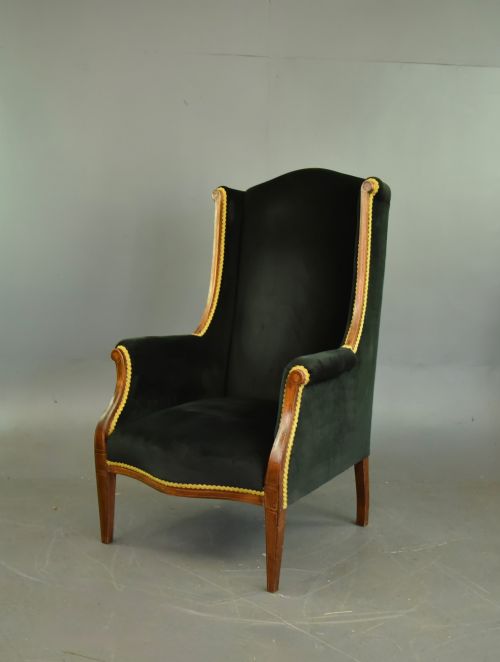
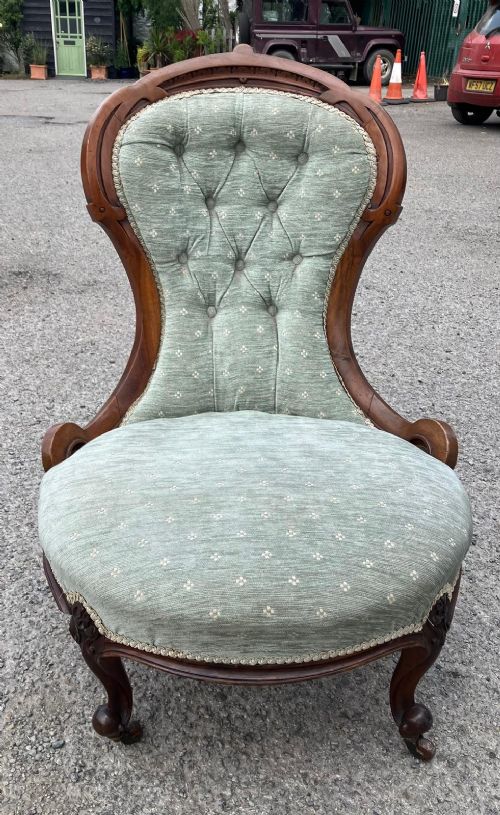
A green fireside chair encompasses various seating forms designed for warmth and comfort, ranging from wingbacks to nursing and slipper chairs. These pieces emerge primarily from the 18th, 19th, and early 20th centuries, spanning periods such as the Victorian, Edwardian, and Georgian eras.
Buyers seeking this phrase encounter armchairs featuring wooden frames of mahogany, walnut, oak, and rosewood, paired with upholstery in green tones. The selection includes styles influenced by Queen Anne, George II, and Regency designs alongside specific maker-attributed pieces.
How they were made
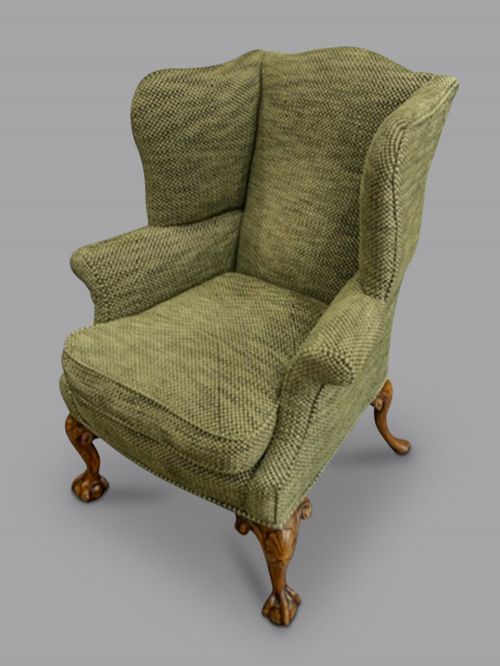
Frames rely on hardwoods including mahogany, walnut, oak, and rosewood, shaped into cabriole legs, barley twists, or scroll arms. Joinery techniques and carved details reflect the craftsmanship of the period, from George III examples to Edwardian productions.
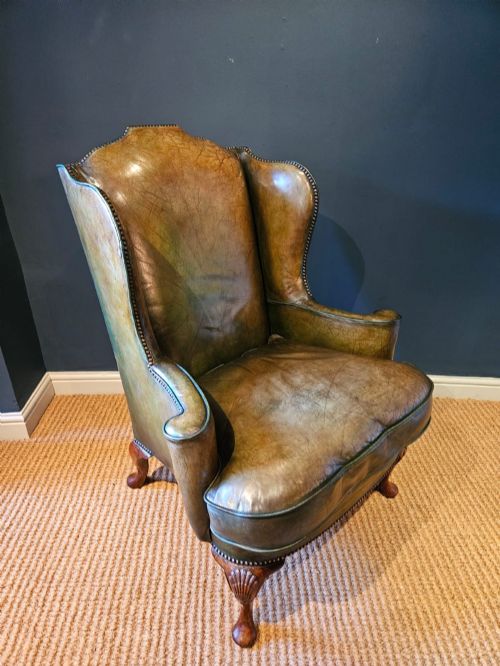
Upholstery incorporates textile, velvet, fabric, and leather secured over internal padding, often complemented by brass details or button backs.
Listings feature hardwood frames of mahogany, walnut, oak, and rosewood combined with leather, velvet, and textile upholstery.
What varies in quality
The standard of a green fireside chair depends on the integrity of the hardwood frame, the refinement of the carved details like cabriole legs or scroll arms, and the historical authenticity of the materials. Maker attribution to workshops such as Gillows or Howard and Sons elevates a piece.
Condition of the timber frame combined with the quality and preservation of the upholstery materials, whether leather, velvet, or fabric, determines the overall standing of the armchair.
Gillows·Hampton and Sons·Howard and Sons·C Hindley and Sons
The Green Fireside Chair Glossary
- Wingback
- An armchair with side panels designed to shield the occupant from drafts. These protective flaps extend from the arms up to the back.
- Cabriole
- A furniture leg that curves out and then in, resembling the leg of an animal. This shape appears frequently on walnut and mahogany frames.
- Bergère
- An enclosed armchair with upholstered sides and back. The frame is typically exposed wood, often utilising cane or fabric panels.
- Button back
- An upholstery style where depressions are formed in the padding by sewing buttons through to the frame. This technique secures the stuffing and creates a diamond pattern.
- Barley twist
- A type of turning shaped like a spiral rope. It appears on the wooden legs and supports of Victorian chairs.
Green Fireside Chair: Frequently Asked Questions
What periods do these chairs come from?
The pieces span several centuries, including 18th century, Regency, Victorian, and Edwardian eras. Each era brings distinct structural characteristics and aesthetic details.
Craftsmanship and materials shift across these periods, reflecting the prevailing styles of each decade.
What materials make up the frames?
Frames employ various hardwoods such as mahogany, walnut, oak, and rosewood. These timbers provide the structural foundation for the upholstered body.
Carpentry methods vary from plain timber construction to carved cabriole legs and barley twist supports.
How do wingback and barrel back chairs differ?
Wingback designs incorporate side panels intended to block drafts near a fireplace. Barrel back variants feature a semicircular rounded back enclosing the sitter.
Both forms offer distinct silhouettes suited to different interior settings.
What upholstery fabrics appear on these chairs?
Upholstery options recorded include leather, velvet, textile, and general fabric. Button backs and brass accents frequently accompany these coverings.
Specific examples pair traditional frames with textiles by designers like William Morris.