





Green Famille Vase
These green famille vase pieces bring vibrant palette enamels and varied historic forms straight into a room.
Green Famille Vase
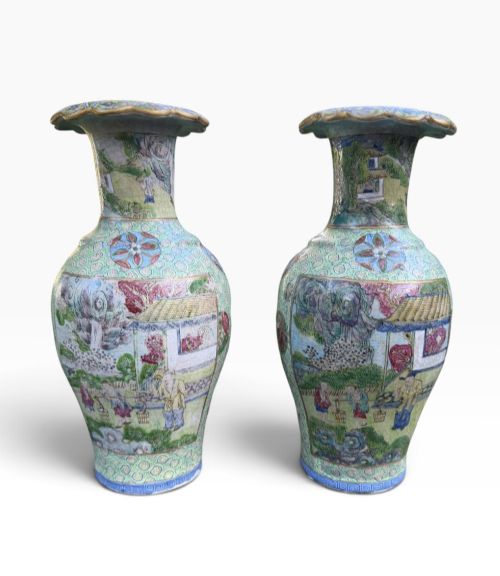
A green famille vase encompasses various historical porcelain and stoneware vessels decorated in distinct palette enamels. Buyers searching for a green famille vase will encounter pieces spanning the eighteenth century through to the Victorian era and the turn of the twentieth century.
The selections on this page heavily feature nineteenth century examples alongside eighteenth century pieces and later adaptations. Common forms include traditional baluster vases, square cong shapes, garlic-head designs, and tulip vessels.
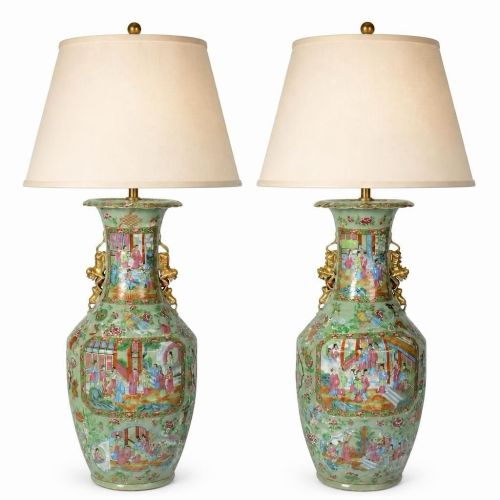
Many of these historic vessels have been adapted over time into table lamps, often retaining their original hand-painted surfaces and mounted with brass, silk, fabric, or ormolu details.
Materials and construction methods
Makers utilised porcelain, enamelled stoneware, and overglaze enamel to build these vibrant decorative objects. Surface decoration relies on meticulous hand-painting executed in rich green tones and contrasting polychrome enamels.
Structural enhancements frequently incorporate metalwork such as brass and ormolu mounts. Textile elements like silk and fabric are also integrated, particularly on pieces converted into table lamps.
Green Famille Vase Retail Price Guide 2026
Typical asking prices for green famille vase among the pieces listed under this phrase on Sellingantiques today, from the lower quarter to the upper quarter. They describe what is for sale here now, not the wider market.
Garlic-head vases prove that ancient vegetable shapes make surprisingly elegant mantelpiece ornaments.
Qualities that distinguish the pieces
Quality rests primarily in the precision of the hand-painted enamels and the crispness of the underlying porcelain or stoneware form. Pieces displaying finer brushwork and more complex multi-coloured motifs stand apart from simpler iterations.
The integration of secondary materials also influences the character of the piece. Superior examples feature well-cast ormolu or brass mounts that complement rather than overwhelm the ceramic body.
The Green Famille Vase Glossary
- Famille Verte
- A ceramic palette dominated by green overglaze enamels, originating in China. This style frequently incorporates complementary colours to depict natural scenes and figures.
- Rose Medallion
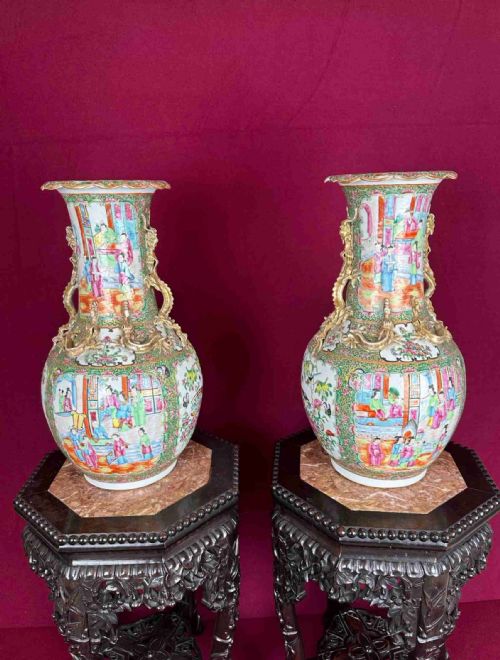
- A distinct style of Chinese export porcelain featuring panel scenes filled with figures and birds, surrounded by intricate floral borders. The palette typically includes generous amounts of pink and green.
- Ormolu
- Gilt bronze mounted onto furniture and decorative objects. It provides a bright metallic contrast to porcelain vessels.
- Cong
- A tubular jade or ceramic form with a square exterior section and a circular inner bore. This ancient shape is replicated in later porcelain pieces.
- Garlic-Head
- A vase shape characterised by a bulbous mouth resembling a bulb of garlic above a slender neck. It appears across various historical dynasties.
Green Famille Vase: Frequently Asked Questions
What is a green famille vase?
A green famille vase is a ceramic vessel decorated with overglaze enamel where green tones predominate the palette. These objects range from eighteenth century productions to nineteenth century export wares.
Many examples take traditional forms like baluster bodies or square shapes, and some have been subsequently converted into lighting fixtures.
How are these vases decorated?
Decoration is achieved through hand-painted enamel work applied over fired porcelain or stoneware. Artisans utilise detailed brushwork to create floral, figurative, and geometric patterns.
The resulting surfaces showcase vibrant hues, often paired with gilt highlights or contrasting ground colours such as yellow.
Are these vases originals?
The selection includes genuine historic pieces originating from the eighteenth and nineteenth centuries. Styles reflect traditional Chinese aesthetics alongside Victorian interpretations and export variations.
Buyers should examine the specific period details and material descriptions provided for each individual item to understand its precise origins.
Why are some mounted as lamps?
Numerous nineteenth century vases were fitted with ormolu or brass mounts and converted into table lamps during subsequent periods of use. This adaptation allowed historic ceramics to function in domestic interior lighting schemes.
Such modifications integrate the antique body with electrical fittings and fabric shades while preserving the decorative ceramic surface.
What styles do these pieces represent?
The items reflect Qing Dynasty traditions, Chinese export goods, and Victorian chinoiserie interpretations. Each style brings distinct decorative motifs and manufacturing traits to the surface.
From Rose Medallion panels to Famille Verte florals, the aesthetic ranges from courtly designs to items made specifically for Western markets.