




Green Ceramic Chargers
Green ceramic chargers are large display plates carrying deep mineral glazes that anchor a dining table or wall.
Green Ceramic Chargers
Green ceramic chargers appear across diverse periods from pre-sixteenth century celadon wares through to twentieth-century art pottery. These substantial display plates take the form of round dishes, decorative plaques, and wide chargers designed primarily for visual impact rather than dining.
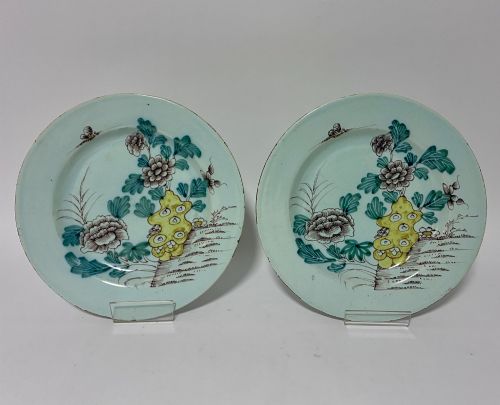
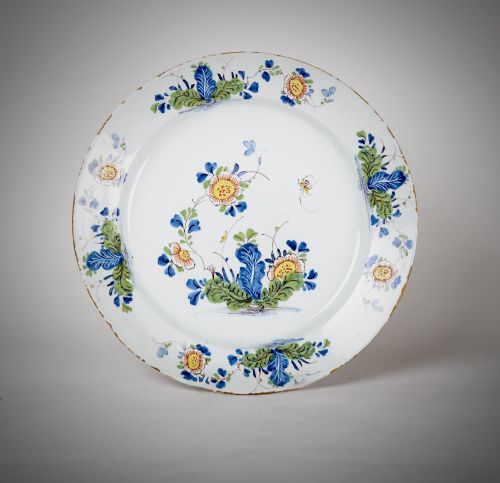
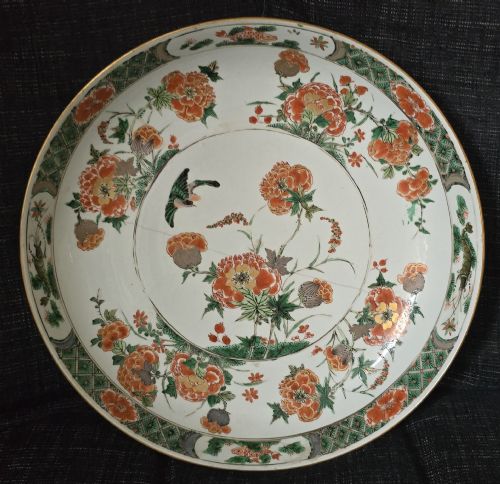
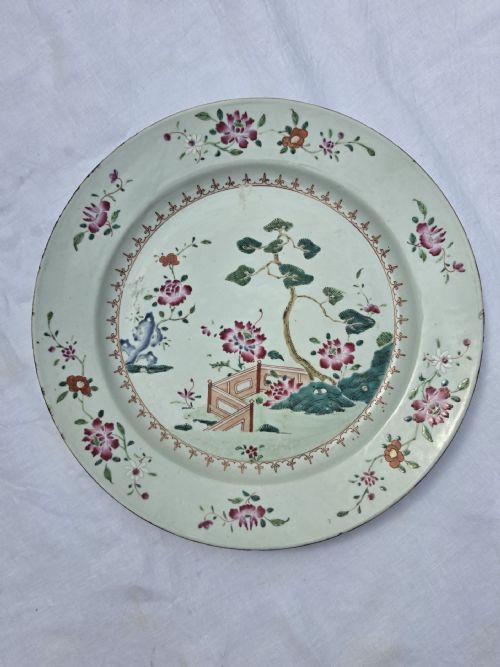
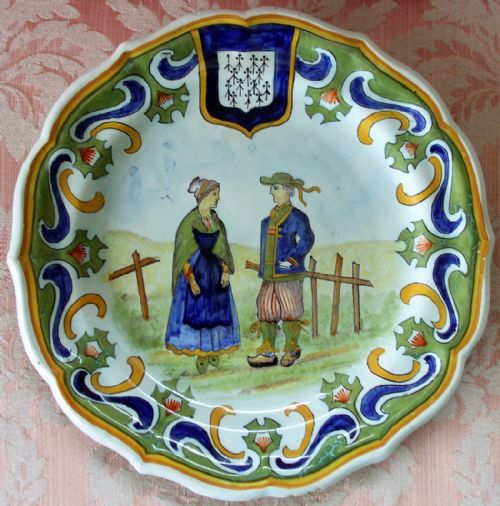
The pieces on this page span Chinese export porcelain, Japanese Kutani and Imari, French faience, Dutch Delftware, and English Victorian pottery. Longquan celadon dishes and Chinese famille verte plates frequently represent the earlier centuries in this selection.
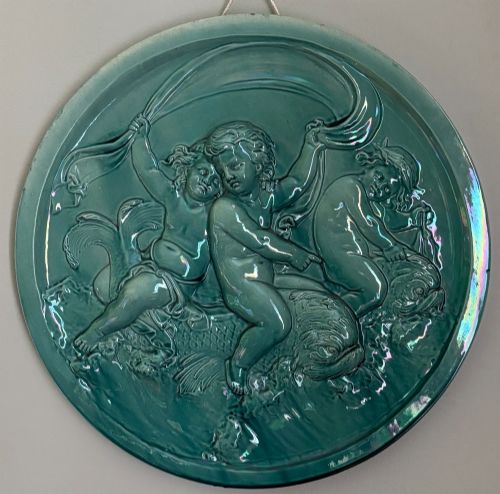
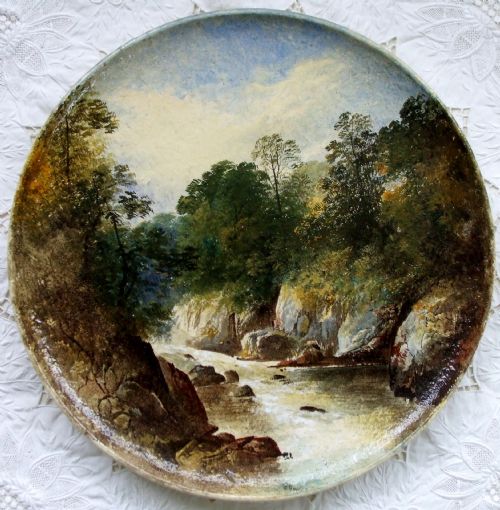
Victorian English earthenware plaques painted with Welsh landscapes and French art pottery chargers complete the range. Buyers will encounter both deep-moulded celadon bowls and brightly enamelled porcelain plates across these listings.
Materials and construction
Potters shaped these pieces using earthenware, porcelain, and tin-glazed earthenware bodies, often throwing them on a wheel or pressing clay into moulds to achieve substantial diameters. Celadon pieces rely on iron-rich glazes fired in reduction kilns to produce characteristic green hues.
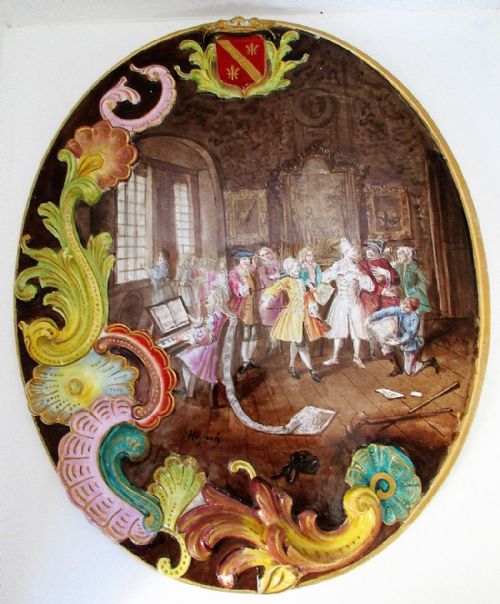
Surface decoration involves underglaze pigments, overglaze enamels, and tin glazes applied before or after initial firing. Some items incorporate moulded floral scrolls or cloisonne tree bark effects directly into the ceramic or base material.
Green Ceramic Chargers Retail Price Guide 2026
Typical asking prices for green ceramic chargers among the pieces listed under this phrase on Sellingantiques today, from the lower quarter to the upper quarter. They describe what is for sale here now, not the wider market.
The selection includes Japanese Kutani porcelain, Chinese Qing dynasty wares, French faience, and English Victorian pottery plaques.
Assessing quality and execution
Quality rests upon the depth and stability of the glaze, the precision of the moulding, and the control demonstrated during high-temperature firing. Fine celadon glazes exhibit an even, jade-like translucency without clouding or surface pitting.
Painted examples distinguish themselves through brushwork confidence and pigment saturation, particularly in complex figural scenes or geometric borders. The crispness of moulded floral scrolls and the integrity of the ceramic body separate standard production from superior work.
Clement Messier·William Yale
The Green Ceramic Chargers Glossary
- Celadon
- A term for ceramics featuring a pale green iron-oxide glaze derived from Chinese traditions. The glaze varies from olive to sea-green tones.
- Famille Verte
- A Chinese porcelain palette dominated by green enamel colours, developed during the Qing dynasty. It often depicts court life or natural scenes.
- Faience
- European tin-glazed earthenware originating in France and other regions. It provides an opaque white or tinted surface for painted decoration.
- Imari
- Japanese porcelain decorated in underglaze blue and overglaze iron red and gold. These pieces were widely exported to Europe.
- Charger
- A large decorative plate exceeding standard dining dimensions. They were traditionally displayed on sideboards or hung upon walls.
Green Ceramic Chargers: Frequently Asked Questions
What is the difference between a charger and a plate?
Chargers measure significantly larger than standard dining plates and function primarily as decorative centrepieces or wall displays.
Historically, larger dishes served functional roles at banquets before shifting entirely to ornamental display during subsequent centuries.
How do I hang a heavy ceramic charger safely?
Displaying large plaques requires purpose-built wall brackets or spring-loaded hangers designed to distribute weight evenly across the base.
Ensure wall fixings anchor directly into solid masonry or studs rather than relying on standard plasterboard hooks.
Can green ceramic chargers be used for serving food?
Many antique chargers feature soft earthenware bodies or delicate overglaze enamels that suffer damage from cutlery and modern dishwashers.
Displaying them on walls or plate stands preserves the glaze and prevents unnecessary wear on historic surfaces.
How can I tell an 18th-century charger from a 19th-century copy?
Examination of the foot rim, glaze pooling, and pigment characteristics reveals the manufacturing methods specific to particular eras.
Earlier pieces show natural kiln faults and potting irregularities that differ from the more uniform output of later factories.