





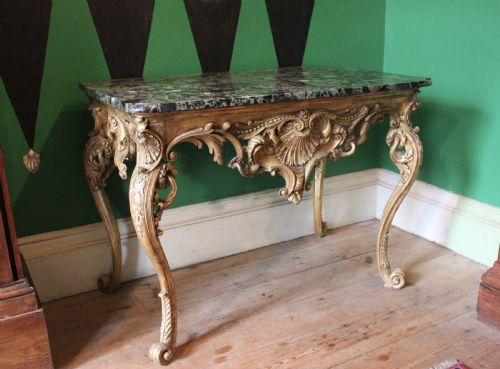
Green and Gold Console
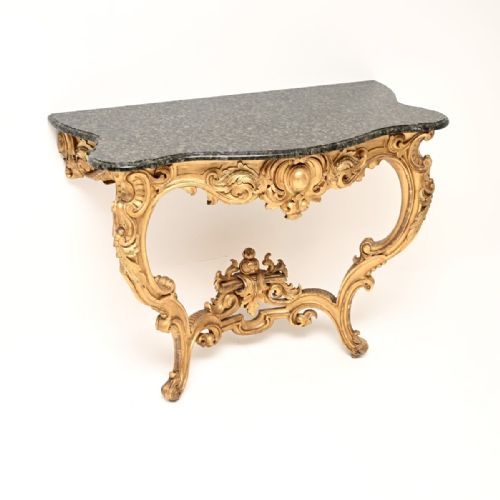
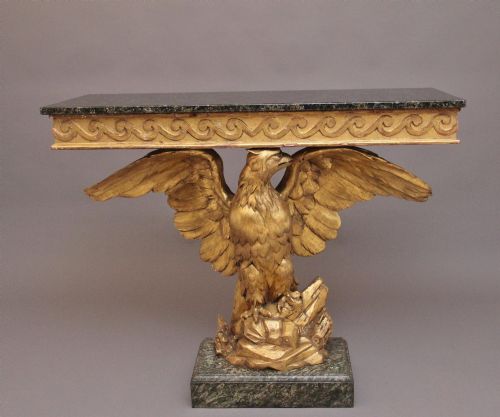
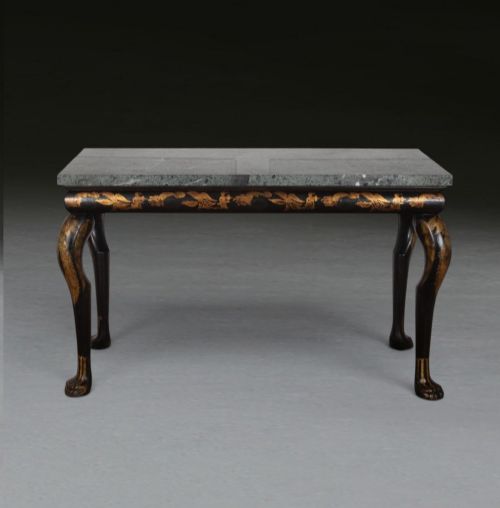
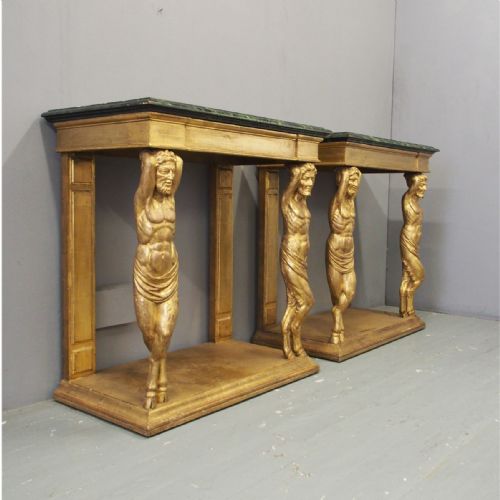
These green and gold console tables bring striking neoclassical and rococo elegance to a room, offering a functional surface topped in marble.
Green and Gold Console
A green and gold console provides a narrow surface designed to stand against a wall, frequently paired with a contrasting marble top. These items encompass console tables, side tables, and low coffee tables spanning from the eighteenth century through to the early twentieth century.
The selections encountered here lean heavily towards continental European craftsmanship, notably Italian and French origins. Pieces span significant historical periods including Regency, Louis XVI, and various revival styles.
Forms range from carved giltwood frames to painted pairs, alongside specific decorative schemes like Chinoiserie and centaur designs. Buyers select these tables to introduce a distinct classical accent into hallways, drawing rooms, or reception spaces.
Materials and construction
Construction relies heavily on timber frameworks enriched with gesso and intricate carving, finished through gilding or paint. Artisans applied layers of gold leaf or metallic gilt to wooden structures to create the signature metallic contrast.
Heavy stone inserts form the upper surfaces, with marble serving as the primary material for the console tops. Glass also appears within the construction of these tables, alongside ebonised wood details that accentuate the gilt surfaces.
Green and Gold Console Retail Price Guide 2026
Typical asking prices for green and gold console among the pieces listed under this phrase on Sellingantiques today, from the lower quarter to the upper quarter. They describe what is for sale here now, not the wider market.
Current listings feature materials such as marble, giltwood, gesso, and ebonised wood across items dating from the eighteenth century to the 1920s.
Distinctions in quality
Quality rests upon the depth and crispness of the carved ornamentation on the wooden or gesso frame. Hand-carved detailing shows sharper relief and more naturalistic movement than cast or heavily built-up composition work.
The selection of the marble top and the precision of its fit within the frame indicate the tier of the piece. Superior examples utilise high-grade stone with complex veining that complements the gilded and painted finish of the base.
The Green and Gold Console Glossary
- Console table
- A table designed to stand against a wall, traditionally supported by two or four legs or fixed brackets. These pieces often feature ornamental wall attachment points for stability.
- Giltwood
- Timber coated with gold leaf or a metallic powder applied over a prepared gesso ground. This finish provides a bright surface that catches the light in formal interiors.
- Gesso
- A plaster-like mixture applied to wood surfaces to create a smooth base for gilding or painting. It allows craftsmen to carve fine details before applying the metallic leaf.
- Rococo
- An ornate artistic style characterised by asymmetry, scrollwork, and natural motifs such as shells and foliage. It strongly influences many of the Italian and French tables found in this category.
- Regency
- An English design period spanning the early nineteenth century noted for classical revival motifs and influences from ancient Greece and Rome. Tables from this era often incorporate distinctive thematic elements like Chinoiserie.
Green and Gold Console: Frequently Asked Questions
Where should I place a console table?
These tables suit narrow circulation areas such as hallways, entrance passages, and landings where floor space is at a premium. They also function effectively against prominent walls in sitting rooms beneath mirrors or artwork.
Because they feature finished stone surfaces, they provide a stable platform for lamps, vases, and decorative objects without overwhelming the room.
How do I care for a gilded wooden frame?
Dust the carved and gilded surfaces gently with a soft, dry brush to prevent the accumulation of dirt within the intricate recesses. Avoid using liquid cleaners, polishes, or abrasive cloths which can damage the delicate gold leaf.
Keep the tables away from direct sources of heat and strong sunlight to protect the underlying gesso and wood from drying out and cracking.
How do I maintain a marble table top?
Wipe the marble surface regularly with a soft, damp cloth and dry it immediately to prevent water spots. Avoid acidic substances like citrus or vinegar which can etch the polished stone.
Utilise coasters and mats under glasses and heavy items to protect the stone from scratches and staining over time.