



Green and Gold Armchairs
These green and gold armchairs bring grand seating into domestic rooms, offering gilded frames and upholstered seats from various historical periods.
Green and Gold Armchairs
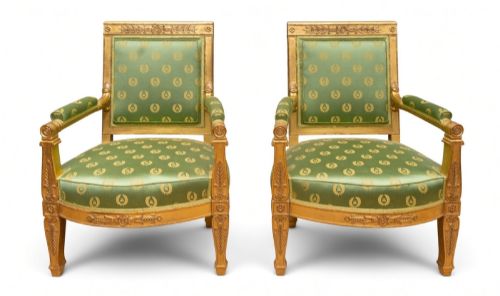
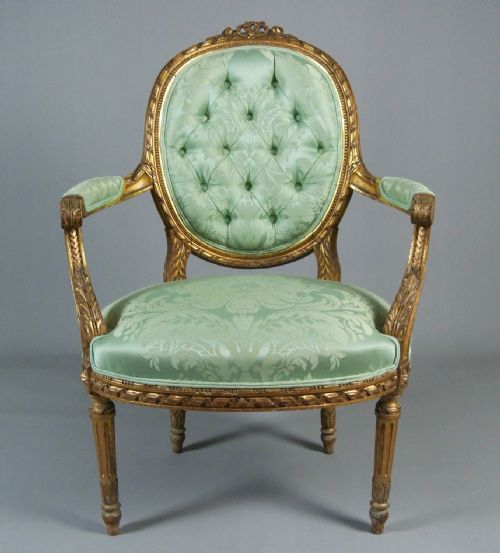
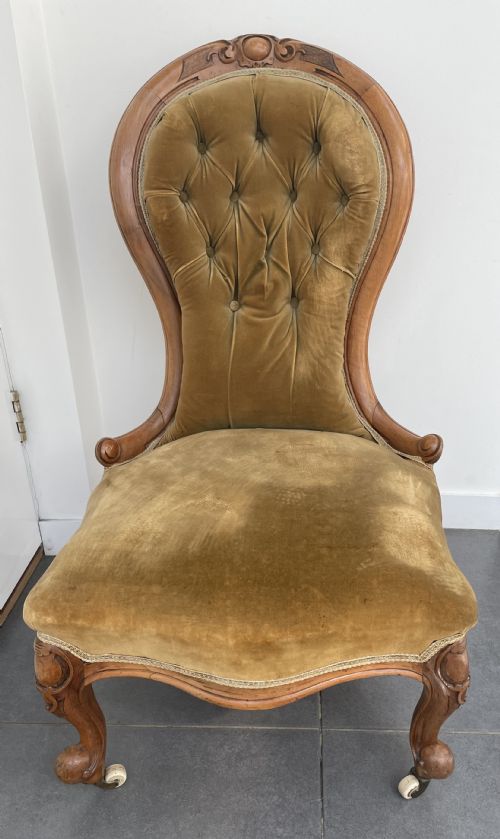
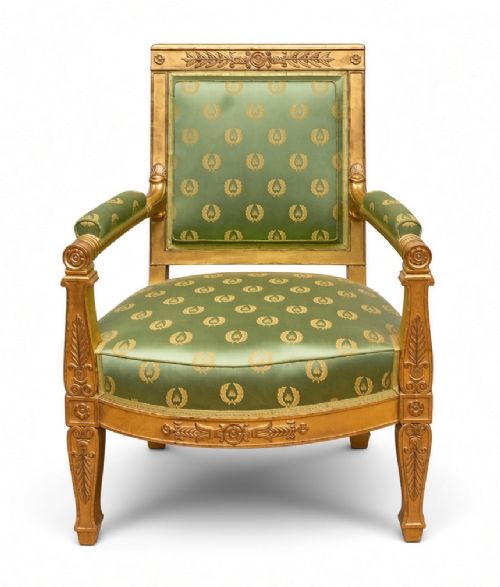
Green and gold armchairs encompass seating designed with gilded wooden frames and green textile upholstery, drawing on historical forms ranging from the eighteenth century to the twentieth century. These pieces appear in styles such as French Restauration, Victorian, George III Neoclassical, and French Rococo Revival.
French Restauration pieces sit alongside nineteenth-century salon chairs and Victorian carved frame designs. Buyers frequently encounter giltwood and gesso finishes paired with silk damask and fabric coverings.
Materials and construction
Makers shaped these frames from timber such as walnut and general wood, applying gesso layers to prepare surfaces for gilding. Giltwood surfaces create the characteristic metallic finish seen on these gilded chair frames.
Upholstery techniques utilise fabric, silk, and silk damask to cover the seats and backs. Carved ornamentation decorates the wooden and giltwood structural elements across multiple periods.
Green and Gold Armchairs Retail Price Guide 2026
Typical asking prices for green and gold armchairs among the pieces listed under this phrase on Sellingantiques today, from the lower quarter to the upper quarter. They describe what is for sale here now, not the wider market.
Listings feature giltwood, gesso, walnut, and wood materials combined with silk damask and fabric upholstery across multiple centuries.
Distinctions in quality
Quality varies in the depth and execution of the carved wooden decoration on the frame, alongside the finesse of the giltwood and gesso application. Superior pieces display crisp detailing in the carved motifs.
The choice of upholstery material, such as silk damask versus standard fabric, affects the overall presentation of the chair. Maker attribution and historical provenance further distinguish exceptional examples from standard production.
Jacob-Desmalter·Thomas Chippendale
The Green and Gold Armchairs Glossary
- Giltwood
- Wood that has been coated with gold leaf or a gold-coloured finish. This material defines the bright frames characteristic of these armchairs.
- Fauteuil
- An open-armed upholstered armchair originating in France. These seats typically feature exposed wooden arms and padded elbow rests.
- Gesso
- A plaster-like mixture applied to wood to prepare a smooth surface for gilding. This base layer receives the gold leaf applications.
- Duchesse brisee
- A multi-part upholstered chaise longue configuration. This form combines an armchair with one or more footstools to create an extended seat.
- Silk damask
- A reversible figured fabric woven on a loom with silk threads. This textile often provides the green upholstery covering for the seats.
Green and Gold Armchairs: Frequently Asked Questions
What periods do these armchairs come from?
The listings span from the eighteenth century through the nineteenth century and into the twentieth century. Examples include George III, Regency Revival, and Victorian periods.
Maker attributions and stylistic markers help identify the specific era of manufacture for each piece.
How do French and English styles differ?
French styles represented here include Restauration, Louis XIV, and Rococo Revival forms. English pieces draw upon George III Neoclassical and Regency Revival traditions.
These designations reflect distinct regional approaches to carving, framing, and giltwood application.
What fabrics are used for upholstery?
Upholstery materials recorded in the evidence include silk damask, general fabric, and silk textiles. These green coverings contrast with the gilded wood frames.
Different grades of textile reflect the original intended function and status of the chair.
How are these chairs used in rooms?
Armchairs, occasional chairs, and salon chairs serve as decorative and functional seating in reception spaces. Larger configurations like the duchesse brisee provide extended lounging options.
Pairs of chairs allow for symmetrical arrangement within a interior scheme.