

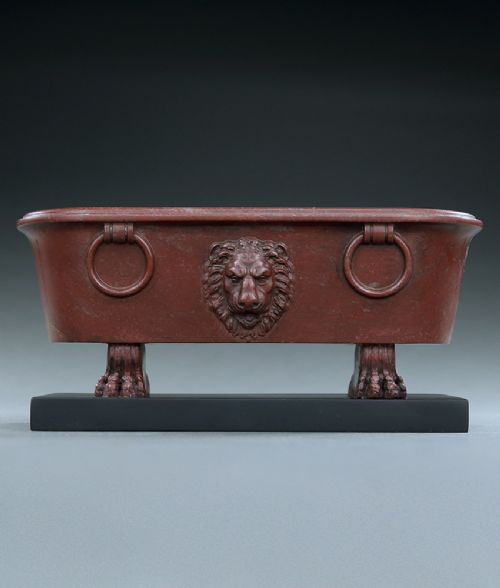




Grand Tour Souvenir Lion
A grand tour souvenir lion brings the sculpture of European capitals into the home as a tangible memory of travel.
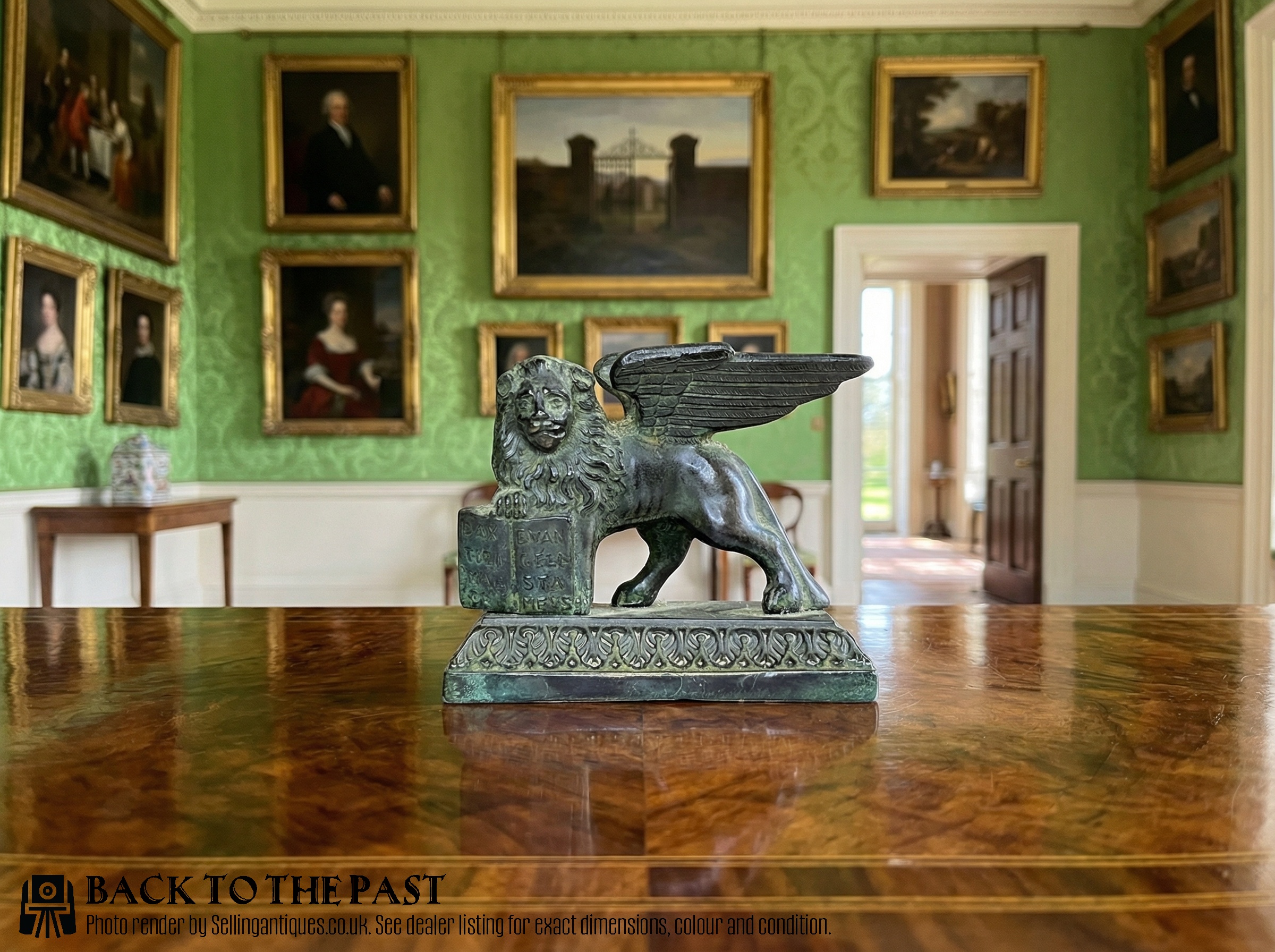
Grand Tour Souvenir Lion
A grand tour souvenir lion takes the form of sculptures, candlesticks, and wall plaques depicting famous classical and Italian monuments. These pieces record the travels of gentlemen through Europe during the Georgian, Regency, and nineteenth century periods.
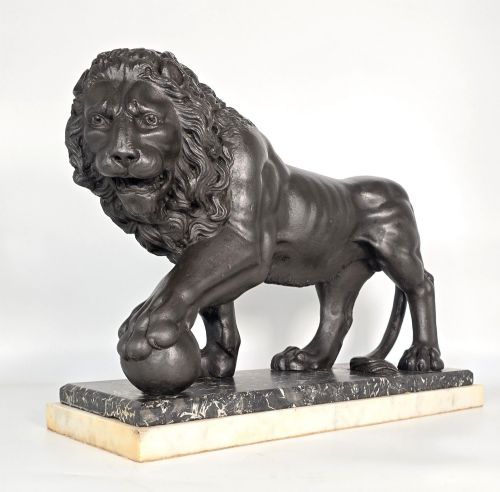
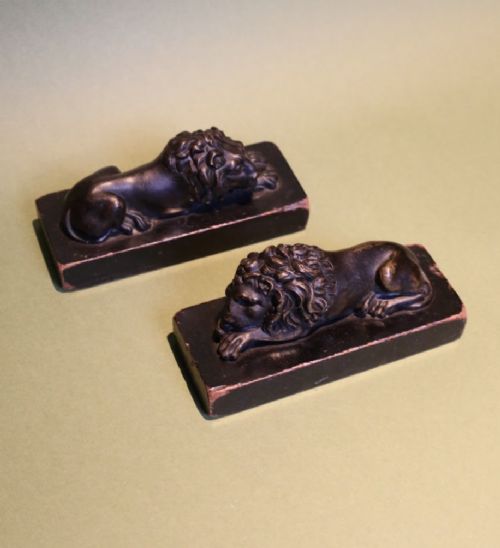
The most common examples encountered here are bronze or marble models of the Canova lions, the Medici lions, and the winged Lion of St Mark. Sculptures frequently rest upon dedicated marble plinths, while pairs commonly appear as mantel ornaments.
Originating largely from Italian workshops, these items replicate ancient Roman originals and prominent Venetian landmarks. Collectors find both single figures and matched pairs spanning dates from the early nineteenth century to the early twentieth century.
Materials and production
Foundries and studios utilised cast bronze, patinated metal, and gilt bronze, often mounting heavy metal figures onto shaped marble bases. Serpentine marble, sienna marble, alabaster, and white statuary marble provide the stone components seen across these carvings and plinths.
Craftsmen shaped the stone panels and sculptures through detailed hand carving, while metal iterations employed traditional casting methods. Surface treatments range from dark patination and gilding to the natural veining inherent in serpentine and alabaster.
Grand Tour Souvenir Lion Retail Price Guide 2026
Typical asking prices for grand tour souvenir lion among the pieces listed under this phrase on Sellingantiques today, from the lower quarter to the upper quarter. They describe what is for sale here now, not the wider market.
Object types include freestanding sculptures, pairs of candlesticks, and carved wall plaques depicting Venetian iconography.
Distinctions in quality
The selection and preparation of the stone plinth contribute significantly to the overall presence of the object. High grade items feature dense, well-figured marble or serpentine bases that complement the proportions of the lion above.
Antonio Canova
The Grand Tour Souvenir Lion Glossary
- Canova lions
- Sculptures based on the monuments designed by Antonio Canova for the tomb of Pope Clement XIII in Rome. These reclining figures are frequently encountered in pairs.
- Medici lions
- Replicas of the pair of marble lion sculptures guarding the Villa Medici in Rome, dating back to antiquity. One looks forward while the other rests a paw on a sphere.
- Serpentine marble
- A green, mottled stone often utilised for Italian Grand Tour bases and carved animal figures. Its appearance resembles the skin of a serpent.
- Patinated metal
- Metal surfaces treated with chemical solutions to produce a controlled aged finish, typically dark brown or green. This technique simulates the appearance of ancient excavated bronzes.
Grand Tour Souvenir Lion: Frequently Asked Questions
What are grand tour souvenir lions made from?
These pieces incorporate cast bronze, gilt bronze, and patinated metal alongside carved stones including alabaster, serpentine marble, and white statuary marble. Many examples combine a metal sculpture mounted securely onto a contrasting marble plinth base.
Foundry work provided the metal iterations, while Italian artisans shaped the various marbles by hand. The choice of material often reflects the specific monument being commemorated.
How do I identify a Canova lion?
Canova lions are depicted in a relaxed, reclining posture with their head turned slightly and paws crossed. They derive from the famous sculptures created for papal tombs in Rome.
These models appear frequently in pairs amongst nineteenth century bronze and marble souvenirs. They differ from the alert posture of the Medici lion or the winged representation of St Mark.
Where were these souvenirs originally made?
The majority of these sculptures and plaques originated in Italy during travel expeditions undertaken by collectors in the nineteenth century. Workshops in cities such as Rome and Venice catered specifically to foreign travellers seeking classical replicas.
Some examples also stem from Swiss production centres, focusing on local monuments rather than Italian antiquities. These objects served as portable representations of European artistic heritage.
How should I display a marble plinth lion?
These substantial sculptures and pairs of candlesticks suit placement on mantelpieces, desks, or console tables where their weight and detail can be appreciated. Stable surfaces are essential due to the heavy stone bases used in their construction.
Keeping them away from direct heat sources protects the alabaster and marble elements from thermal shock. Periodic dusting with a soft, dry cloth preserves the original surface patination.