


Grained Pine Chest
A grained pine chest brings domestic storage from the nineteenth century into modern rooms with rich surface pattern and honest utility.

Grained Pine Chest
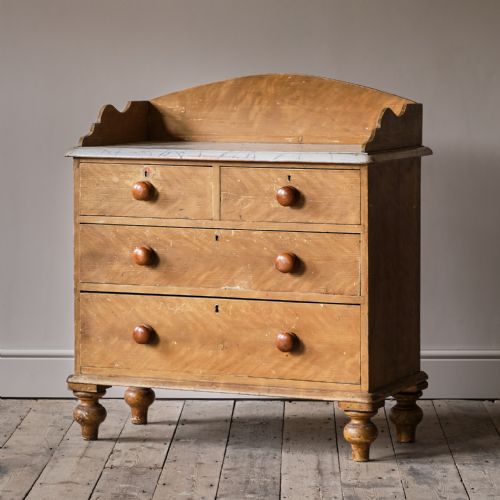
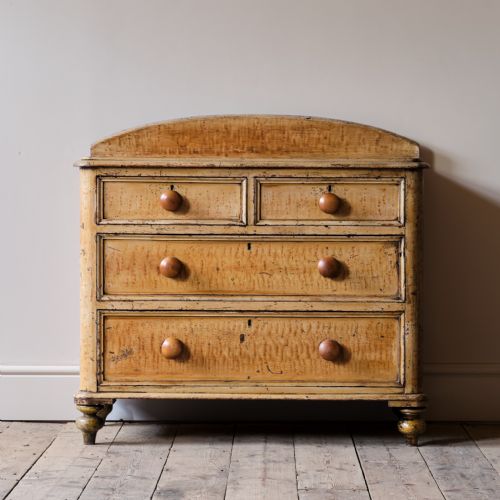
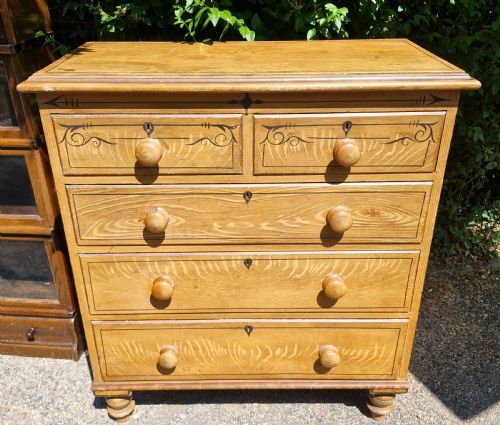
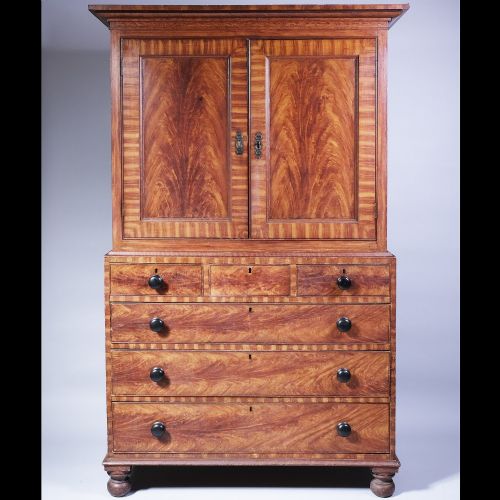
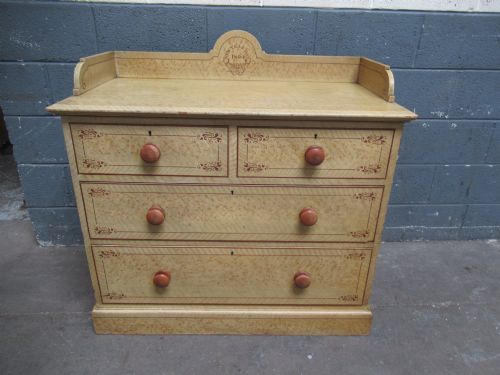
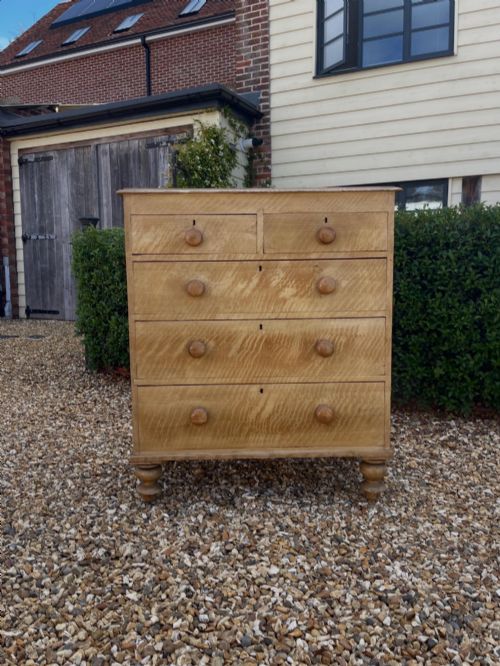
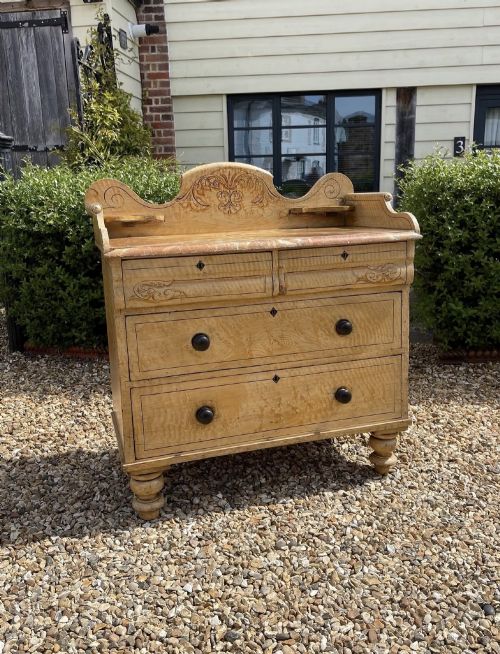
A grained pine chest is a practical nineteenth century storage item finished with decorative paintwork mimicking finer timber. The selection spans chests of drawers, blanket boxes, washstands, and writing desks originating mainly in the Victorian period. Pieces often display regional English or Scandinavian country characteristics alongside utilitarian forms.
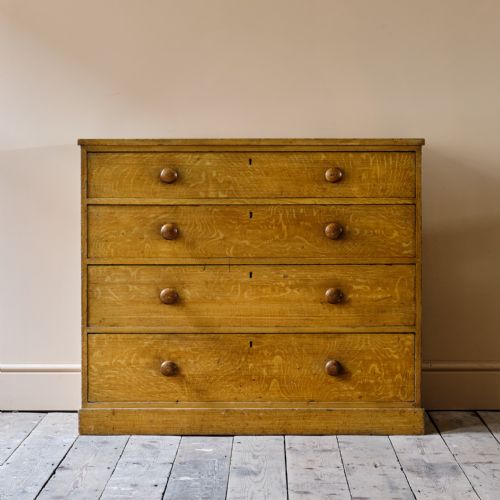
Most examples rely on softwood construction enhanced by paint techniques that imitate oak, walnut, or exotic hardwoods. Buyers frequently encounter standard drawer configurations alongside specialised formats such as housekeepers cupboards and mule chests. Original painted surfaces define the character of these items, showing decades of domestic use.
How they were made
Craftsmen built these items using pine and softwood before applying complex paint layers to simulate richer wood grains. Techniques like scumbling involved dragging combs or brushes through wet glaze to create movement across the timber surface. Hardware typically included brass or turned wooden knobs alongside iron and ceramic details.
Surfaces received protective varnishes or glazes over the faux finish to withstand daily household wear. Construction methods combined dovetailed drawer joints with solid timber backs and applied mouldings. Paint layers often aged together with the softwood beneath to form a stable patinated skin.
Some miniature chests were apprentice pieces, created to prove a cabinetmaker's skill before joining the guild.
What varies in quality
The sophistication of the graining technique largely determines the visual success of the piece. Subtle brushwork and convincing faux bois patterns command greater appreciation than heavy or uniform application. Surviving original painted surfaces retain depth and tonal variation lost through later repainting.
Structural integrity depends on the retention of original turned feet, working locks, and unwarped drawers. Pieces retaining their primary hardware and untouched scumble glaze demonstrate superior preservation. Proportion and scale also influence desirability, particularly in smaller formats like miniature chests.
The Grained Pine Chest Glossary
- Scumble
- A translucent glaze applied over a paler base coat and manipulated with tools to create decorative patterns. This technique forms the foundation of much nineteenth century graining.
- Faux bois
- French for false wood, describing paintwork specifically designed to imitate the grain of timber such as oak or walnut. Artisans used combs and feathers to achieve these realistic textures.
- Mule chest
- A storage box featuring one or more drawers built into the lower section beneath a lift-up lid. These hybrid items bridge the gap between traditional coffers and modern chests of drawers.
- Washstand
- A specialised table or small chest designed to hold basin sets and toiletries for washing. Many examples incorporate splashbacks and marble or timber tops.
- Housekeepers cupboard
- A large storage cabinet traditionally used for household linens and dry goods. These tall pieces often combine upper shelving with lower drawers.
Grained Pine Chest: Frequently Asked Questions
How do I clean a grained pine chest?
Dust the surface regularly with a soft, dry cloth to prevent dirt accumulation on the painted finish. Avoid harsh chemical cleaners or abrasive pads that might damage the historic scumble glaze.
Feed the dry pine occasionally with appropriate conservation wax if the surface appears thirsty. Test any maintenance product on a hidden area before applying it to the entire piece.
Are these chests suitable for daily bedroom use?
Nineteenth century drawers provide practical storage capacity for modern clothing and domestic items. The soft timber construction glides smoothly when properly maintained.
Ensure drawers are not overloaded to preserve the original internal runners and side guides. Placing felt pads inside can protect the historic timber bases from modern wear.
What is the difference between scumble and graining?
Scumbling specifically involves working a translucent darker glaze over a lighter ground to create textured patterns. Graining is the broader category of paint techniques used to simulate various natural wood species.
Many Victorian pieces combine both methods to achieve a convincing hardwood appearance on ordinary pine. The resulting finish mimics the figure of expensive timber without the associated cost.
How can I tell if the paint is original?
Original painted surfaces show natural craquelure, consistent wear patterns, and microscopic integration with the underlying pine. Examination under magnification often reveals dust particles trapped within the historic glaze layers during application.
Later repainting tends to look flat, uniform, or lacks the characteristic softening of edges seen in nineteenth century work. The presence of multiple underlying decorative schemes can sometimes be detected in areas of loss.