
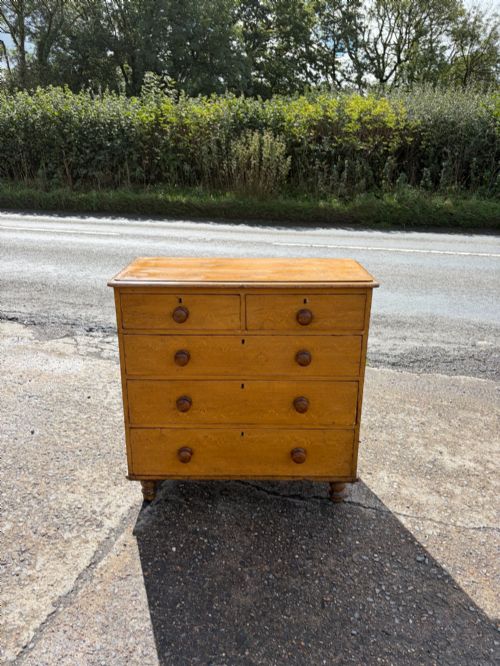
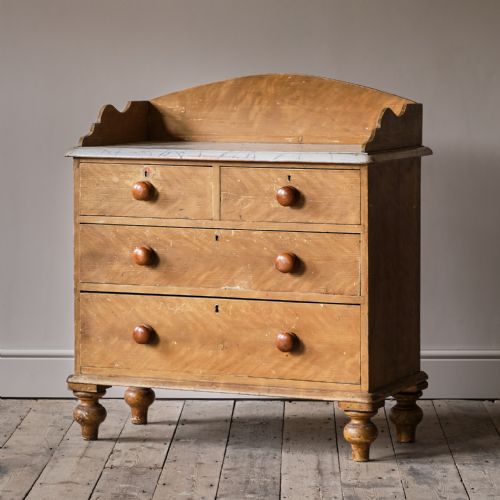
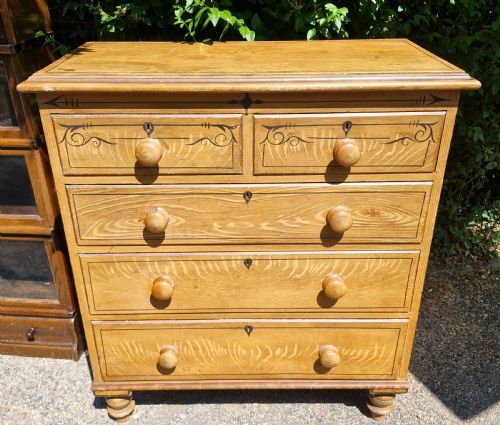
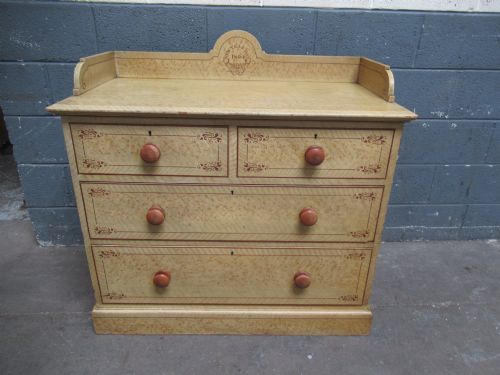
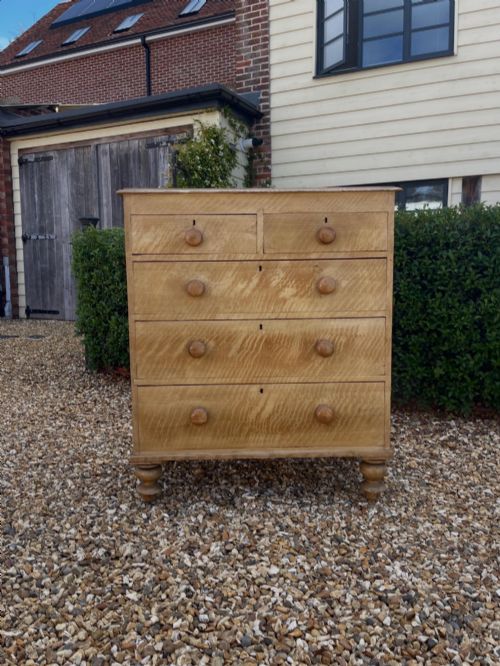
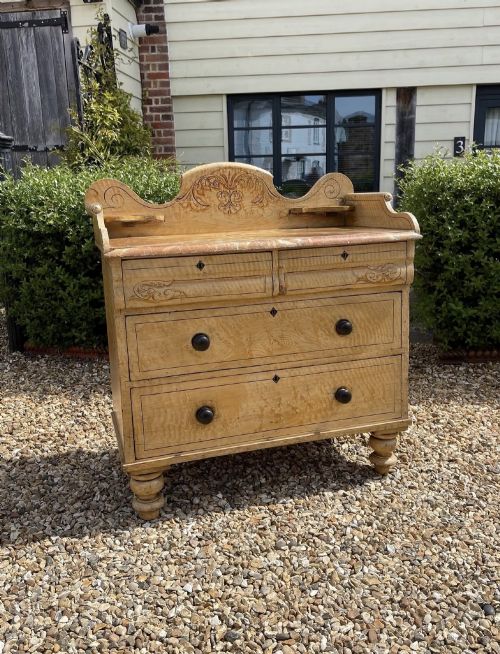
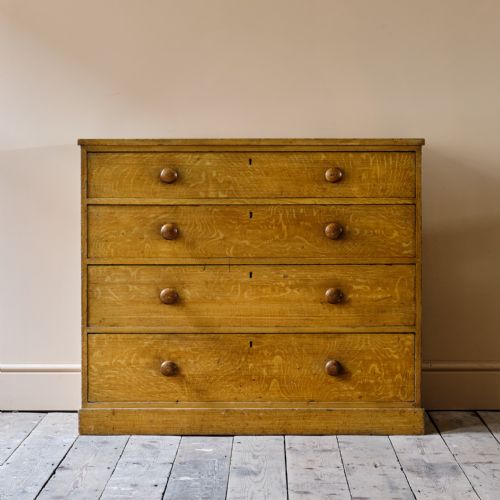


Grained Pine Chest Drawers
These grained pine chest drawers bring tactile warmth and rich surface pattern to a room, offering practical storage through traditional craftsmanship.
Grained Pine Chest Drawers
A grained pine chest drawers typically dates from the nineteenth century, including Victorian periods, and appears in forms such as standard chests, washstand chests, dressing chests, and miniature pieces. The surface finishes include original paint, scumble glaze, simulated painted wood, and faux bois, which imitate more costly timbers like oak or mahogany.
Makers utilised softwoods, pine, and wood, often incorporating ceramic, brass, or glass details alongside turned knobs and feet. The styles span Victorian country house, rustic farmhouse, and folk art, reflecting domestic utility and decorative vernacular traditions.
How they were made
Carpenters constructed these pieces primarily from pine and softwood, shaping drawers and frames to withstand daily household use. Surfaces received coats of paint or scumble glaze, dragged and patterned with combs or brushes to create simulated wood grain.
Makers applied hand painted details and protective finishes, sometimes pairing the wood with ceramic, brass, or glass handles. Turned feet and applied mouldings completed the construction before the pieces left the workshop.
Miniature chests whisper of master carpenters practicing their craft on a domestic scale.
What varies in quality
The sophistication of the graining or scumble work dictates much of the visual appeal, ranging from simple brushed effects to intricate faux bois patterns that closely mimic exotic hardwoods. Preservation of the original paint layer also influences desirability, as untouched surfaces retain the character of the period.
Structural integrity depends on the precision of the drawer joints and the retention of original elements such as turned knobs and feet. Pieces that maintain their early surface patination alongside sound softwood construction stand apart from those with later repainting.
The Grained Pine Chest Drawers Glossary
- Scumble
- A translucent glaze applied over a base coat of paint and manipulated with combs, rags, or brushes to imitate the grain of finer woods. This technique was widely used on utilitarian furniture to elevate its appearance.
- Faux bois
- French for false wood, this decorative painting technique replicates the natural grain, knots, and growth rings of timber onto a softwood base. It demonstrates considerable painterly skill.
- Washstand chest
- A specialised furniture form combining drawer storage with a surface designed for washing basins and ablutions. These often feature tiled or specially treated upper surfaces.
- Softwood
- Timber derived from conifers, such as pine, which is lighter and easier to work than hardwood. It served as the primary material for vernacular furniture throughout the nineteenth century.
Grained Pine Chest Drawers: Frequently Asked Questions
What is scumbled pine?
Scumbled pine refers to softwood furniture treated with a translucent glaze over a painted ground, manipulated to create decorative patterns that resemble wood grain.
This finish allowed modest pine furniture to emulate expensive hardwoods like oak or walnut during the Victorian era.
How do I care for original painted surfaces?
Original painted and scumbled surfaces require gentle dusting with a dry, soft cloth and protection from direct sunlight and moisture.
Avoid chemical cleaning products or abrasive polishes, as these can strip or damage the historic paint layers.
Are these chests suitable for daily bedroom use?
These nineteenth-century chests offer practical drawer storage and robust softwood construction well suited to contemporary domestic interiors.
Drawer interiors and runners function reliably when maintained, though antique mechanisms benefit from gentle handling.
How can I tell if the paint is original?
Original paint exhibits natural wear patterns, uniform ageing across the entire piece, and microscopic integration with the underlying pine substrate.
Inspect corners, recesses, and drawer edges for consistency and the absence of modern primer layers underneath.