



Graduated Open Shelving
Graduated open shelving offers stepped tiers that display books and objects with increasing depth from top to floor.
Graduated Open Shelving
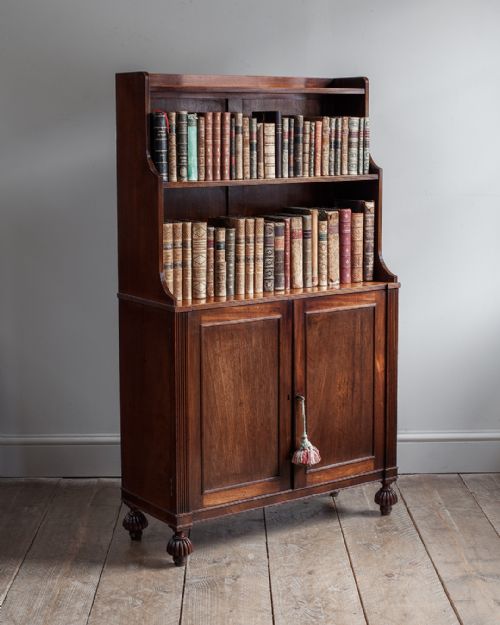
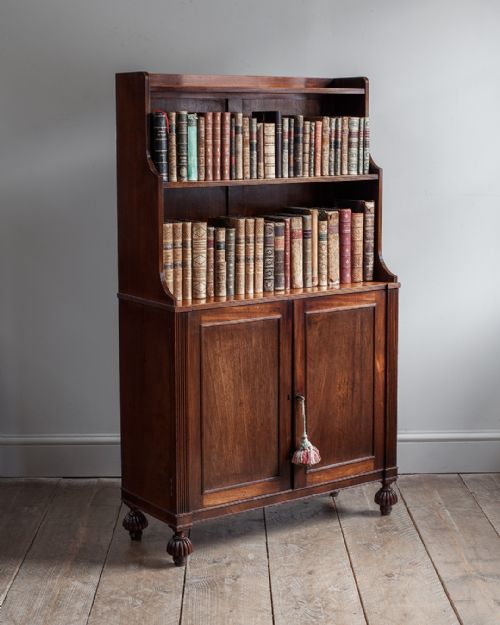
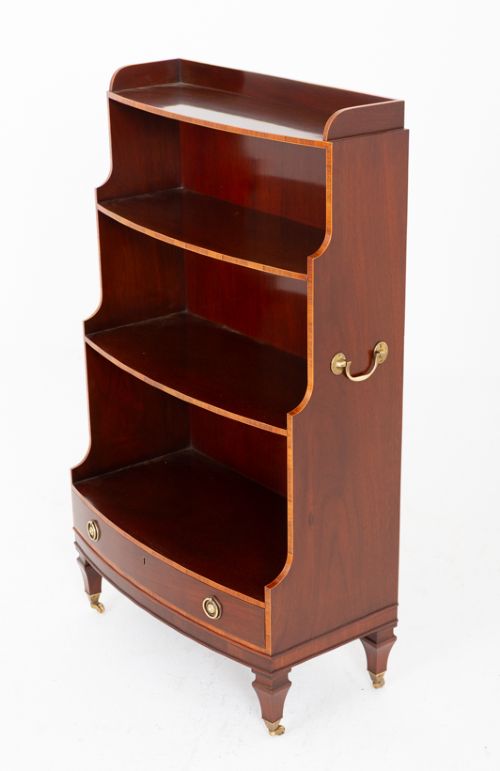
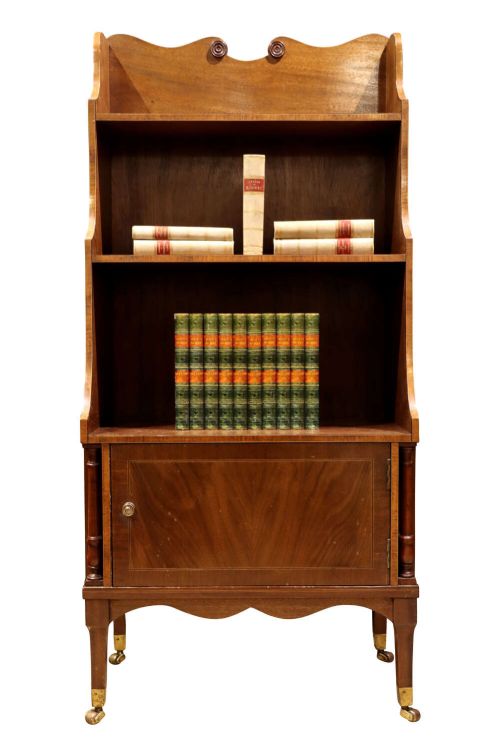
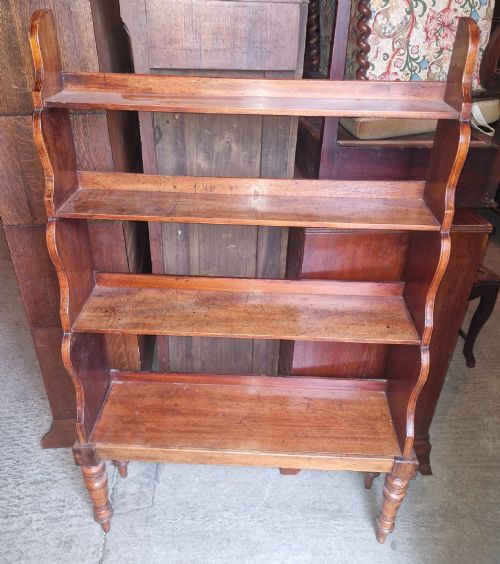
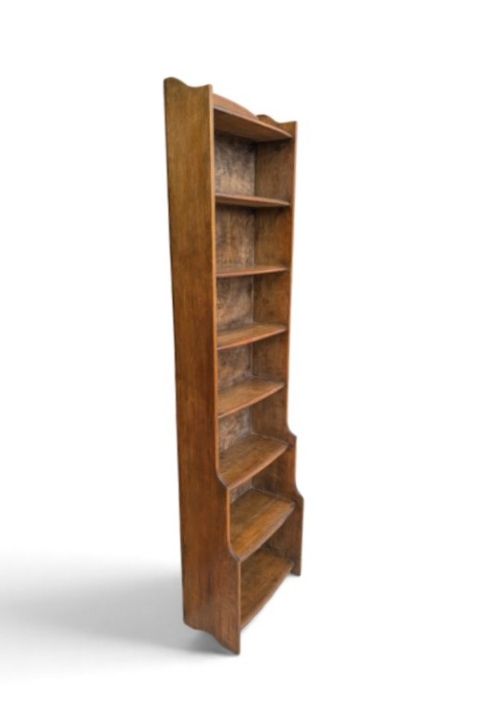
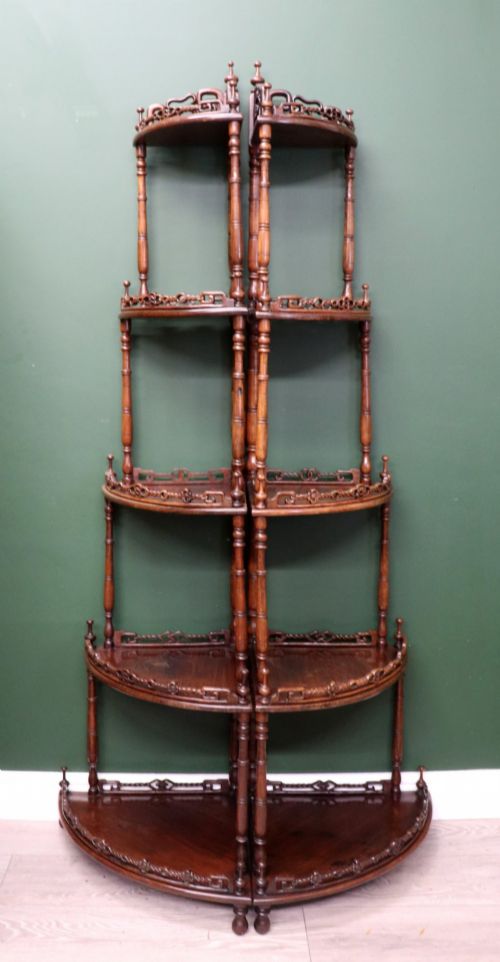
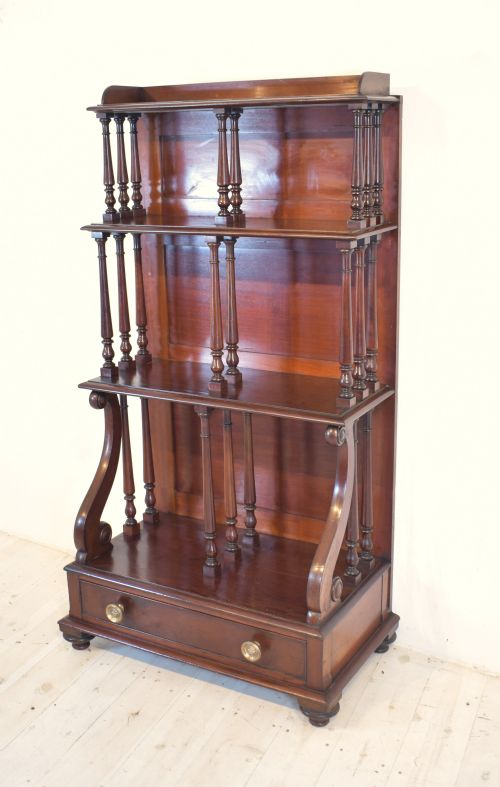
Graduated open shelving encompasses waterfall bookcases, étagères, and tiered whatnots designed to hold books and display items. These pieces feature horizontal shelves that step outward in size from top to bottom, creating a cascading silhouette.
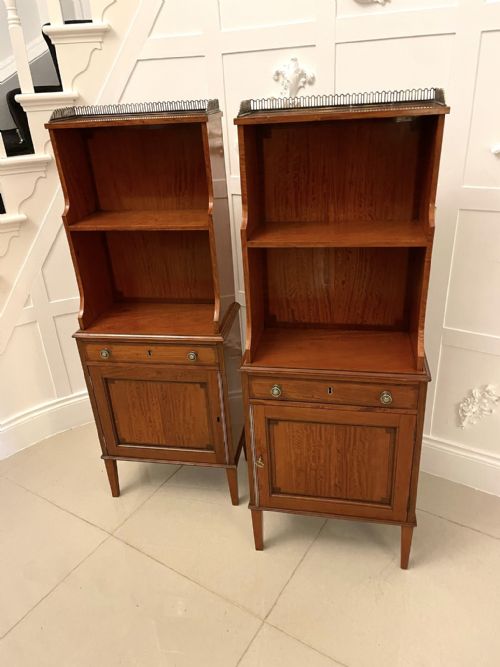
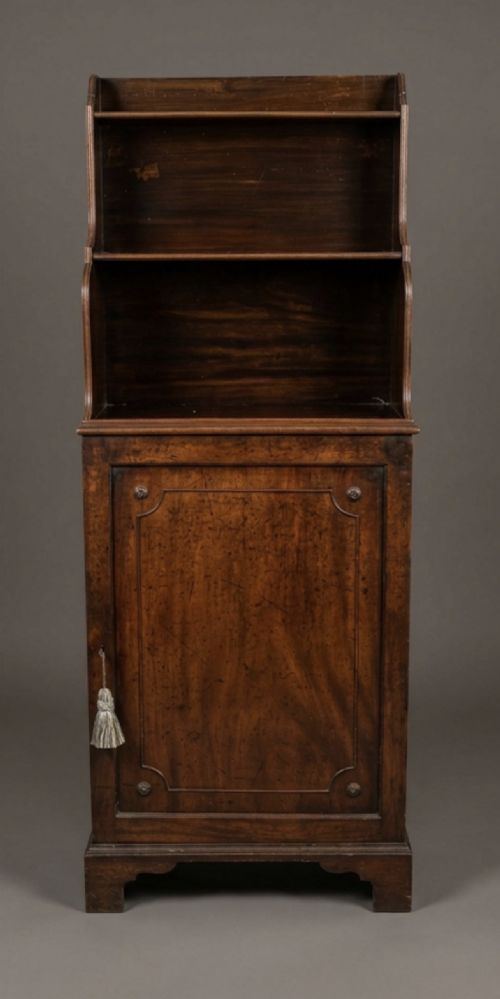
The version you meet most often on this page is the mahogany waterfall bookcase from the nineteenth century, frequently rendered in Regency or Victorian styles. Pieces range from small dwarf units to tall multi-tiered stands with cupboards or drawers below.
Makers also constructed these items in rosewood, oak, walnut, satinwood, and yew wood across Georgian, Edwardian, and later periods. Some examples incorporate corner designs, brass castors, or enclosed lower compartments beneath the open graduated tiers.
How they were made
Cabinetmakers constructed graduated open shelving primarily using timbers such as mahogany, rosewood, oak, and walnut, often selecting solid wood alongside figured veneers. Finer pieces incorporate decorative elements like satinwood, boxwood stringing, and contrast cross banding on the tiered uprights.
Structural joinery supported the stepped load of the shelves, while upright supports occasionally featured turned columns or hollow barley twist details. Workshops integrated brass castors on the feet of heavier cabinet forms to ease movement across floors.
Listings feature woods spanning mahogany, rosewood, oak, walnut, satinwood, and yew wood across the Georgian to Edwardian periods.
What varies in quality
Quality in graduated open shelving rests upon the selection of timber and the crispness of the cabinetmaker's joinery. Superior examples display carefully matched grain patterns across the graduated tiers and refined decorative stringing along the shelf edges.
Gillows
The Graduated Open Shelving Glossary
- Waterfall bookcase
- A set of open shelves that step outward in depth from the top to the bottom tier. This form gained popularity during the Regency period.
- Whatnot
- A multi-tiered piece of freestanding furniture used for displaying ornaments and books. Victorian examples frequently feature three to six open tiers.
- Cross banding
- A narrow strip of veneer applied across the grain along the edge of a shelf or top. This technique frames the primary timber of the piece.
- Stringing
- A thin inlay line of contrasting wood inserted into the surface of furniture. It creates geometric borders on cabinet panels and shelf edges.
- Etagere
- A set of open display shelves supported by columns or slender uprights. These pieces function as decorative storage units in reception rooms.
Graduated Open Shelving: Frequently Asked Questions
What is a waterfall bookcase?
A waterfall bookcase is an open shelving unit where each tier steps forward and outward in depth from the top shelf to the bottom. This cascading design provides a stable base while creating a distinctive stepped silhouette.
Craftsmen built these primarily in mahogany and rosewood during the Regency and Victorian eras for displaying books and decorative objects.
Where were these shelves used?
These tiered units served principally in parlours, libraries, and drawing rooms as accessible display space for prized volumes and ornaments. Dwarf versions sat beneath windows or against walls without obstructing light.
Examples with integrated lower cupboards provided concealed storage for papers alongside the open graduated display shelves above.
How do I date a piece?
Dating relies on timber selection, structural style, and decorative details like inlay or leg hardware. Regency and Georgian pieces typically feature solid mahogany with delicate stringing.
Edwardian and later iterations often utilise oak, satinwood, or walnut while retaining the signature graduated stepped profile of earlier generations.
Can these hold heavy books?
Solid hardwood tiers handle substantial volumes, though graduated shelves taper to smaller depths at the top. The widest lower shelves support heavier folios and reference books securely.
Freestanding models distribute weight down through sturdy side panels or turned supports resting directly upon the floor.