



Gouache on Paper Art
Gouache on paper art brings together opaque pigments and delicate supports to create vivid, light-filled works ranging from botanical studies to modernist abstractions.
Gouache on Paper Art
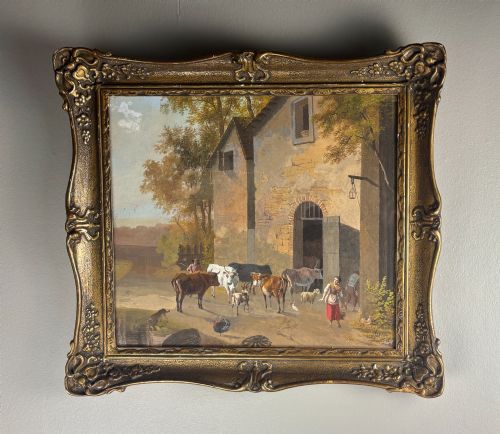
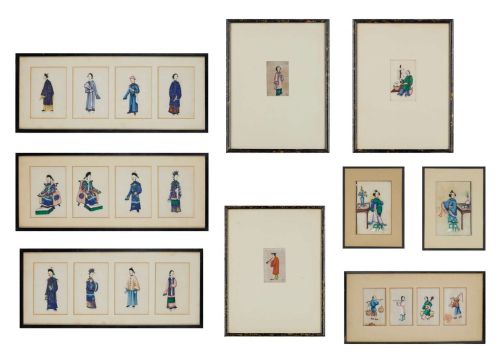
When you search for gouache on paper art, you encounter a wide spectrum of visual expressions spanning multiple centuries and global origins. These pieces include framed drawings, portraits, landscapes, and intricate miniatures executed on various paper supports.
Forms range from intimate book-sized illustrations to large framed wall art. Each object highlights the versatility of an opaque medium that bridges the fluidity of watercolour and the solidity of oil paint.
Materials and working methods
Artists utilise gouache, an opaque water-based medium composed of ground pigments bound with gum, often combined with pencil, ink, or watercolour washes. This allows for sharp linear details alongside velvety, flat expanses of colour.
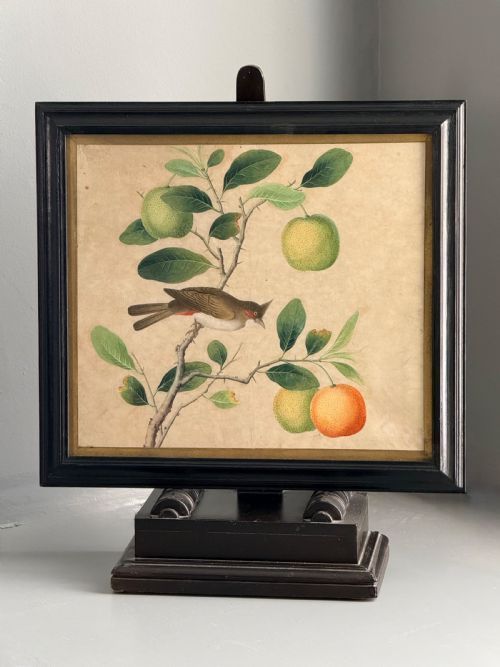
The fragile supports vary from standard wove paper and buff paper to delicate pith paper, sometimes historically termed rice paper. Works are frequently framed behind glass with wooden surrounds to protect the paper substrate from atmospheric moisture and handling.
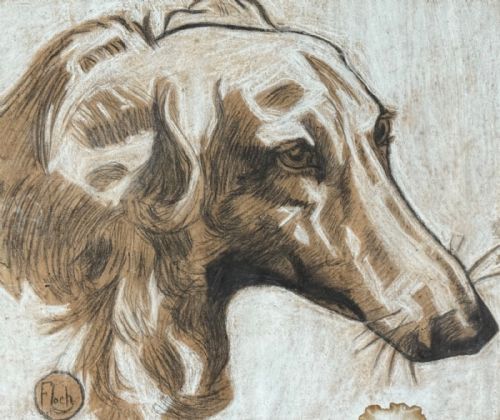
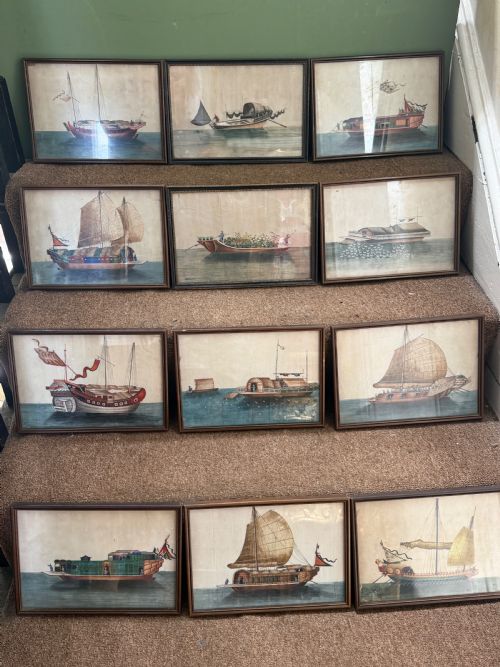
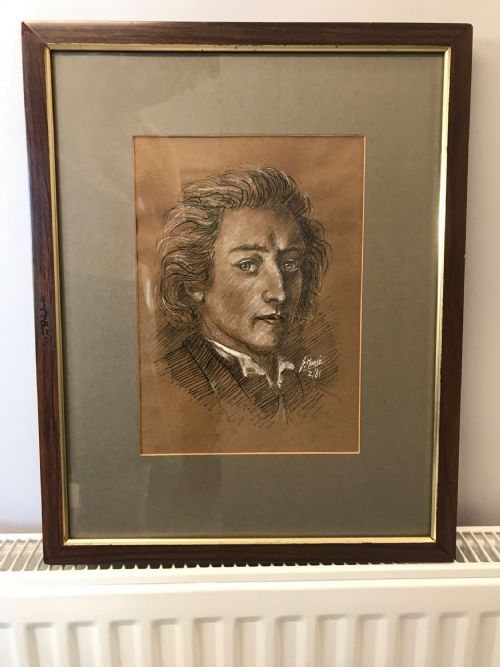
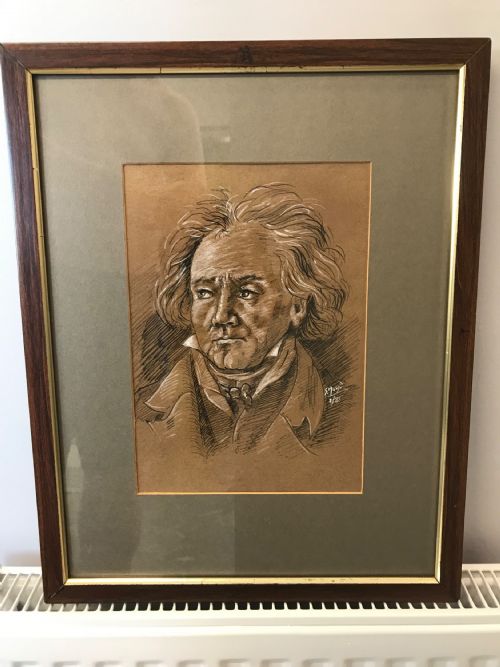
A Borzoi dog poses quietly in pencil and gouache, waiting patiently beside centuries of sailing ships and classical composers.
Distinctions in execution and condition
Quality in these works rests upon the surety of the draughtsmanship and the vibrancy of the remaining pigment. Superior examples maintain their saturation without flaking or fading from exposure to light.
The refinement of detail, particularly in figural or botanical subjects, separates hurried decorative output from masterly hand-painted execution. Preservation of the original paper support and framing assembly also influences the overall integrity of the piece.
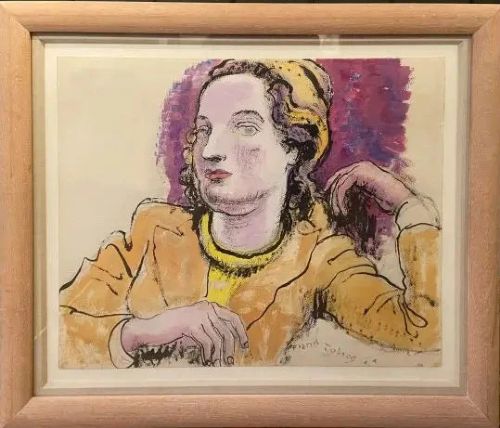
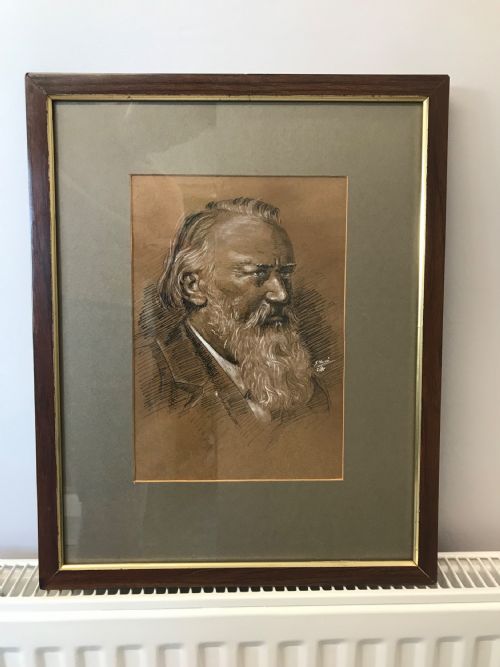
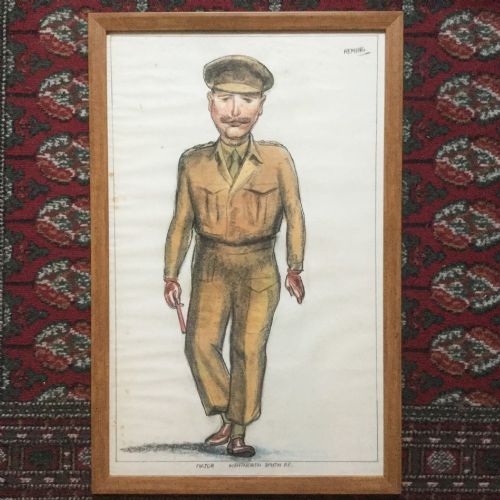
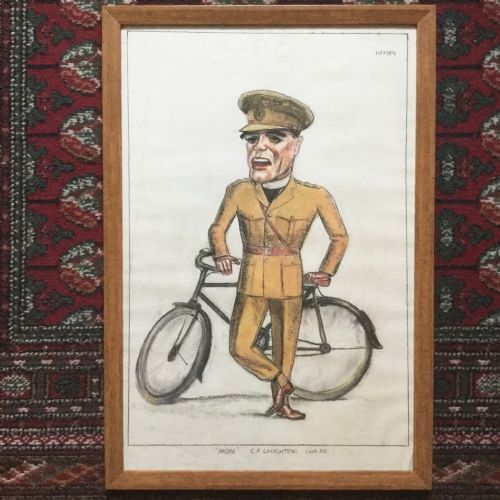
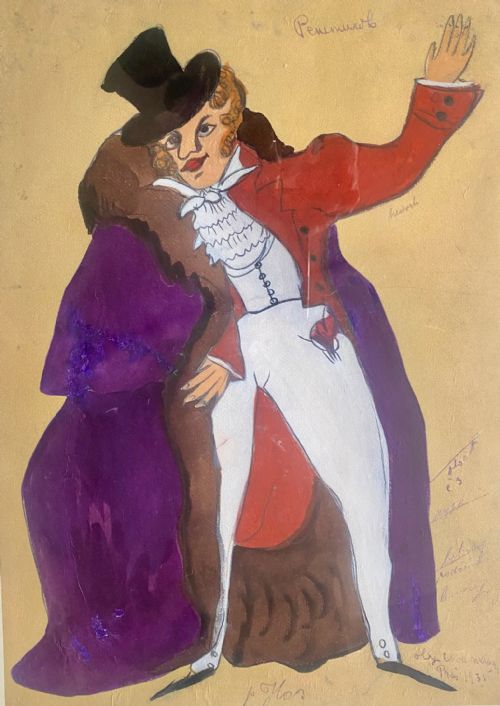
Karel Dujardin·Frank Dobson·Frédéric Chopin·Ludwig van Beethoven·Johannes Brahms·Alice Anne Renshaw·Kershaw Schofield·Montagu Barstow·Dame Laura Knight·Reginald Mills
The Gouache on Paper Art Glossary
- Gouache
- An opaque water-based paint that dries to a matte finish. It contains white pigment mixed with ground colours to achieve opacity.
- Pith paper
- A delicate organic material sliced from the stem of the Tetrapanax papyrifer plant. It possesses a velvety texture historically used for Chinese export paintings.
- Chinese Export
- Artworks produced in China specifically for Western markets during the Qing dynasty and later periods. They frequently depict local flora, fauna, and maritime scenes.
- Mid-Century Modern
- A stylistic movement spanning the middle decades of the twentieth century. It prioritises abstracted forms, vibrant palettes, and dynamic compositions.
- Miniature
- A small-scale painting executed with immense precision. These works are often found in Persian and Indian traditions on paper or other portable surfaces.
Gouache on Paper Art: Frequently Asked Questions
How should I frame gouache art?
Framing requires acid-free mount boards and glass to prevent direct contact between the fragile paper surface and the glazing. Keeping the work away from direct sunlight protects the water-based pigments from fading.
Traditional wooden frames often complement the period of the piece, but conservation-grade materials are essential for long-term preservation.
What is pith paper?
Pith paper is a spongy material derived from the pith of a specific Asian shrub rather than pressed wood pulp. It absorbs gouache pigments deeply, giving the colours a unique luminous velvety depth.
Because the material is exceptionally delicate, these paintings are almost invariably found preserved beneath glass.
How do I identify Chinese export works?
These pieces typically depict traditional junks, maritime trade scenes, figural studies, or botanical specimens rendered in bright gouache. They often date from the nineteenth-century Qing dynasty and utilise pith paper supports.
Their distinct aesthetic blends traditional Eastern subject matter with formats tailored for European collectors.
Is gouache the same as watercolour?
While both use water-soluble binders, watercolour is translucent and relies on the white of the paper for highlights. Gouache includes an added white pigment that makes the paint completely opaque.
This opacity allows artists to paint light colours over dark ones, creating solid blocks of tone.