





Gothic Umbrella Holder
A gothic umbrella holder brings stern nineteenth-century architectural drama to a hallway, keeping wet sticks neatly organised in heavy cast iron, oak, or brass.
Gothic Umbrella Holder
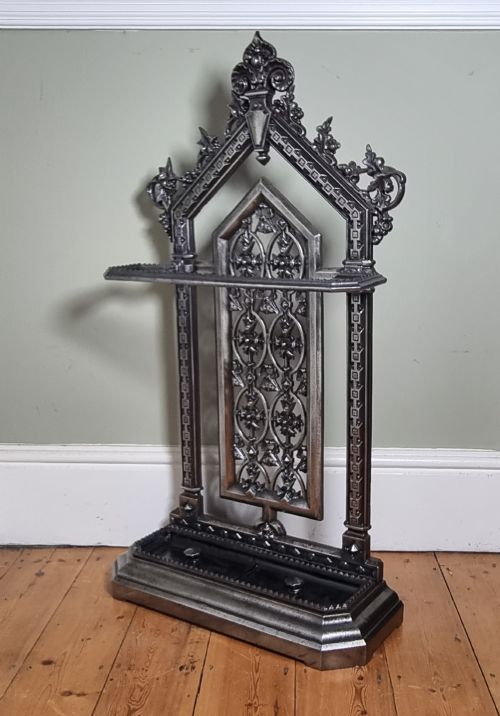
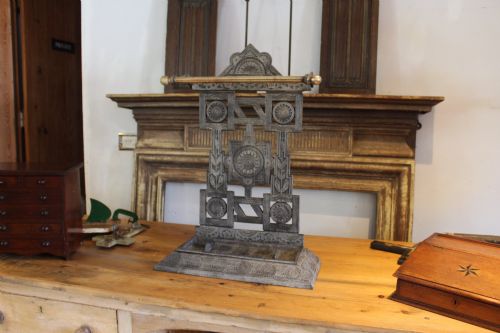
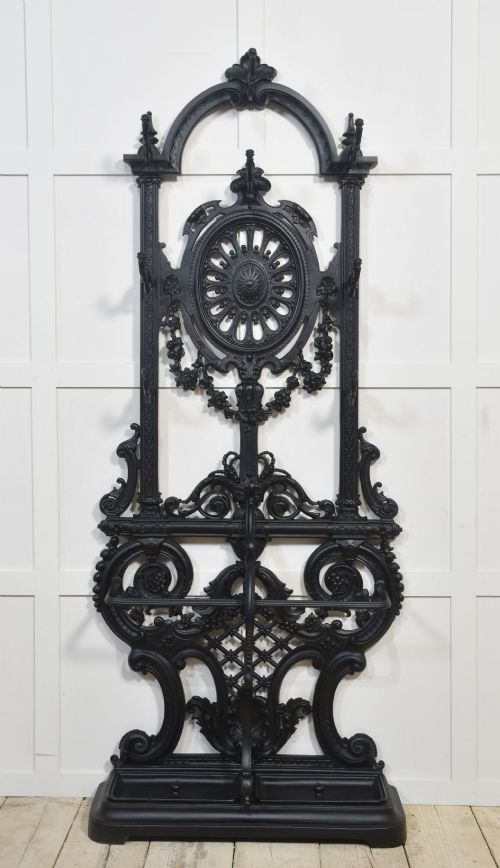
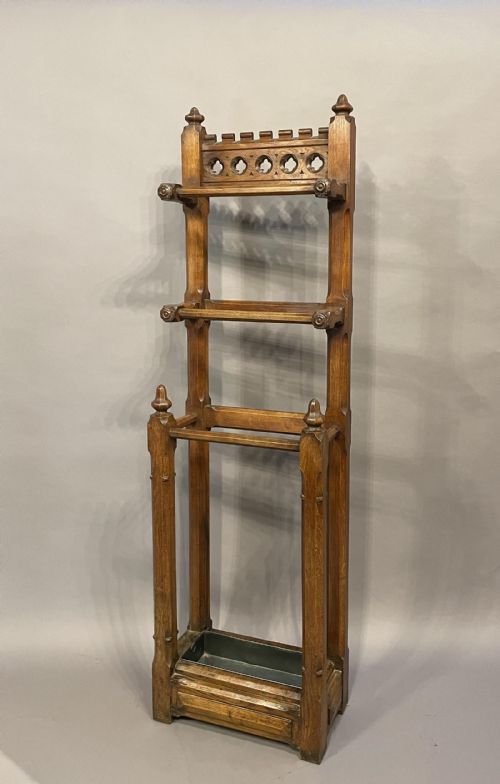
A gothic umbrella holder is primarily found as a cast iron stick stand or an oak hall stand dating from the Victorian era. These pieces served a utilitarian purpose in nineteenth-century hallways, designed to catch rainwater from walking poles, umbrellas, and parasols.
The selections on this page span the mid-nineteenth century through to the early twentieth century, incorporating gothic revival, aesthetic movement, and arts and crafts influences. You will frequently encounter heavy cast iron frameworks alongside oak hall stands featuring carved architectural details.
How they were made
Foundries utilised sand-casting techniques to produce intricate cast iron frames, often incorporating pierced gothic tracery, drip pans, and designated ring partitions for individual sticks. Larger models emerged from notable ironworks, while decorative elements like copper and brass fixtures were applied for contrast.
Woodworking construction relied on solid oak and carved panels, frequently integrating hooks for hats and coats alongside the central umbrella rack. Zinc or iron liners were fitted beneath the framework to catch water and protect the wooden or tiled flooring below.
Some nineteenth-century visitors dropped their walking sticks into gothic iron rings while admiring William Wallace cast in iron.
What varies in quality
Quality rests in the crispness of the iron casting and the architectural ambition of the design, distinguishing standard commercial production from numbered foundry works. Pieces associated with specific makers or prominent ironworks display sharper relief and more complex geometric or figural ornament.
In wooden examples, the depth of the carving and the integrity of the timber define the piece, particularly where figural elements or linenfold panels are present. The retention of original drip trays also influences the overall integrity of the stand.
Thomas Jeckyll·Coalbrookdale·Falkirk Foundry
The Gothic Umbrella Holder Glossary
- Gothic Revival
- An architectural and decorative style that revived medieval forms, pointed arches, and heavy structural motifs during the nineteenth century. It heavily influenced hall furniture and metalwork.
- Cast Iron
- An iron-carbon alloy poured into moulds to create rigid, highly detailed decorative frames. It provided the ideal heavy base for nineteenth-century umbrella stands.
- Drip Pan
- A removable metal tray placed at the base of a stick stand to catch water from wet umbrellas. It protected the floor and prevented corrosion of the main frame.
- Hall Stand
- A larger piece of hallway furniture combining an umbrella rack with coat hooks, a mirror, and glove boxes. Many incorporate gothic or jacobean revival styling.
- Aesthetic Movement
- A late nineteenth-century design movement that emphasised visual beauty over narrative or moral function. It produced refined metalwork and stylised decorative objects.
Gothic Umbrella Holder: Frequently Asked Questions
How do I clean cast iron?
Cast iron surfaces require gentle dusting and occasional waxing to preserve the finish without damaging the metal.
Moisture should be kept away from untreated areas to prevent surface rust from forming on older frames.
Are original drip pans common?
Original metal drip pans are sometimes retained at the base, though many have been replaced over the decades.
Their presence adds authenticity to nineteenth-century cast iron and oak stands.
How do I date a stand?
Dating relies on registration marks, foundry stamps, stylistic cues, and the specific type of cast iron or oak construction.
Victorian gothic pieces frequently display patent dates or maker names cast directly into the metalwork.
Where should I place it?
These tall stands suit entrance halls and porches where their heavy frame and architectural presence can be appreciated.
Adequate floor clearance is necessary to accommodate both the stand and the umbrellas it holds.