


Gothic Tracery Wood Carving
Gothic tracery wood carving brings medieval ecclesiastical motifs into domestic furniture and architectural salvage, offering tactile depth and rich historical character for the home.
Gothic Tracery Wood Carving
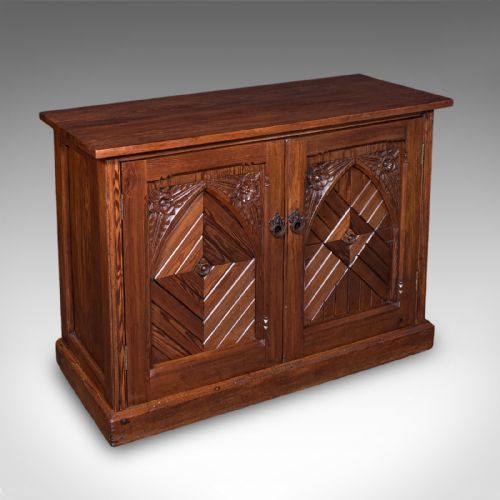
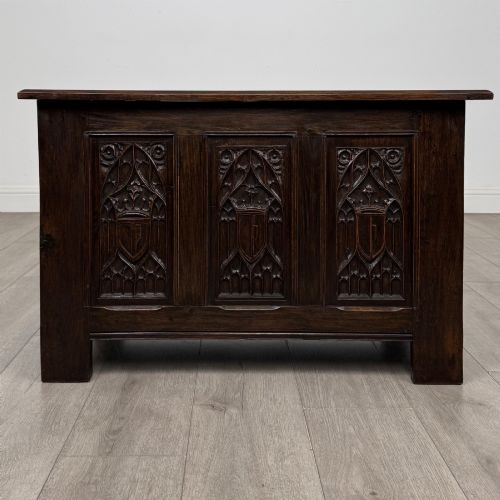
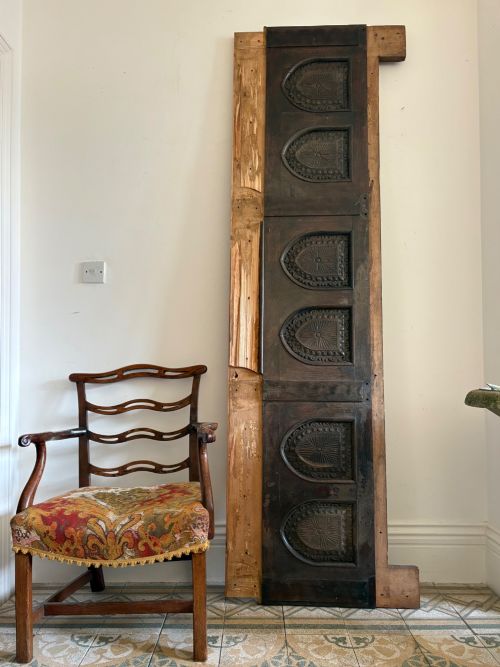
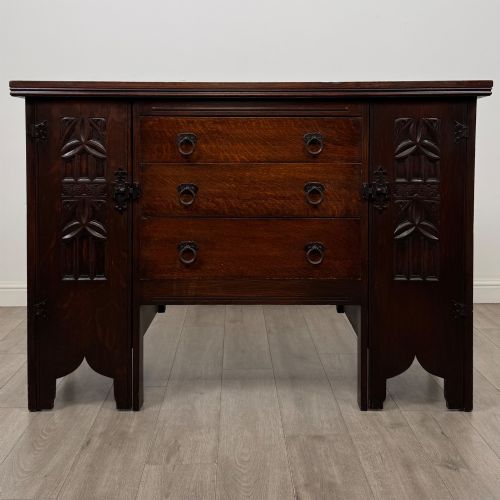
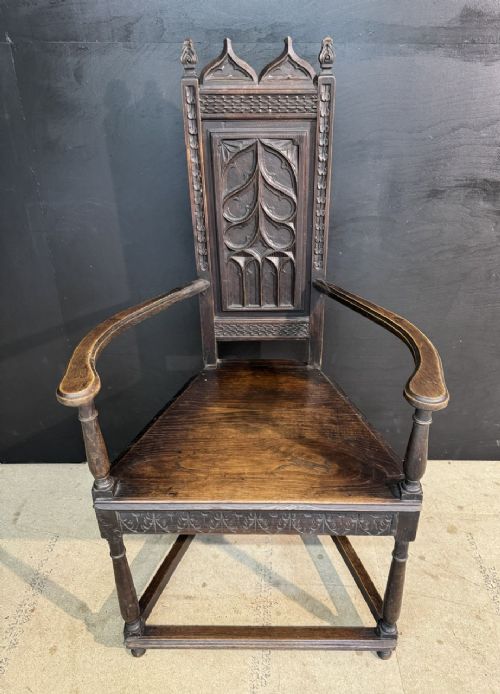
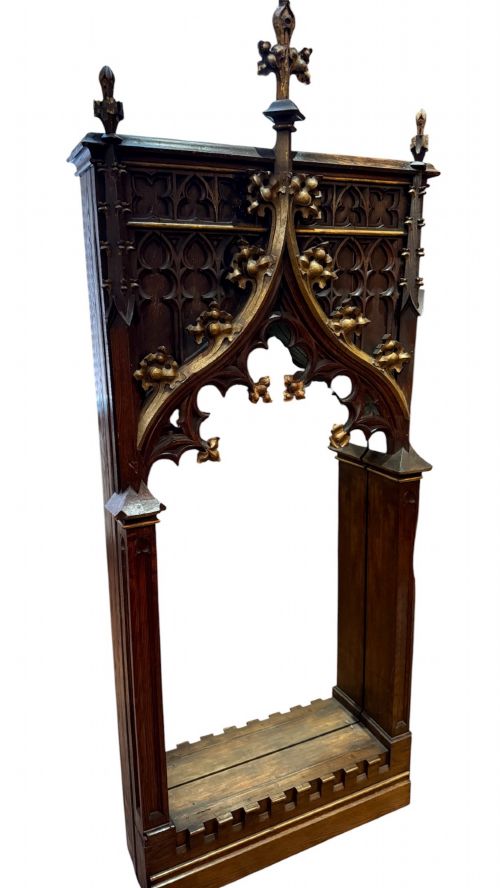
Gothic tracery wood carving encompasses architectural panels, chests, seating, and larger case pieces that display pointed arches, cusps, and geometric stone-inspired stonework rendered in timber. You encounter these primarily on nineteenth-century oak panels, blanket boxes, and sideboards, alongside earlier seventeenth-century Italian walnut cassone chests and pre-sixteenth-century architectural fragments.
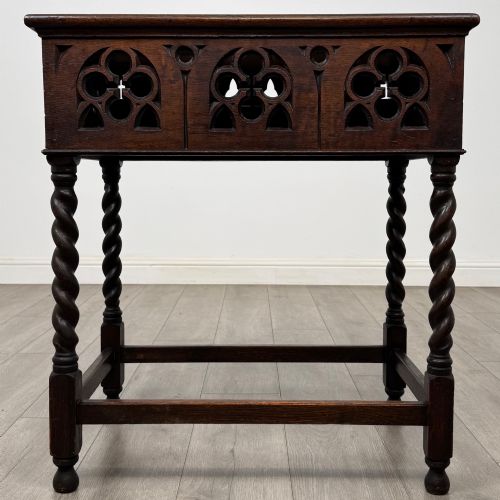
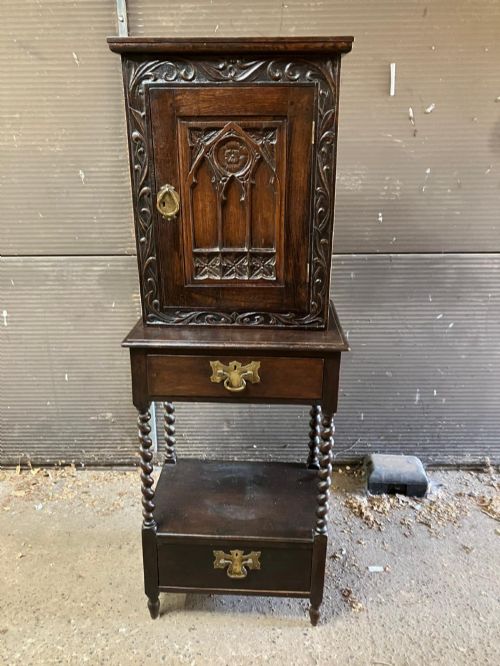
The aesthetic bridges several eras, appearing on Victorian Gothic Revival items, Edwardian oak side tables, and eighteenth-century French and Continental chests. Pieces range from large ecclesiastical church tracery panels to smaller deed boxes and bookcases, demonstrating how architectural ornamentation adapted to domestic utility over centuries.
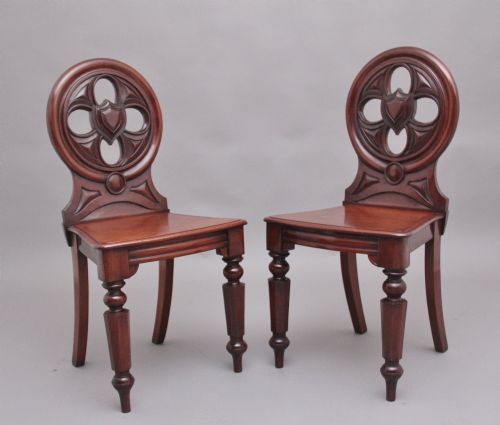
Makers and workshops across Britain and continental Europe utilised these window-inspired patterns on everything from simple hall benches to imposing breakfront bookcases. The resulting objects provide a direct link to medieval design principles mediated through later revival movements.
Materials and Technique
Oak dominates the surviving examples, supported by walnut, chestnut, mahogany, and pine, often worked by hand to achieve deep relief and sharp architectural lines. Carvers cut and pierced the timber to mimic stone window tracery, applying chisels and gouges to create cusped arches and geometrical lattices.
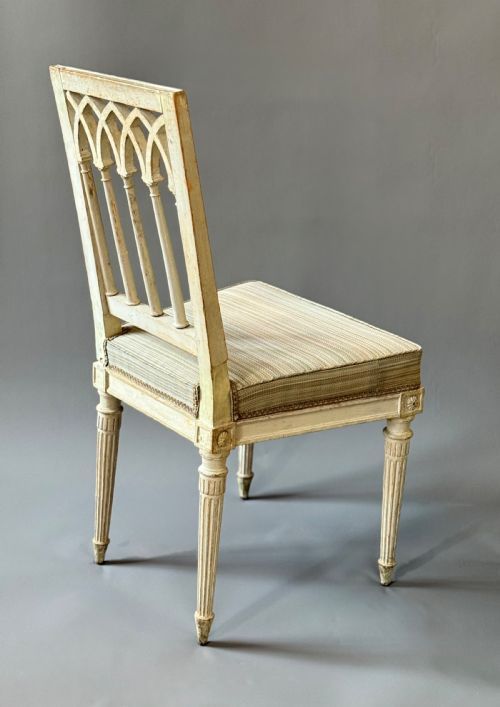
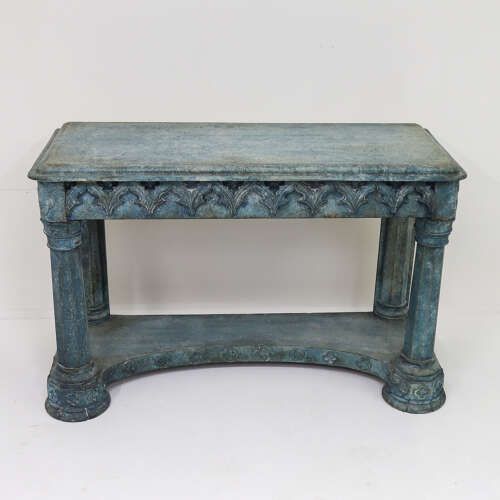
Surface treatments vary from polished natural timber to painted wood, grey-painted finishes, and historic gilding on pieces like Italian walnut cassoni. Joinery methods span traditional panel construction for chests and architectural salvage to turned components like barley twist legs on side tables.
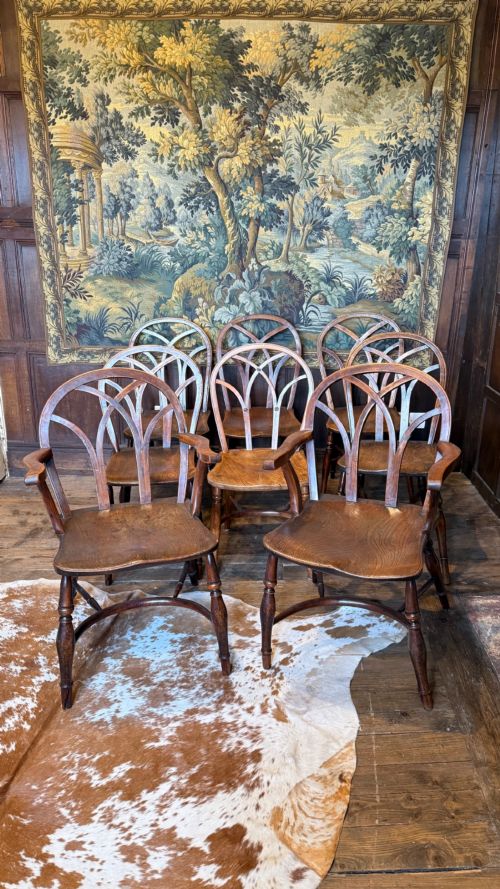
Object forms range from architectural salvage and church panels to blanket boxes, sideboards, and dining chairs.
Judging Quality
Quality rests on the crispness and depth of the carving, where master carvers achieved clean intersections in the geometric tracery rather than soft or shallow incisions. The choice of timber also dictates the standard, with dense, well-figured oak and figured walnut displaying superior grain and stability over softer pines.
The integration of the carving into the structural form defines the best pieces, ensuring that panels and mouldings complement the overall architectural composition of a cabinet or chair. Age and authenticity elevate certain works, distinguishing medieval fragments and seventeenth-century chests from nineteenth-century revival interpretations.
The Gothic Tracery Wood Carving Glossary
- Tracery
- The stonework ornament of windows, translated here into carved woodwork to form geometric patterns and pointed arches.
- Cassone
- A rich chest or coffer used in Italy for storing valuable household goods and often decorated with elaborate carvings.
- Wainscot
- A type of heavy wooden chair, typically made of oak, constructed with panelled backs and solid joinery.
- Ecclesiastical
- Relating to the Christian church or clergy, describing items salvaged from or inspired by religious buildings.
- Revival
- A stylistic movement where designers recreated historical aesthetics, particularly medieval and Gothic forms during the nineteenth century.
Gothic Tracery Wood Carving: Frequently Asked Questions
What is gothic tracery carving?
It is ornamental stonework geometry translated into timber, featuring pointed arches and intersecting ribs.
Craftsmen applied these architectural motifs to domestic furniture, church panels, and storage chests across several centuries.
How do I style these pieces?
These wooden carvings pair well with minimalist modern interiors as focal points that add texture and history.
Larger items like oak cabinets or benches anchor a room, while panels function effectively as wall art.
Are these pieces purely decorative?
While many architectural panels and fragments served a visual or structural purpose in buildings, most listed items are functional.
Chests, sideboards, chairs, and tables combine intricate tracery work with everyday storage and seating utility.
How do I date wood carvings?
Dating relies on timber species, tool marks, joinery techniques, and the specific style of the Gothic revival period involved.
Earlier items show hand-hewn construction and medieval influences, whereas nineteenth-century pieces often reflect Victorian interpretation.