

Gothic Table Lamp
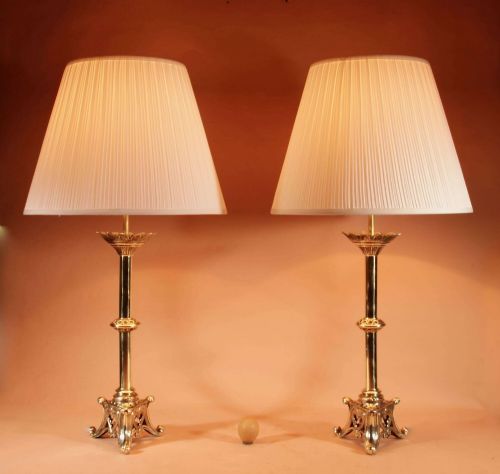
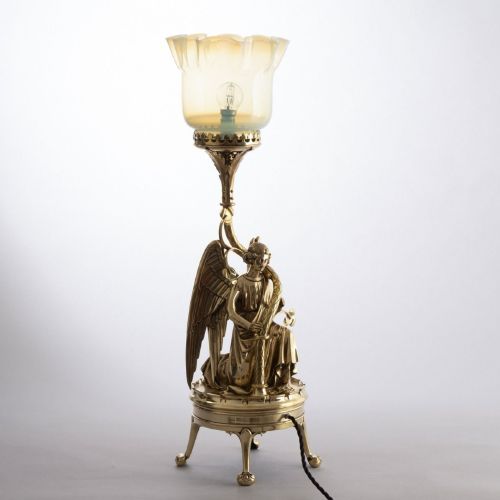
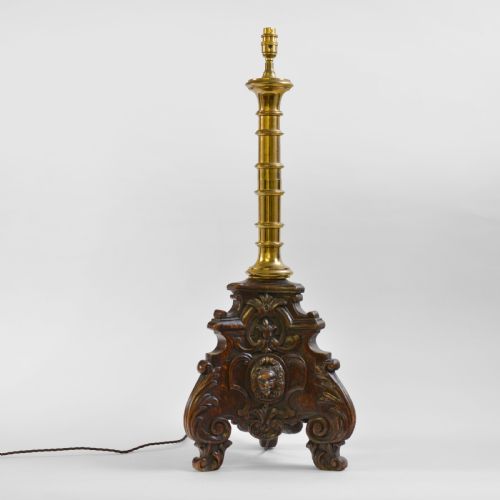
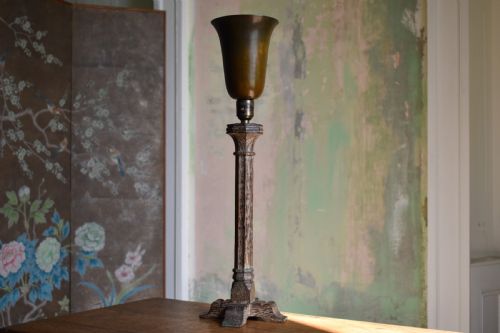
A gothic table lamp brings architectural weight and ecclesiastical detail into a room, often taking the form of cast brass or carved oak.
Gothic Table Lamp
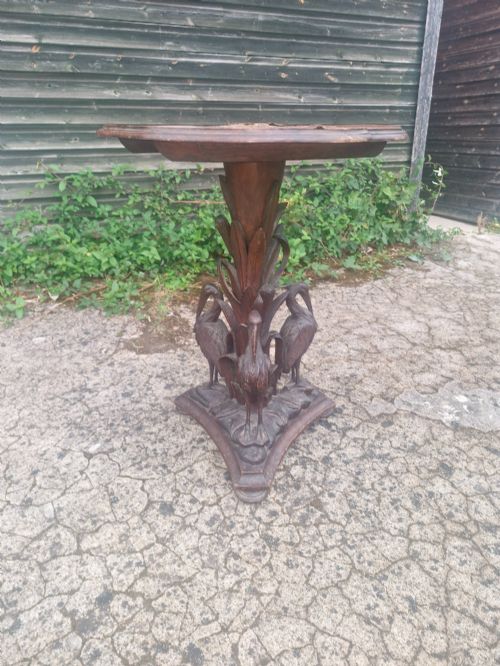
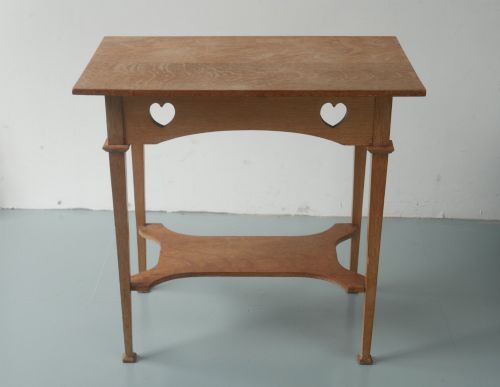
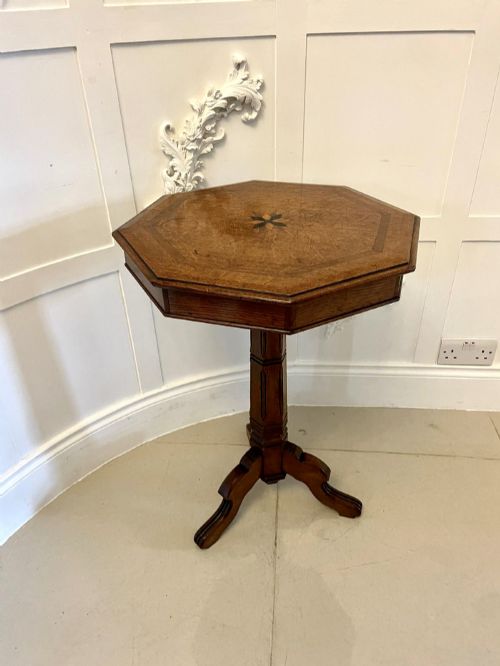
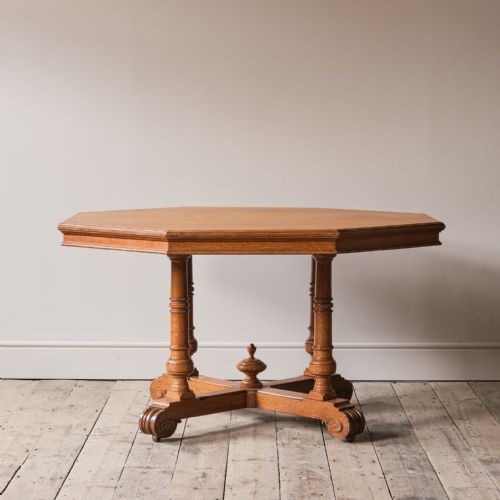
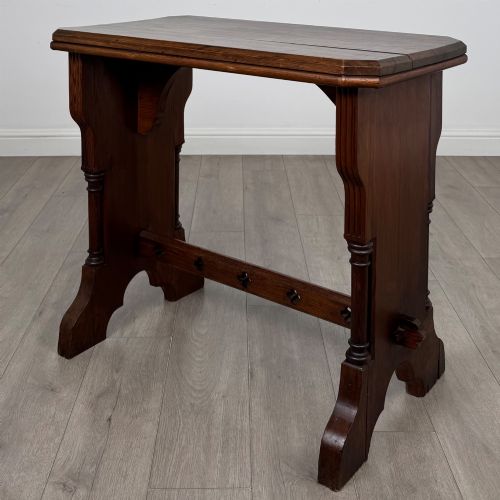
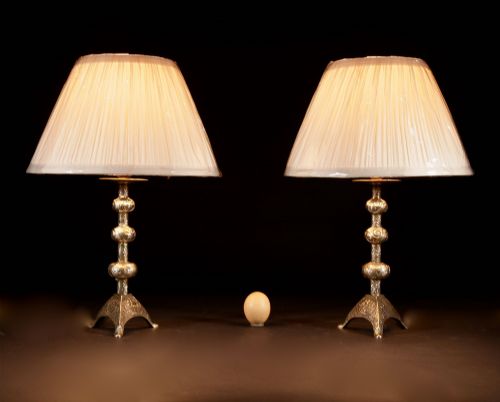
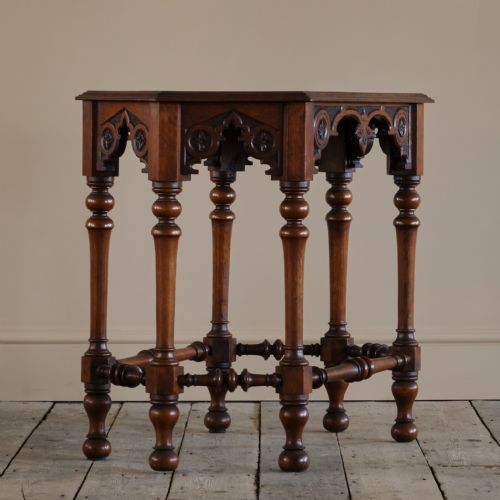
The form often manifests as adapted church candlesticks or dedicated lamp tables designed to hold a light source. Oak side tables and occasional tables frequently share this aesthetic space, carrying the heavy timber construction characteristic of the nineteenth century.
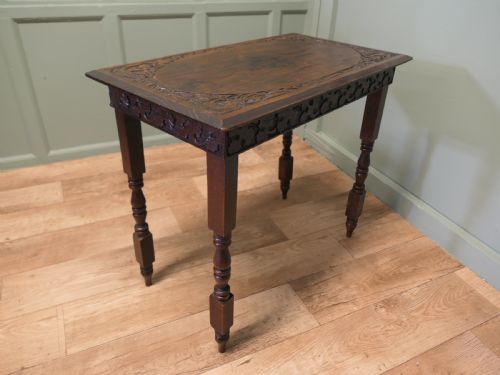
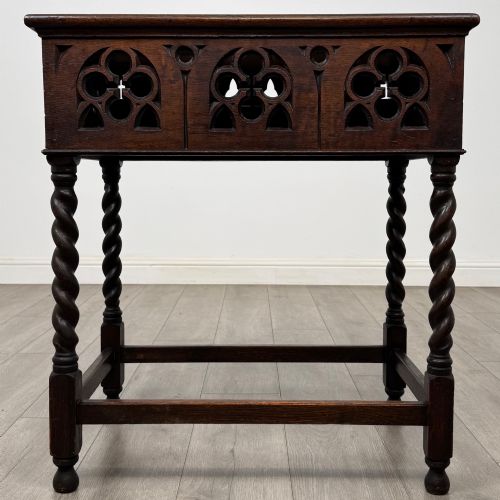
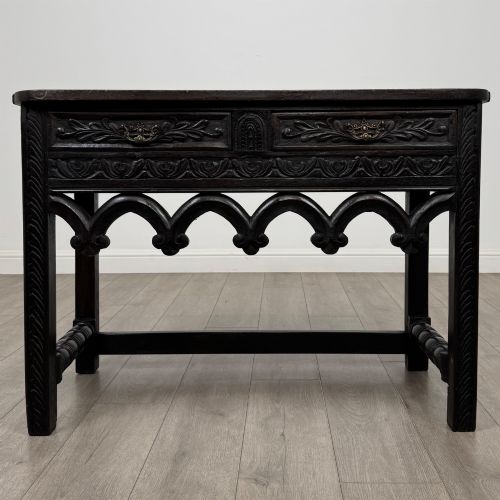
Makers and workshops across England, France, and Germany adapted ecclesiastical metalwork and heavy wood carving for domestic interiors. Pieces range from straightforward brass altar sticks to elaborate oak lamp tables with barley twist legs or Celtic carvings.
Construction and Materials
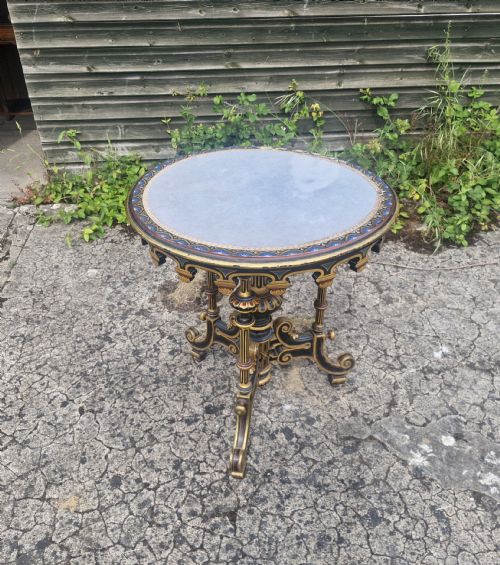
Makers utilised heavy timbers such as oak, elm, and mahogany, often employing hand carving to produce intricate tracery, panels, and moulded edges. Wood pieces occasionally show painted finishes, ebonising, or limed treatments applied to the surface.
Metal components rely on cast brass and silver plating, sometimes combined with vaseline glass to form lamp bodies. Construction methods involve traditional joinery for the wooden tables and robust casting techniques for the heavy brass altar sticks and candelstands.
Some heavy brass candlesticks spent centuries lighting hymns before finally retiring to hold an electric bulb.
Evaluating Quality
Quality rests in the crispness of the hand carving on the timber and the weight and detail of the cast brass elements. Pieces with sharp architectural moulding and substantial metal gauge stand apart from simpler domestic adaptations.
The integrity of the timber and the originality of the conversion from candlestick to lamp dictate the standing of an item. Superior examples maintain cohesive styling, whether in the Gothic Revival, Arts and Crafts, or Romanesque manner.
Baillie Scott
The Gothic Table Lamp Glossary
- Gothic Revival
- An architectural and decorative style drawing inspiration from medieval forms, pointed arches, and ecclesiastical motifs. This aesthetic dominates the nineteenth-century examples found in this category.
- Altar Candlestick
- A heavy metal candlestick originally designed for use on a church altar, frequently converted into a table lamp. These items provide substantial brass weight and ecclesiastical height.
- Barley Twist
- A type of turned wooden leg resembling a spiral or rope. This decorative turning appears frequently on nineteenth-century oak lamp tables.
- Occasional Table
- A small, movable table intended for specific, minor uses within a room. In this context, they often serve to support a lamp.
- Vaseline glass
- A type of glass coloured with uranium oxide, producing a distinctive yellow-green hue. It occurs alongside brass in Victorian lighting.
Gothic Table Lamp: Frequently Asked Questions
What defines a gothic table lamp?
A gothic table lamp incorporates medieval architectural elements, pointed arches, or heavy timber construction inspired by ecclesiastical design.
Materials typically include cast brass or carved oak, often originating from nineteenth-century revival periods or adapted church metalwork.
How do I date a wooden lamp table?
Dating relies on timber selection, tool marks, and stylistic indicators such as Gothic Revival carving or barley twist legs.
Nineteenth-century pieces commonly utilise solid oak or elm, while later Edwardian and 1920s examples show distinct finish variations like limed oak.
Were these always electric lamps?
Many brass examples began life as altar candlesticks or ecclesiastical lighting before receiving later electrical conversions.
Wooden forms often started as side tables or occasional tables adapted subsequently to hold a lamp.
Where should I place a heavy oak lamp table?
These robust tables suit studies, hallways, or living rooms where their dark wood and substantial presence anchor the space.
Pair them with traditional seating to complement the architectural character of the timber.