

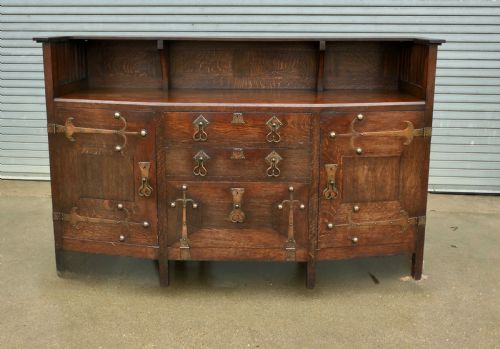


Gothic Style Dresser
These gothic style dresser pieces bring heavy timber, pointed arches, and medieval weight straight into your dining room or hallway.
Gothic Style Dresser
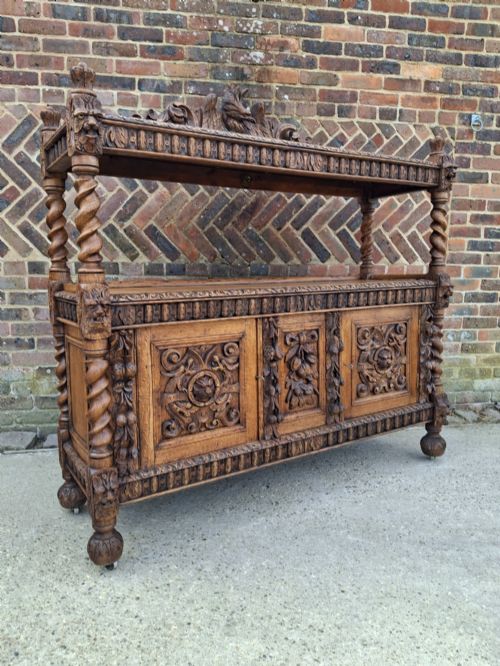
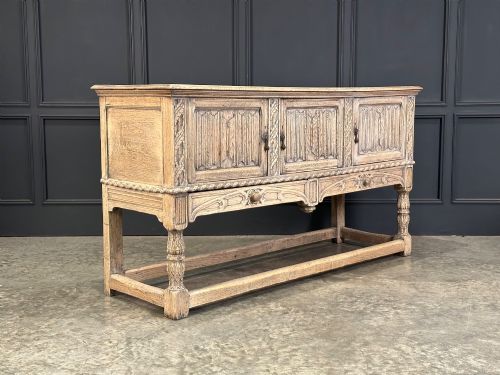
A gothic style dresser draws on medieval architecture, bringing pointed arches, linenfold panels, and heavy timber construction into domestic spaces. These pieces emerge chiefly across the nineteenth and twentieth centuries, spanning the Victorian and Edwardian eras down to the nineteen-thirties.
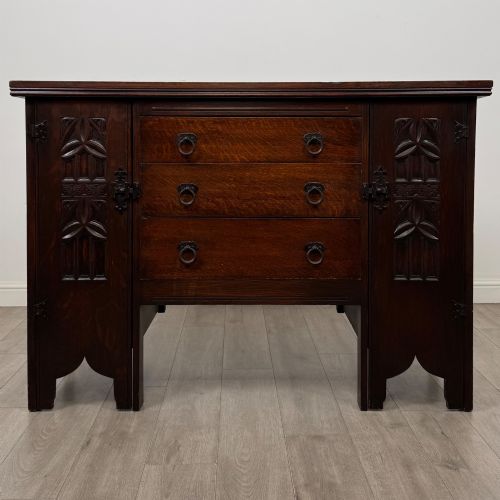
The form crosses paths with sideboards, cupboards, and bookcases, utilising oak as the primary timber alongside elm and pine. You will encounter variations that blend Gothic Revival with Arts and Crafts or Jacobean revival sensibilities.
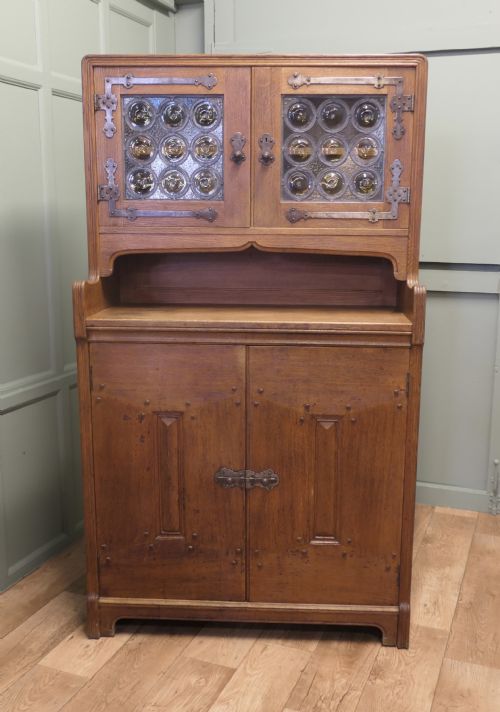
Makers such as Liberty and designers including Leonard Wyburd and Augustus Pugin contributed to this tradition, producing golden oak cupboards and multi-wood bookcases. The selection ranges from West Country glazed dressers to French oak two-door cupboards.
Materials and construction
Oak dominates the evidence, appearing in French, golden, and pollard variations alongside elm and pine. Carpenters relied on solid timber construction, incorporating carved stretcher bases, linenfold door panels, and specimen wood inlay.
Metalwork plays a structural and decorative role, featuring iron, brass, copper, and wrought iron hardware. Glazed doors and leaded glass sections appear on cabinets and bookcases, while brass fire dogs demonstrate companion metalworking techniques.
Gothic Style Dresser Retail Price Guide 2026
Typical asking prices for gothic style dresser among the pieces listed under this phrase on Sellingantiques today, from the lower quarter to the upper quarter. They describe what is for sale here now, not the wider market.
Listings feature oak as the primary material, spanning the Victorian, Edwardian, and nineteen-twenties periods.
Assessing quality and execution
The depth and crispness of the woodcarving separate standard production from superior cabinet work. Sharp linenfold panels and deeply undercut mouldings require skilled hand labour rather than mechanical shaping.
Timber selection dictates the visual weight of the piece, with figured golden oak and pollard oak commanding attention over plain pine or standard oak. The integration of secondary woods and specialised hardware further distinguishes workshop output.
Liberty·Leonard Wyburd·Christopher Dresser·Augustus Pugin
The Gothic Style Dresser Glossary
- Linenfold
- A style of wood carving that mimics folded fabric or parchment. It frequently appears on cupboard doors of the period.
- Gothic Revival
- An architectural and decorative movement reviving medieval forms. It introduces pointed arches, tracery, and heavy proportions to furniture.
- Stretcher base
- A system of horizontal wooden braces connecting the legs of a table or sideboard. This construction adds rigidity and structural support.
- Pollard oak
- Timber taken from trees that have been pollarded, producing dense and highly figured grain patterns. Cabinetmakers used it for decorative veneer and panels.
Gothic Style Dresser: Frequently Asked Questions
What is a gothic style dresser?
A gothic style dresser is a heavy wooden storage piece incorporating medieval architectural motifs like pointed arches and linenfold carving. These items function as sideboards, cupboards, and bookcases.
Originating largely in the nineteenth and early twentieth centuries, they reflect revivals of Gothic and Arts and Crafts design philosophies.
How do I date a gothic oak piece?
Dating relies on examining the timber preparation, hardware, and stylistic crossover points present in the construction. Pieces from the eighteen-eighties often show Liberty or Arts and Crafts influences, while nineteenth-century examples lean into heavier Gothic Revival ornamentation.
Nineteen-twenties and thirties items tend toward simplified proportions while retaining traditional oak materials and linenfold details.
Where should I place a heavy sideboard?
These substantial oak and elm cabinets suit dining rooms, large hallways, or living spaces with sufficient floor area. Their visual weight pairs well with period architecture and neutral walls.
Ensure the floor can support heavy solid timber construction before positioning large sideboards or bookcases.
Are these pieces made of solid oak?
The evidence shows oak as the predominant material, utilised alongside elm, pine, and specialist decorative woods. Many items feature solid timber framing and panel construction.
Some variations incorporate secondary woods or specimen wood inlay for decorative contrast on mirror backs and cabinet doors.