



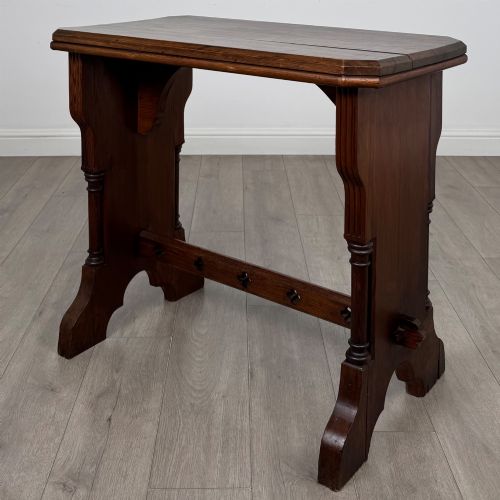
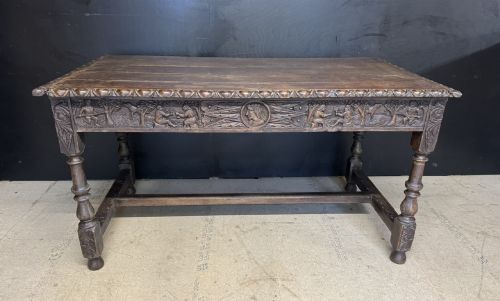


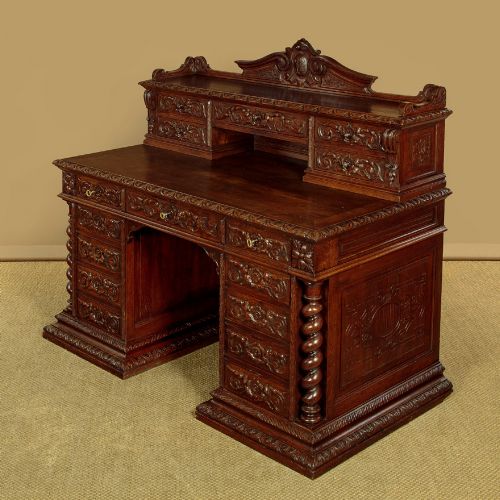



Gothic Style Desk
A gothic style desk brings architectural ambition and deep, historic timber into a room, offering a serious workspace grounded in centuries of design tradition.
Gothic Style Desk
A gothic style desk draws on medieval architectural forms, incorporating pointed arches, heavy mouldings, and robust proportions into a functional writing space. These pieces emerge predominantly from the nineteenth century, spanning Victorian interpretations and later revivals.
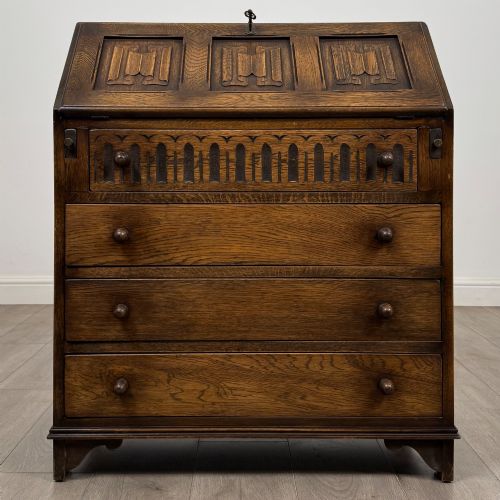
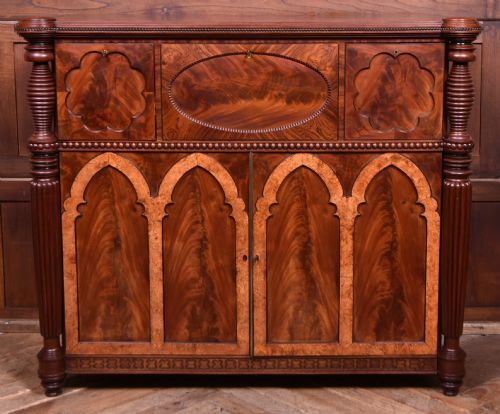
Buyers encounter solid oak and mahogany writing tables, kneehole desks, and bureau forms adorned with carved panels and linenfold details. The selection leans heavily toward nineteenth-century craftsmanship, reflecting the Victorian appetite for revivalist furniture.
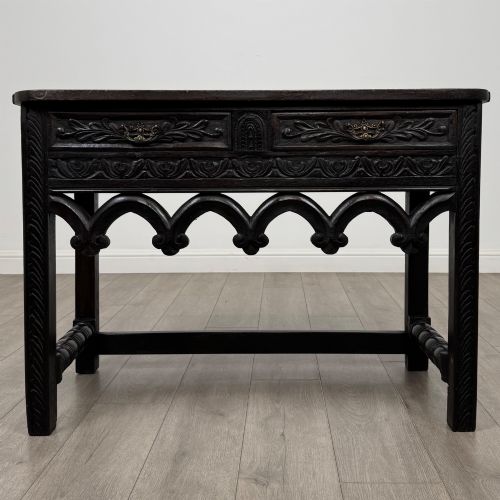
Makers of the period often turned to ecclesiastical motifs, adapting tracery and structural bracing from medieval buildings for domestic use. This integration creates pieces that function as practical writing furniture while serving as striking visual anchors in a room.
How they were made
Construction relies heavily on dense timbers such as oak, walnut, and mahogany, selected for their stability and capacity to hold deep, crisp carving. Workshops utilised traditional joinery, including mortise and tenon frames, to support the heavy structural demands of architectural furniture.
Surface ornament is carved directly into the solid wood, often supplemented by applied mouldings, turned spindles, and occasional brass hardware. Leather inserts frequently top the writing surfaces, providing a durable and refined texture for daily use.
Gothic Style Desk Retail Price Guide 2026
Typical asking prices for gothic style desk among the pieces listed under this phrase on Sellingantiques today, from the lower quarter to the upper quarter. They describe what is for sale here now, not the wider market.
Some desks hide secret compartments behind intricately carved linenfold panels, designed to keep personal correspondence entirely out of sight.
What varies in quality
The distinction between ordinary and exceptional pieces lies in the depth and precision of the carved ornament, particularly how cleanly the tracery and linenfold panels are executed. Superior examples demonstrate a careful balance between architectural weight and refined proportion.
Timber selection and secondary wood usage also dictate worth, with top-tier examples employing richly grained oak or mahogany throughout the carcase and drawers. The integrity of the original construction and the survival of fitted interiors separate standard production from masterwork output.
Gillows·Richard Winter of Chieveley·Charles Bevan·A. W. N. Pugin
The Gothic Style Desk Glossary
- Gothic Revival
- A nineteenth-century movement that revived medieval architectural forms, incorporating pointed arches and heavy timber construction into furniture and buildings. This style dominates the desks and tables found in this category.
- Linenfold
- A style of wood carving that mimics folded fabric, commonly seen on panels of desks and cupboards from this period. It adds texture and architectural depth to flat wooden surfaces.
- Kneehole desk
- A freestanding desk with a central recess for the user's legs, flanked by pedestals containing drawers. This form provides substantial storage alongside a dedicated writing surface.
- Secretaire
- A piece of furniture incorporating a pull-down writing flap that conceals a fitted interior of small drawers and pigeonholes. It combines the storage of a chest or cabinet with the utility of a desk.
Gothic Style Desk: Frequently Asked Questions
What is a gothic style desk?
A gothic style desk is a nineteenth-century or revival writing piece that incorporates medieval architectural motifs like pointed arches, heavy mouldings, and carved linenfold panels into its construction.
These desks are typically built from dense timbers like oak or mahogany, serving as both functional workspaces and bold decorative statements.
How do I date a gothic style desk?
Dating relies on examining the timber, construction methods, and stylistic cues such as the specific type of revivalism at play, whether Victorian, Tudor, or Arts and Crafts.
Nineteenth-century pieces often display machine-assisted joinery alongside hand carving, whereas earlier items show entirely hand-tooled surfaces and older secondary woods.
Where should I place a gothic style desk?
These substantial pieces demand a room with enough space to accommodate their heavy proportions and dark timbers without overwhelming the surrounding interior.
They function well as central library tables, executive desks in studies, or striking accent pieces in traditional reception rooms.
How do I care for the leather top?
Writing surfaces inset with leather require gentle cleaning with a damp cloth and periodic treatment with appropriate leather creams to prevent drying and cracking.
Avoid using harsh chemical cleaners or placing excessive moisture directly onto the leather or the surrounding polished wood.