

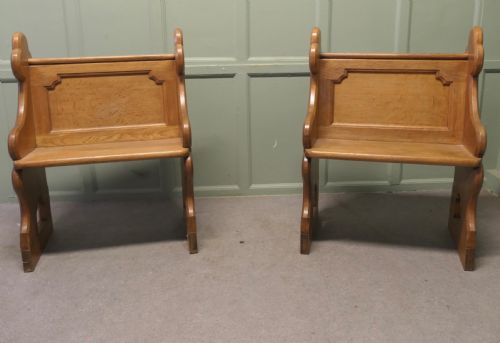
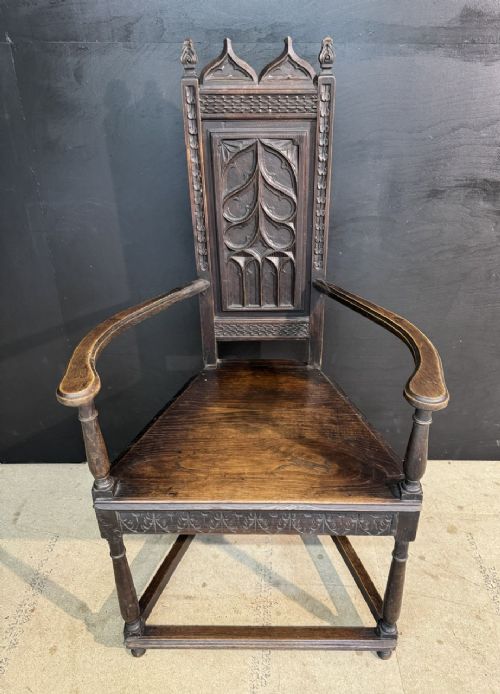
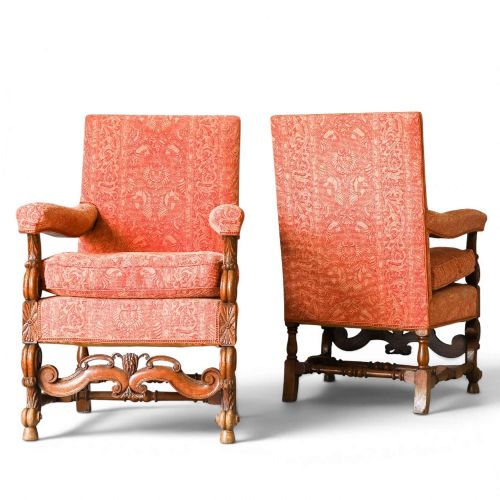
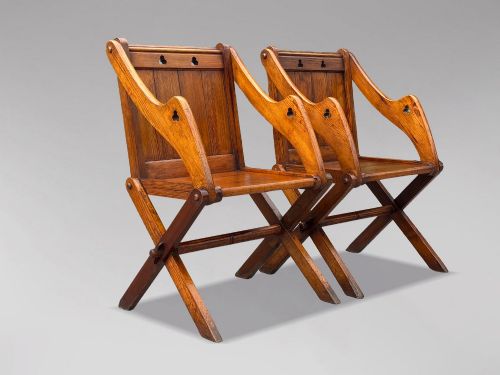

Gothic Style Chairs
These gothic style chairs bring medieval architectural drama into domestic spaces through heavy carved timber and pointed arches.
Gothic Style Chairs
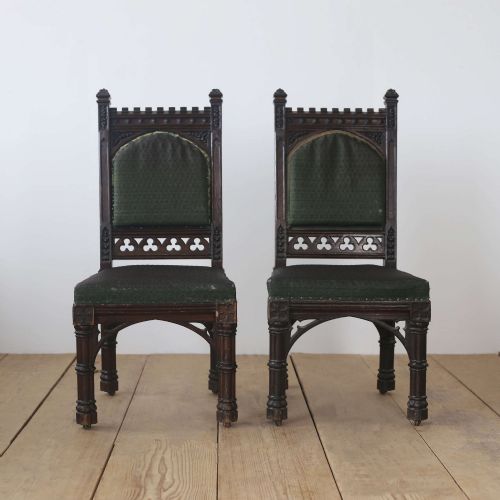
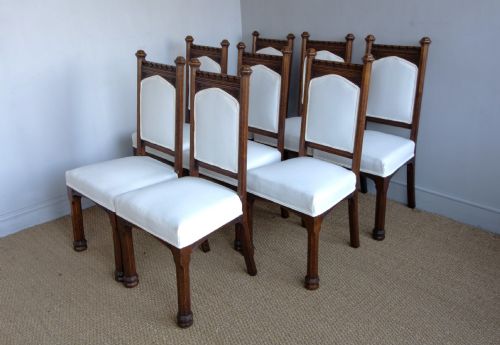
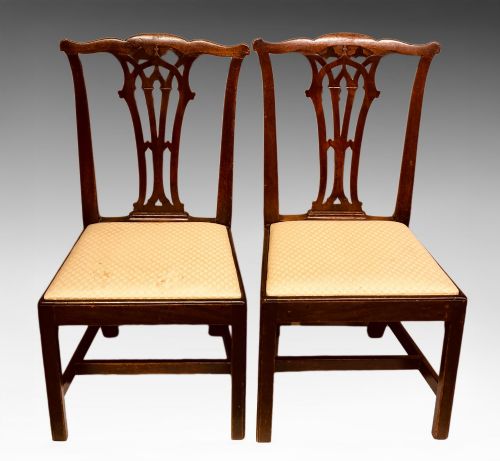
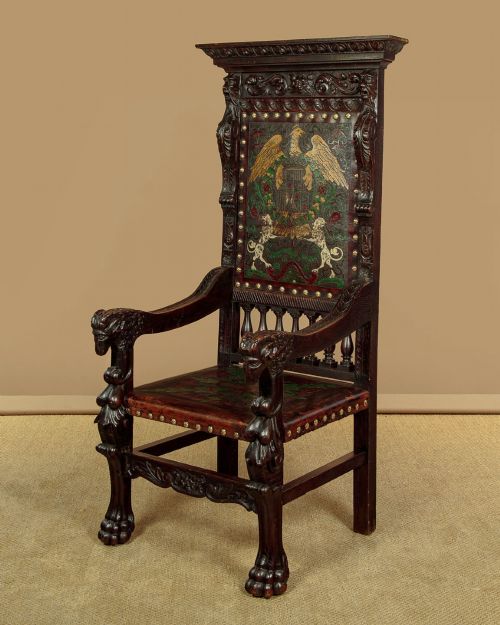
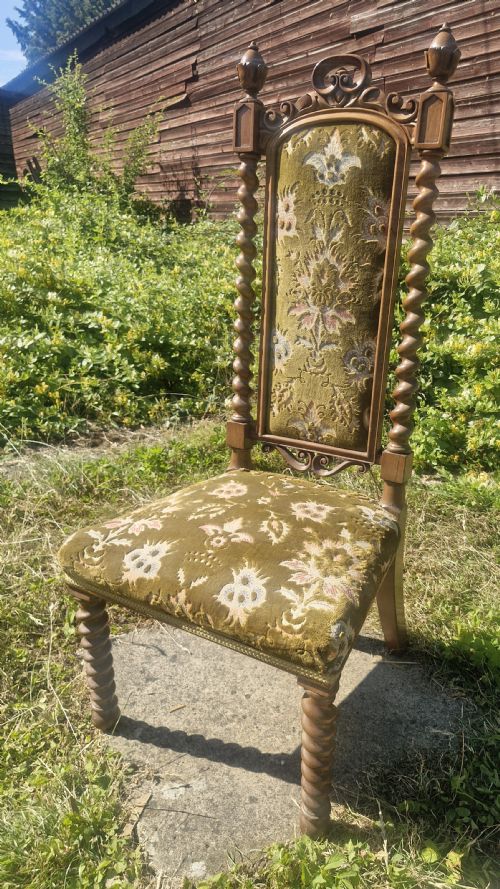
When a buyer searches for gothic style chairs, they encounter a range of seating built predominantly during the nineteenth century, drawing heavily on medieval ecclesiastical design. The selection spans dining chairs, side chairs, and substantial armchairs or thrones.
Most pieces on this page originate from the Victorian era and the broader nineteenth century, reflecting the nineteenth-century Gothic Revival movement. Makers adapted medieval architectural motifs such as lancet windows, linenfold paneling, and tracery into domestic seating forms.
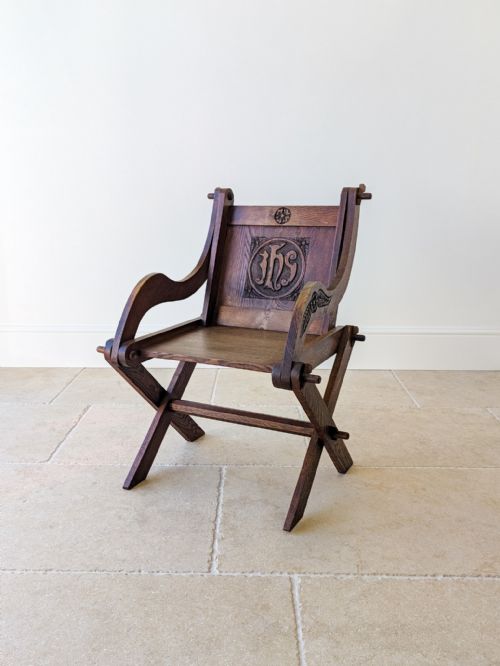
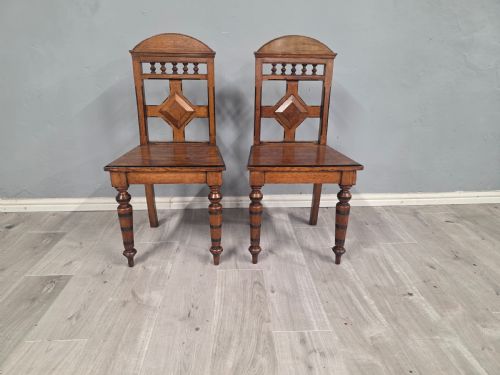
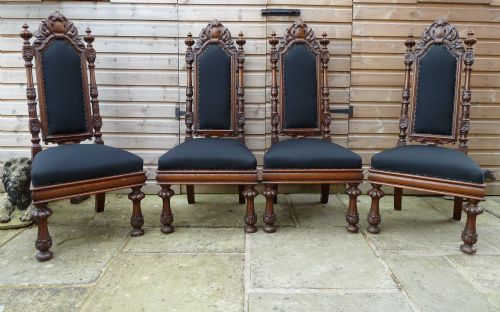
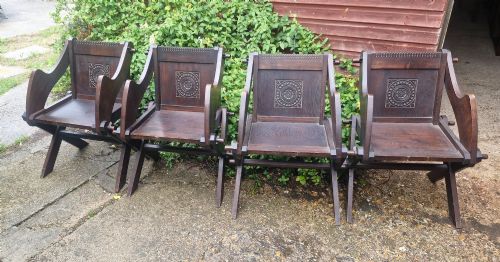
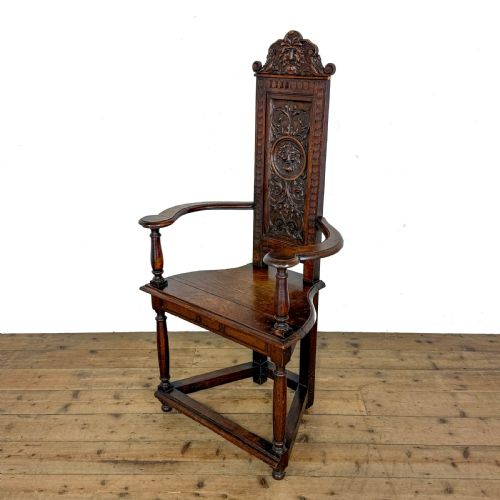
Forms vary from sturdy oak Glastonbury and wainscot armchairs to sets of dining chairs and hall chairs executed in mahogany, pitch pine, and walnut. These seating options served both formal reception spaces and libraries, carrying substantial presence through their architectural silhouettes.
Materials and Construction
Carpenters relied principally on solid oak, alongside mahogany, pitch pine, and walnut, selecting timber for strength and deep grain texture. Frameworks utilise traditional mortise and tenon joints to support heavy carved ornamentation.
Upholstery materials include buttoned leather, velvet, and fabric, often secured with brass tacks to complement dark wood frames. Carving is executed by hand directly into the timber, defining the tracery, linenfold panels, and heraldic motifs.
Gothic Style Chairs Retail Price Guide 2026
Typical asking prices for gothic style chairs among the pieces listed under this phrase on Sellingantiques today, from the lower quarter to the upper quarter. They describe what is for sale here now, not the wider market.
Several chairs double as folding thrones, proving that medieval drama can pack flat for convenient storage.
Assessing Quality and Execution
Quality rests in the crispness of the hand carving and the selection of timber grain. Superior examples display deep, sharp relief work on tracery and panels, whereas lesser pieces show shallow, mechanical tooling.
Construction integrity separates standard production from finer workshop output, evident in tight joinery and substantial timber gauge. The integration of period upholstery materials and proper framing support further elevates the standing of an individual chair.
Bruce Talbert·Gillows·Norwich Maker·A W N Pugin
The Gothic Style Chairs Glossary
- Gothic Revival
- A nineteenth-century architectural and decorative movement reviving medieval forms. It heavily influences the design of ecclesiastical and domestic furniture through pointed arches and tracery.
- Wainscot chair
- An early wooden armchair constructed with paneled back and solid seat. This form originates from seventeenth-century vernacular tradition and was frequently copied in later revival periods.
- Glastonbury chair
- A distinctive type of folding X-frame armchair with a sloping back and paneled seat. It gains popularity during the nineteenth-century Gothic Revival based on medieval archetypes.
- Tracery
- Openwork stonework or woodwork ornamentation featuring intersecting ribs. In seating, it decorates chair backs to mimic cathedral window designs.
- Curule
- An ancient chair form featuring intersecting curved legs forming an X-shape. Also known as a Dante or Savonarola chair, it appears frequently in Renaissance Revival seating.
Gothic Style Chairs: Frequently Asked Questions
What defines a gothic style chair?
These chairs incorporate architectural elements from medieval buildings, including pointed arches, trefoils, linenfold panels, and heavy carved woodwork.
They draw inspiration from church architecture and early furniture forms, translating stone and structural motifs into domestic timber seating.
Where should I place a heavy oak armchair?
Substantial armchairs and thrones suit studies, libraries, or hallway settings where their architectural weight balances the room.
Pairing a single high-back chair with simpler modern furnishings allows the carved details and dark timber to stand out as a focal point.
How do I distinguish revival periods?
Nineteenth-century revival pieces often blend Gothic tracery with Victorian manufacturing techniques, using kiln-dried oak and machine-assisted joinery alongside hand carving.
Earlier examples from the eighteenth and early nineteenth centuries feature vernacular joinery methods and simpler, regional turning rather than ornate ecclesiastical decoration.
Were these chairs used for dining?
Dining sets appear frequently alongside individual library chairs and hall seats, often produced in sets of six or eight.
Sets provide a dramatic presence around a large dining table, matching vertical backsplats and carved crest rails across multiple chairs.