



Gothic Style Carved Chairs
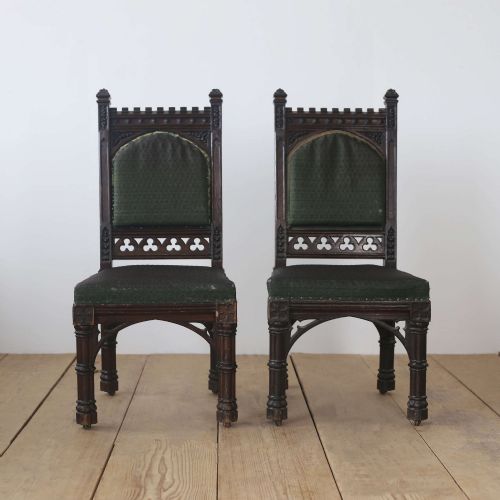
Gothic style carved chairs bring architectural weight and rich timberwork into domestic interiors through pointed arches, tracery, and solid framing.
Gothic Style Carved Chairs
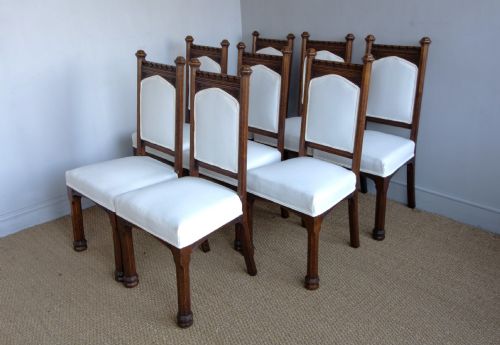
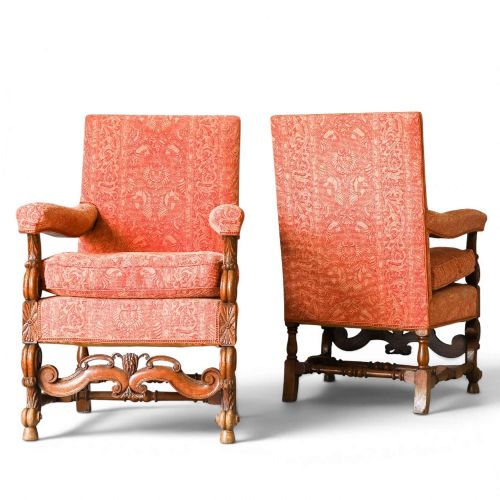
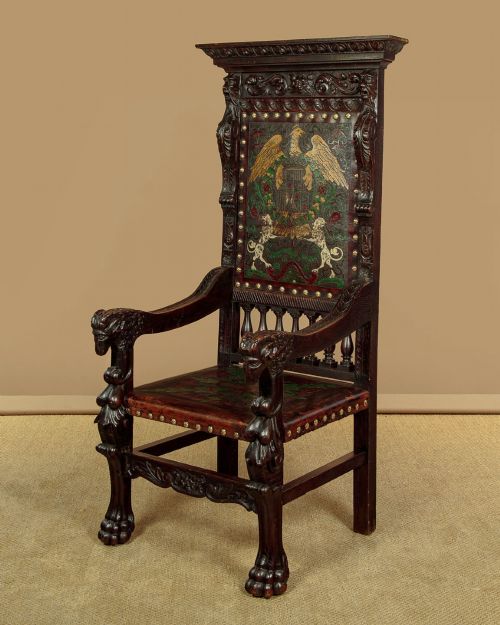
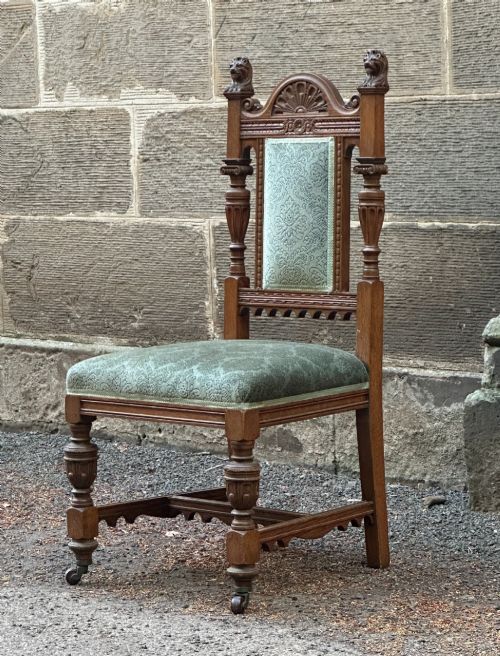
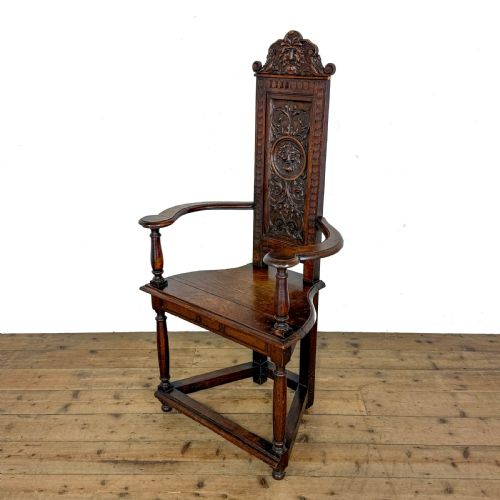
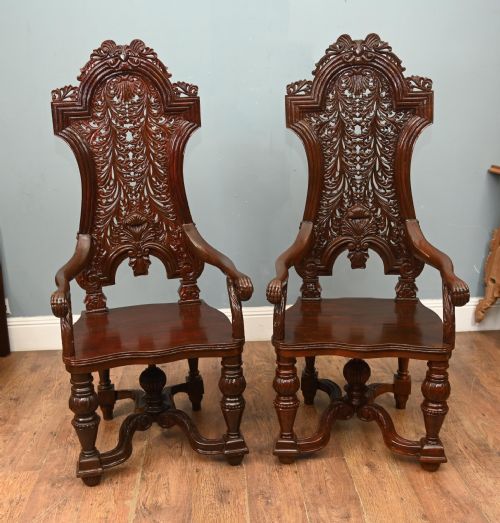
When you search for gothic style carved chairs, you encounter heavy timber seating drawing directly from medieval ecclesiastical and domestic architecture. The listings show forms ranging from sturdy oak dining sets and high-backed hall chairs to monumental throne chairs and cross-frame armchairs.
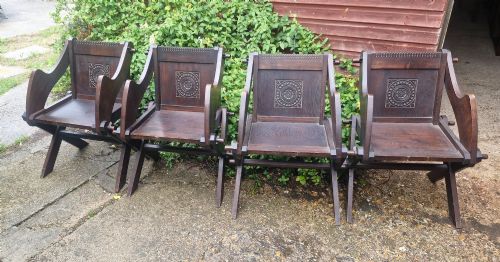
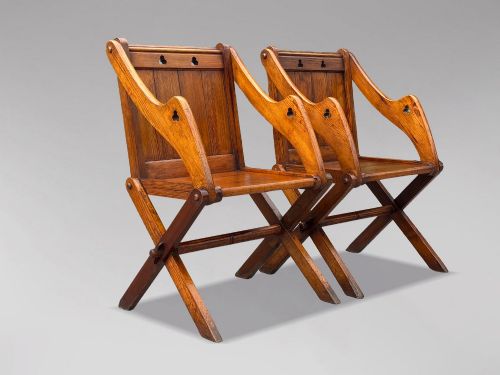
You are most likely to meet 19th-century Victorian interpretations on this page, particularly pieces produced during the Gothic Revival and Jacobean Revival movements. These include oak Glastonbury chairs, wainscot chairs, and Pugin-inspired library seating alongside pitch pine and mahogany variants.
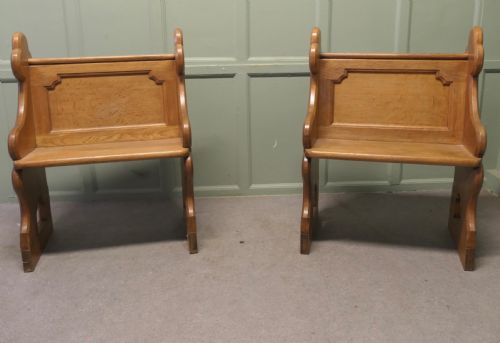
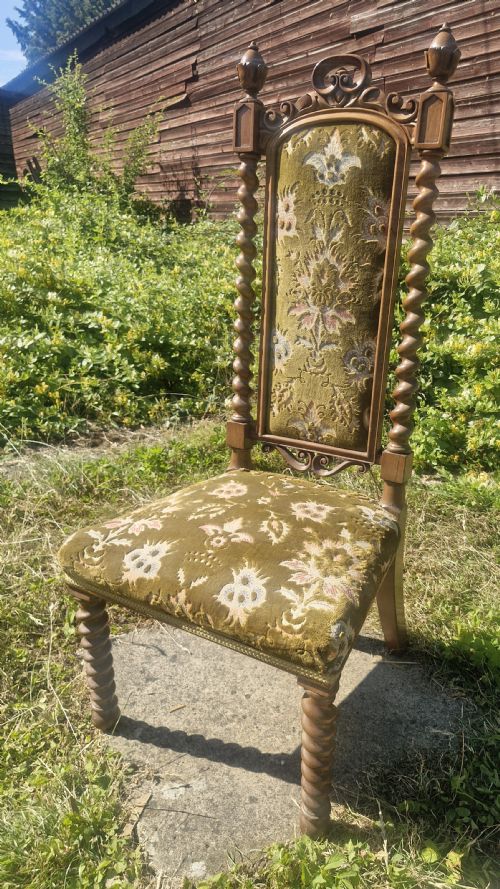
The selection extends from single accent pieces to large matching dining sets of six, eight, or twelve items. Alongside standard chairs, the records encompass specialised forms such as monks benches, piano stools, and curule X-frame seats.
Evaluating quality
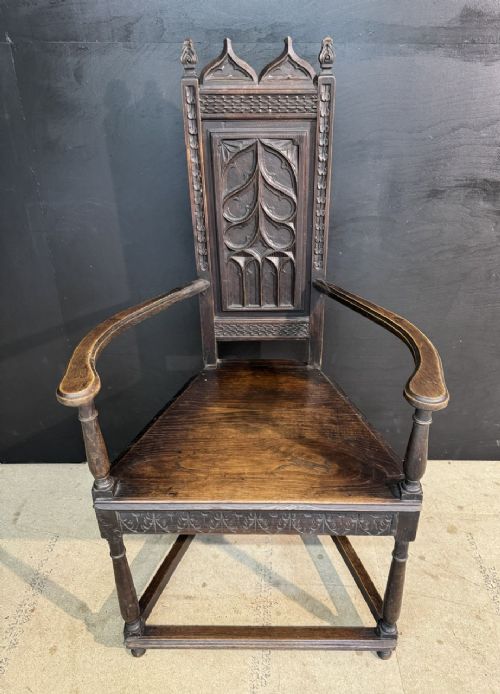
Quality rests principally on the depth, sharpness, and ambition of the timber carving. The finest examples display crisp relief work on tracery, linenfold panels, and heraldic motifs rather than shallow or mechanical stamping.
Structural integrity and timber selection equally divide the standard range from superior pieces. Dense, well-figured oak with sound period joinery commands greater consideration than later or loosely assembled frames.
The listings on this page span from the early 19th century through to the 1930s, featuring oak, mahogany, walnut, and pitch pine.
Bruce Talbert·Gillows
The Gothic Style Carved Chairs Glossary
- Gothic Revival
- An architectural and decorative movement drawing inspiration from medieval design. It manifests in pointed arches, cusping, and structural timberwork.
- Wainscot chair
- A solid wooden armchair with a paneled back and enclosed arms, originating in the 17th century and frequently revived during the Victorian period.
- Glastonbury chair
- A folding armchair with an X-frame base and sloping panel back, based on an ancient relic associated with Glastonbury Abbey.
- Curule chair
- An ancient form of X-framed seating with intersecting legs, often revived during the Renaissance and 19th-century revival periods.
- Linenfold
- A carved wooden panel motif resembling folded cloth, commonly used on the backs of gothic and Tudor revival seating.
Gothic Style Carved Chairs: Frequently Asked Questions
What periods do these chairs date from?
The listings span the nineteenth century up through the Edwardian era and the early twentieth century. Most pieces represent Victorian revivals of earlier medieval and seventeenth-century forms.
While some designs look back to much older architecture, the physical construction and timber finishing typically reflect nineteenth-century cabinetmaking practices.
Are these chairs comfortable for daily use?
Gothic style carved chairs generally prioritize architectural presence and upright posture over deep lounging. Many feature solid timber seats, high straight backs, and firm leather or fabric upholstery.
Dining chairs and hall chairs function well for structured seating around a table, while upholstered armchairs offer a more supportive sit for a library or study.
What is a wainscot chair?
A wainscot chair is a heavy wooden armchair constructed with paneled timber backrests and solid box-like frames. They originated when wood paneling was scarce and expensive, making them prestige items in early domestic interiors.
Nineteenth-century revival examples retain this heavy, formal character, often incorporating deep relief carving, turned front legs, and sloping wooden arms.