
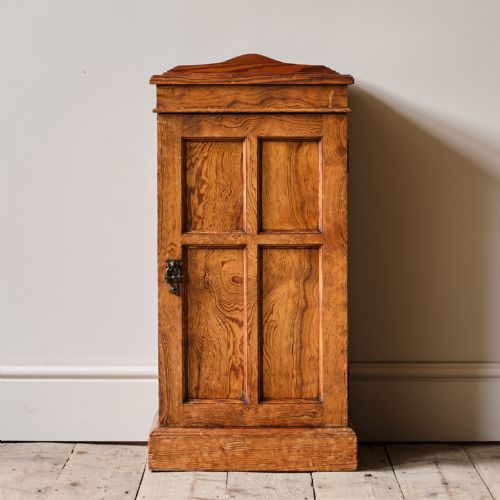
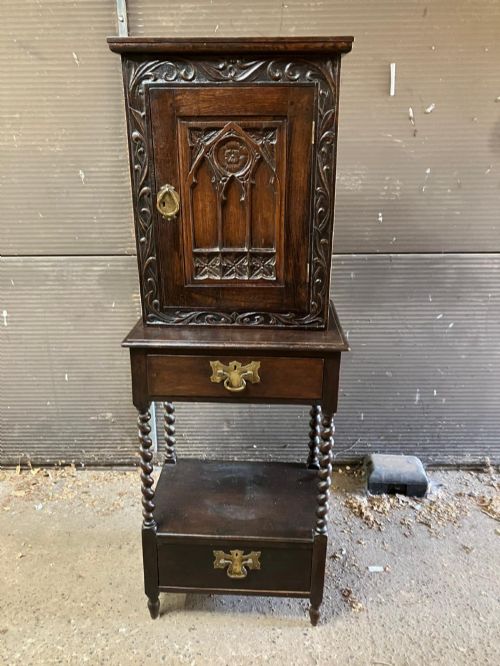
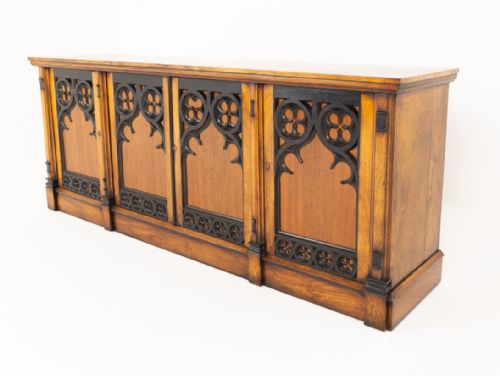
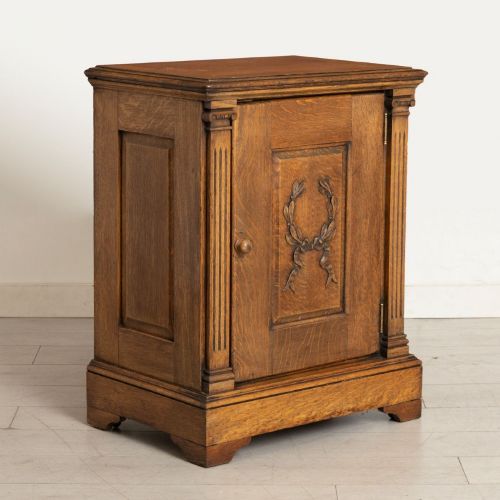
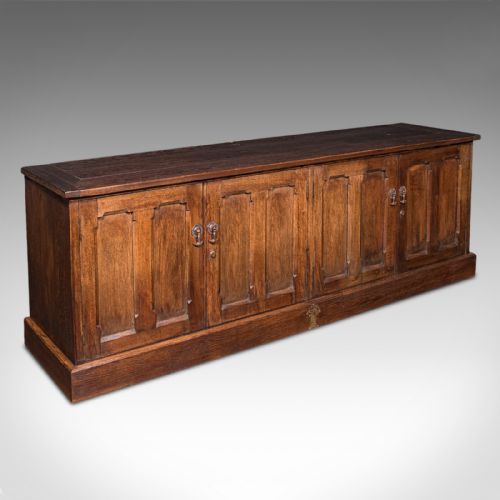


Gothic Revival Side Cupboard
A gothic revival side cupboard brings ecclesiastical lines and heavy timber into a room, offering practical storage with pointed arches and traceried panels.
Gothic Revival Side Cupboard
When you search for a gothic revival side cupboard, you encounter a range of timber furniture from the nineteenth century alongside earlier Regency and later pieces. These storage items include bedside cabinets, chiffoniers, larger sideboard bases, and credibility cabinets designed with architectural motifs.
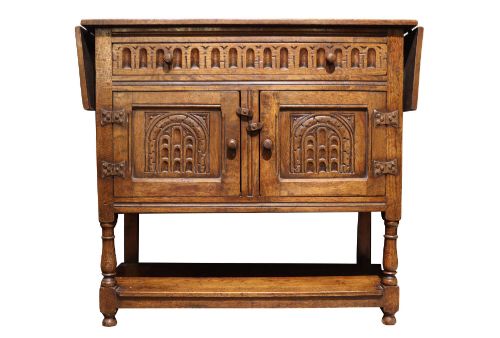
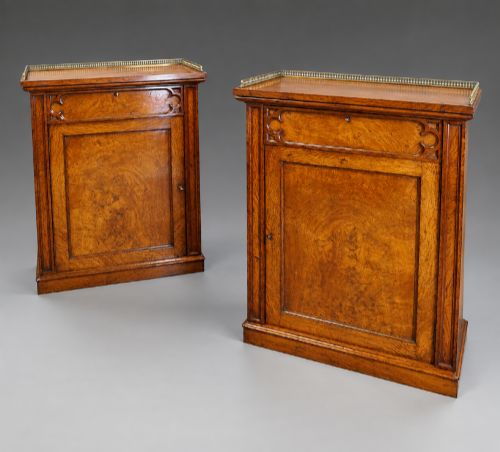
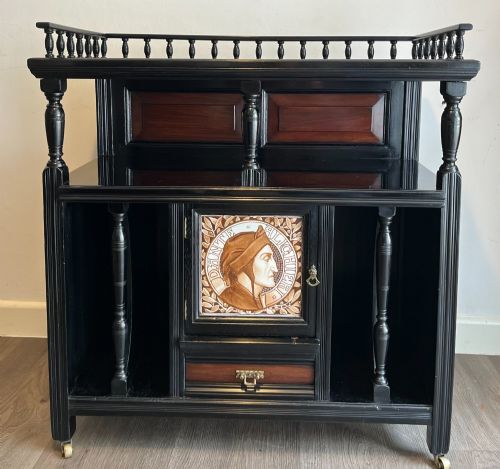
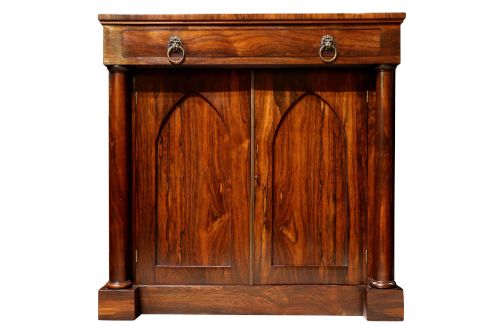
The pieces on this page lean heavily toward nineteenth-century oak constructions, though you will also find examples in mahogany, rosewood, and ebonised wood. Most incorporate pointed arches, panelled doors, and carved details that echo medieval ecclesiastical architecture.
Forms vary from compact pot cupboards to large dresser bases and cabinets on stands. The selection reflects both domestic utility and the nineteenth-century fascination with medieval design revivals.
What varies in quality
The depth and crispness of the timber carving separate standard utility furniture from finer workshop output. Sharp linenfold panels, intricate tracery, and well-executed relief work indicate skilled craftsmanship.
Material selection and hardware integrity also define the upper tier. Original brass or wrought iron mounts, well-figured oak or rosewood veneers, and balanced proportions elevate a piece far above simpler, plain-timber alternatives.
Several pieces double as window seats, proving that nineteenth-century carpenters expected furniture to handle both sitting and storing at once.
Bruce Talbert·Gillows
The Gothic Revival Side Cupboard Glossary
- Creedence cabinet
- A small medieval-style table or cupboard originally used for holding sacramental elements. In later revival pieces, it denotes a compact wall or floor cabinet with characteristic linenfold or traceried panels.
- Chiffonier
- A low sideboard or cabinet developed in the nineteenth century, often fitted with enclosed shelving and panelled doors. These pieces frequently incorporate pointed arches or Gothic tracery during the revival periods.
- Ebonised wood
- Timber stained or treated to imitate ebony, a technique popular in nineteenth-century cabinet making. It provided a dramatic, dark contrast to brass mounts and painted details.
- Tracery
- Architectural openwork stonework or timber design found in Gothic windows, adapted by cabinet makers for door panels and fretwork. It forms a primary decorative identifier for this style.
Gothic Revival Side Cupboard: Frequently Asked Questions
What is a gothic revival side cupboard?
A gothic revival side cupboard is a timber storage piece decorated with architectural motifs from medieval buildings, such as pointed arches and quatrefoils. These cabinets were produced primarily in the nineteenth century during revivals of Gothic style.
They serve as functional storage units for living areas or hallways while introducing strong historical character into a modern interior.
How do I date a gothic revival cabinet?
Dating relies on timber selection, hardware, and construction methods combined with stylistic clues. Nineteenth-century pieces often use solid oak or mahogany with machine-cut elements alongside hand-carving.
Earlier Regency examples tend to feature lighter rosewood frames with subtle Gothic panel inserts, while later nineteenth-century pieces display heavier, more elaborate ecclesiastical carving.
Where should I place a side cupboard?
These cupboards suit dining rooms, hallways, or living spaces where their enclosed storage is useful for tableware or books. Their strong architectural presence makes them effective anchor pieces against a plain wall.
Smaller bedside versions fit neatly into bedrooms, providing compact surface space and enclosed storage for night-time essentials.
Are these cabinets made of solid oak?
Many examples on this page are constructed from solid oak, which was the favoured timber for heavy Gothic revival furniture. Other pieces utilise mahogany, walnut, or pine carcases.
Some refined specimens incorporate exotic timbers like rosewood or feature ebonised finishes to achieve a contrasting aesthetic.