

Gothic Revival Carved Oak
Gothic revival carved oak pieces combine medieval architectural forms with sturdy domestic wood, offering substantial presence to modern rooms.
Gothic Revival Carved Oak
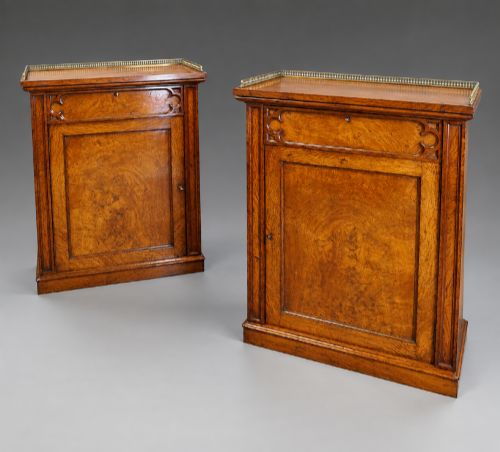
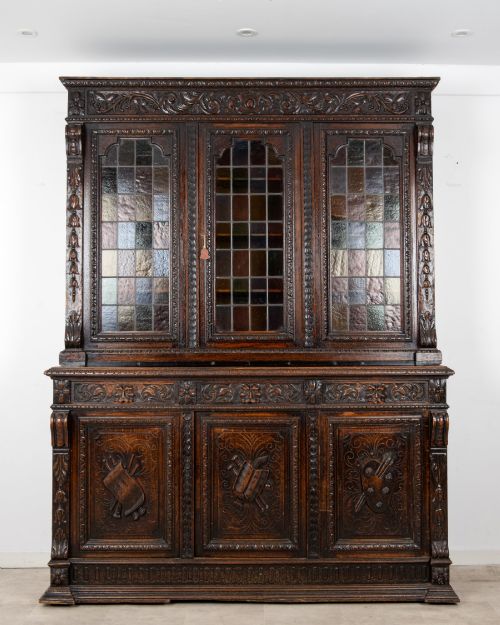
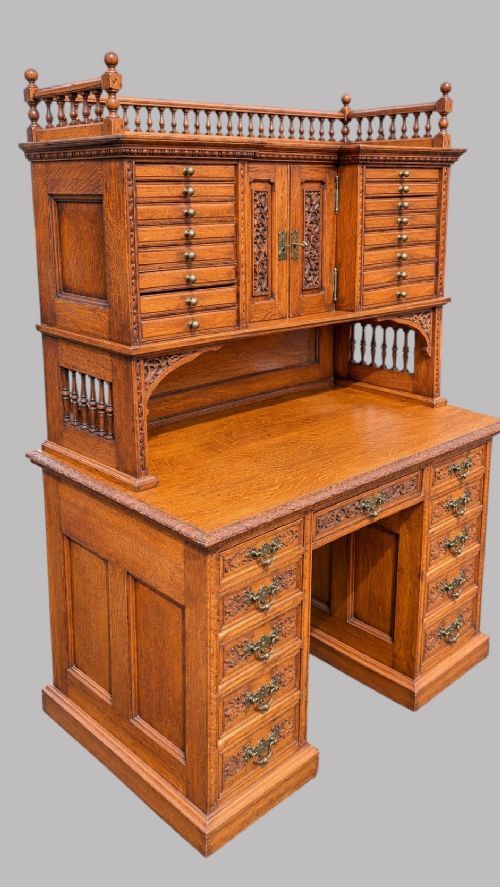
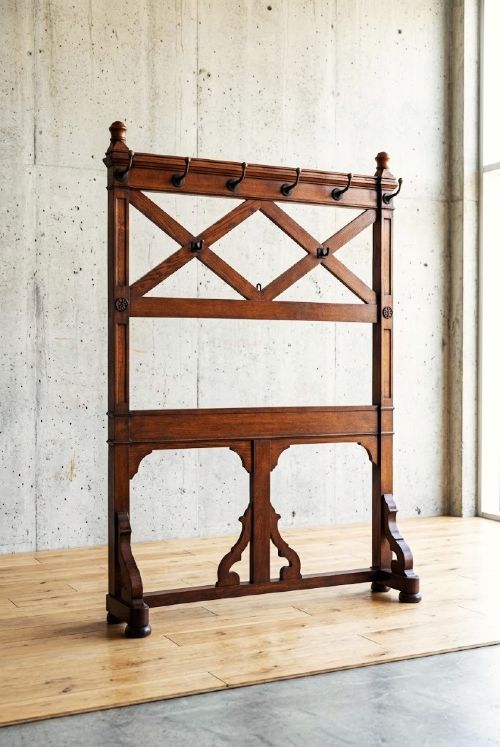
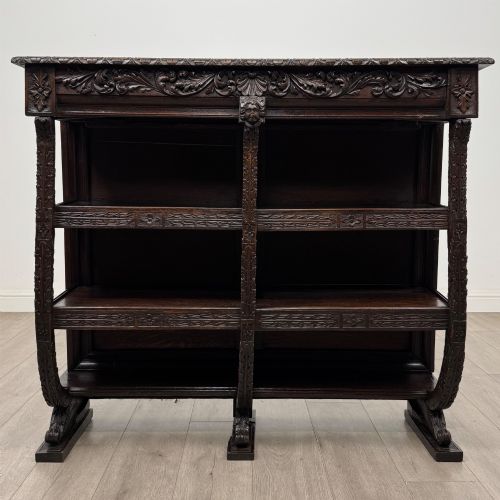
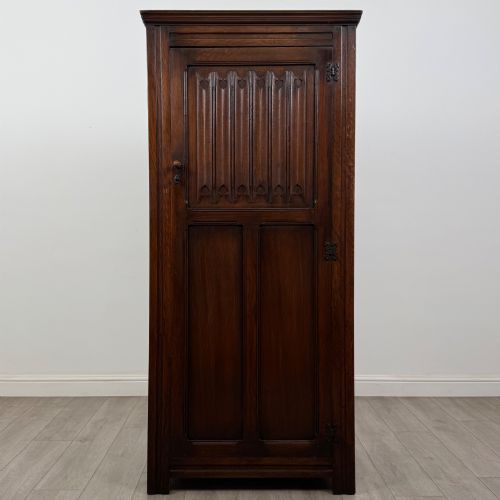
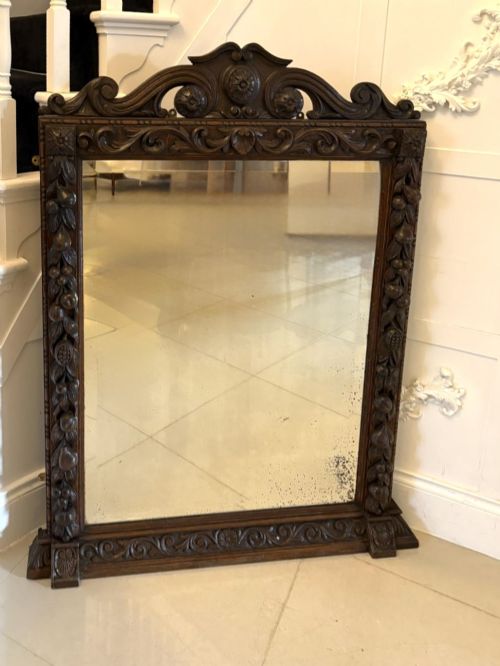
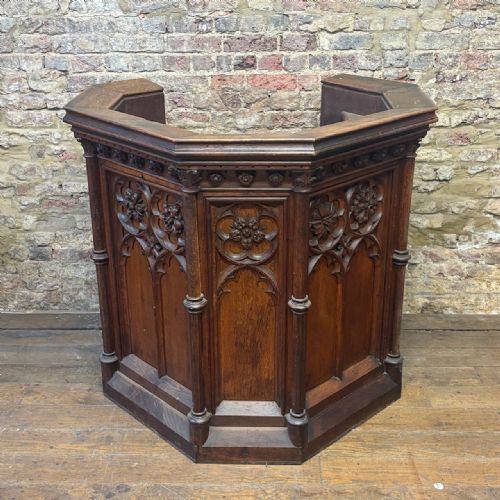
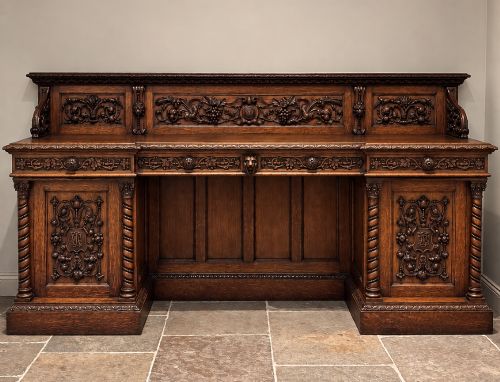
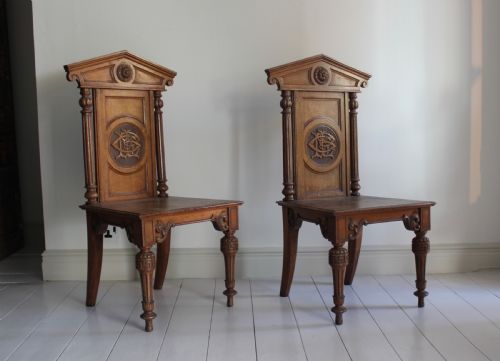
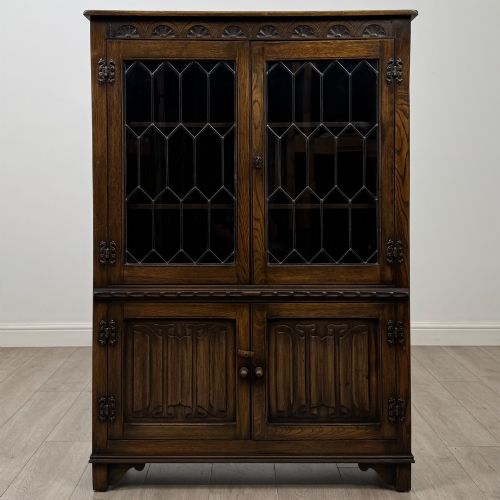
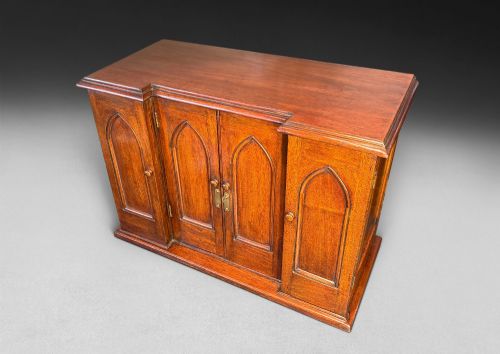
When searching for gothic revival carved oak, a buyer encounters domestic and ecclesiastical furniture spanning the nineteenth and early twentieth centuries. The selection includes dining chairs, sideboards, bookcases, and desks alongside smaller items such as wall mirrors, pulpits, and hymn boards. These pieces draw directly on medieval motifs, translating stone tracery and ecclesiastical forms into domestic timber.
The Victorian period dominates the available inventory, bringing substantial sideboards, throne chairs, and hall seats alongside 1890s tables and cabinets. Edwardian and later pieces introduce linenfold panels and practical storage formats like wardrobes and display cabinets. Pieces range from ecclesiastical church furnishings to domestic seating and writing furniture.
Ecclesiastical influences remain prominent, appearing in church pulpits, prayer desks, and pew end panels adapted for domestic interiors. Alongside these sit utilitarian items such as coal scuttles, correspondence boxes, and umbrella stands. Oak provides the structural baseline across the selection, occasionally augmented by secondary woods and hardware.
Evaluating the pieces
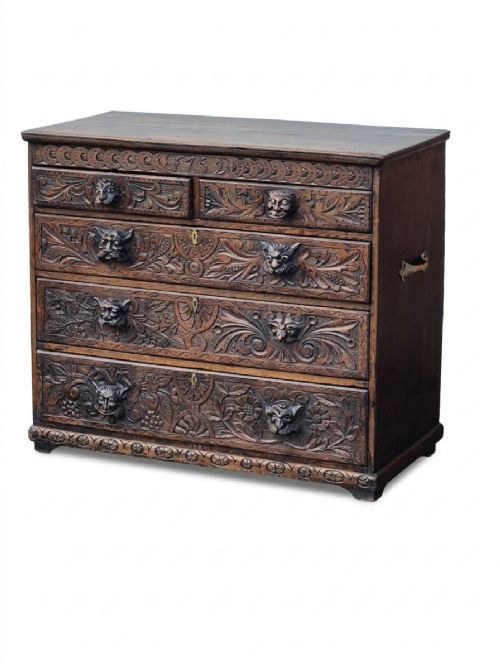
The depth and clarity of the carving separate standard production from superior examples, with hand-chiseled architectural details showing sharp undercutting and expressive figures. The selection of the timber grain influences the visual impact, particularly where quarter-sawn oak displays prominent medullary rays.
Proportion and architectural coherence dictate the success of the design, distinguishing balanced compositions from heavy or discordant assemblies. The integration of period hardware, such as original brass hinges and iron handles, maintains the integrity of the piece.
Listings feature oak predominantly, supported by iron, brass, leather, and stained glass across Victorian and Edwardian domestic and ecclesiastical forms.
Christopher Dresser·W Davis And Sons·George Wadham
The Gothic Revival Carved Oak Glossary
- Trefoil
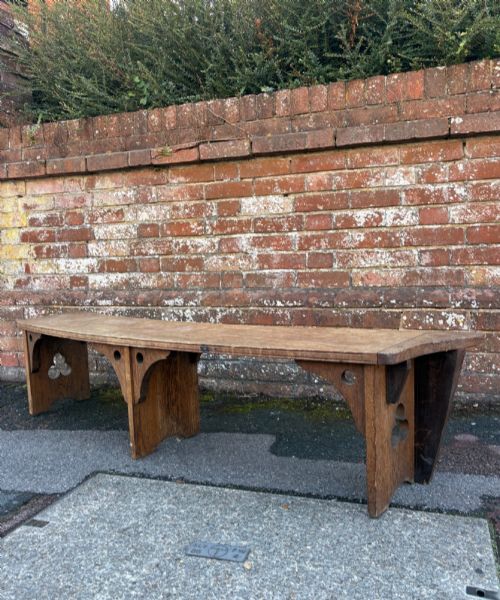
- A three-lobed ornamental design resembling clover leaves, frequently pierced through wooden chair supports and architectural tracery.
- Linenfold
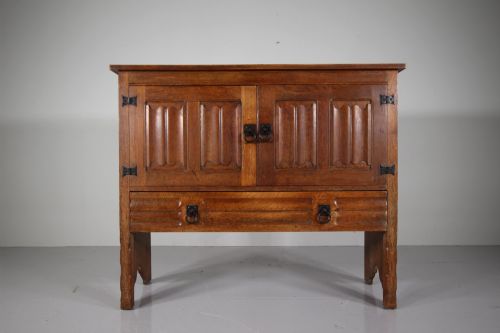
- A style of wood carving that mimics folded fabric, commonly seen on panels of Edwardian cabinets, bureaus, and desks.
- Green Man
- A sculptural motif depicting a human face disgorged from foliage, appearing frequently on Victorian grotesque chests and bookcases.
- Pulpit
- An elevated enclosed stand used for public speaking in churches, occasionally adapted into domestic architectural elements.
- Glastonbury
- A specific nineteenth-century chair design featuring intersecting diagonal legs and flat armrests, associated with ecclesiastical revival seating.
Gothic Revival Carved Oak: Frequently Asked Questions
What periods do these pieces date from?
The inventory spans the nineteenth century through the early twentieth century, with a heavy concentration of Victorian and Edwardian examples. Pieces range from mid-nineteenth-century items down to 1920s wardrobes and cabinets.
Earlier examples from the eighteenth and seventeenth centuries occasionally appear as panels or coffers, reflecting the revival of historic motifs across multiple generations.
How were these oak pieces used originally?
Many items served domestic functions in country houses and town residences, including dining chairs, sideboards, desks, and bookcases. Others originated in ecclesiastical settings, such as church pulpits, prayer desks, hymn boards, and pew end panels.
Over time, ecclesiastical furnishings transitioned into domestic spaces as decorative conversation pieces or practical storage units.
How do I care for antique oak furniture?
Antique oak benefits from stable indoor humidity levels away from direct heat sources and harsh sunlight to prevent timber movement. Regular dusting with a dry, soft cloth preserves the finish without the need for heavy chemical polishes.
Applying microcrystalline wax occasionally helps nourish dry timber and maintains the natural lustre of the carved surfaces.
How do I identify the style?
Gothic revival pieces display architectural elements borrowed from medieval buildings, such as pointed arches, quatrefoils, heavy buttresses, and tracery. Carved motifs often include foliage, green man masks, and heraldic symbols applied to solid oak furniture.
Proportions tend to be heavy and substantial, reflecting the weight of stone architecture translated into domestic timber.