



Gothic Pendant Light Shade
These gothic pendant light shade pieces bring historic architectural character and warm illumination to high-ceilinged rooms.
Gothic Pendant Light Shade
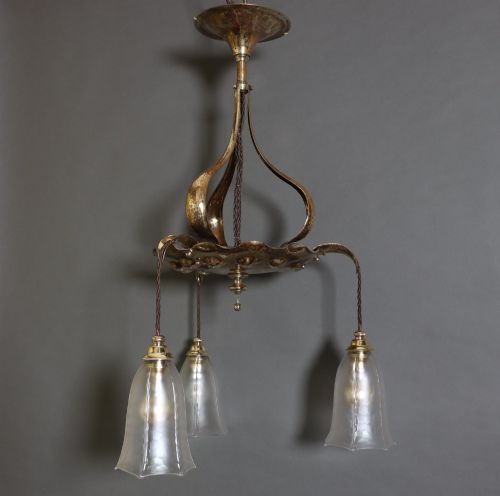
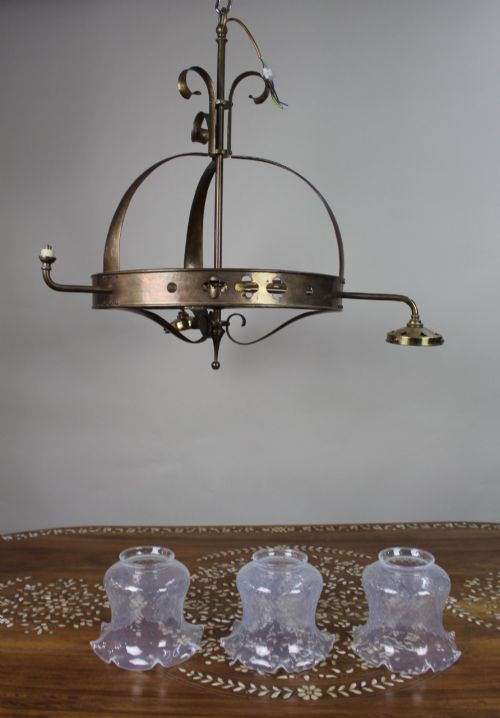
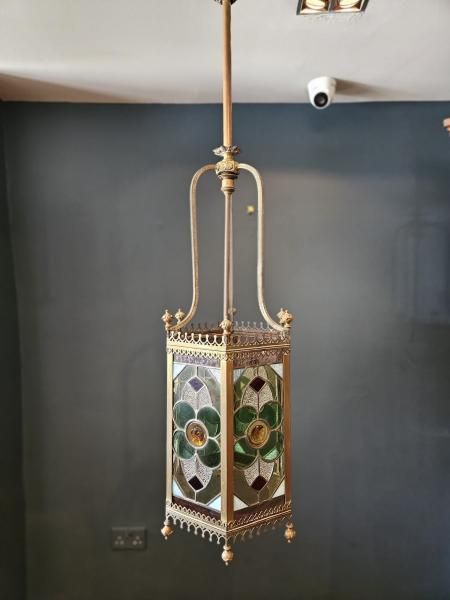
When you search for a gothic pendant light shade, you find ceiling-hung lighting fixtures drawing on medieval architectural forms and later revival movements. The pieces on this page span from the Victorian and Edwardian eras up to nineteen-ten, taking the form of lanterns, gasoliers, chandeliers, and simple hanging lamps.
You are most likely to meet metal-framed ceiling lights fitted with glass shades during your search. These range from heavy cast iron and beaten copper lanterns to brass gasoliers and chandeliers utilising opalescent, leaded, or dimpled red glass.
The aesthetic bridges several overlapping stylistic categories, including Gothic Revival, Victorian Gothic, and Arts and Crafts. Pieces originate from domestic workshops as well as continental sources such as France, showing varied interpretations of ecclesiastical and vernacular design.
How they were made
Construction relies on structural metalwork formed through casting, beating, and wrought iron techniques. Makers shaped copper, brass, iron, and gilded metal to form the skeletal lanterns, gasolier arms, and ceiling fixtures.
Glass elements were produced using diverse methods to alter light diffusion, incorporating opalescent panels, leaded segments, opal glass globes, and dimpled red glass. These components were glazed or fitted directly into the metal frames to complete the pendant assembly.
Gothic Pendant Light Shade Retail Price Guide 2026
Typical asking prices for gothic pendant light shade among the pieces listed under this phrase on Sellingantiques today, from the lower quarter to the upper quarter. They describe what is for sale here now, not the wider market.
What varies in quality
Quality reveals itself in the integration of metalwork and glass, where substantial cast or beaten frames support specialised glazing without structural compromise. Finer examples display deliberate hand-working in the copper and brass components alongside thoughtfully chosen glass textures.
Design ambition separates standard fixtures from superior pieces, with better examples incorporating distinctive details such as figural motifs, gilding, or integrated provenance. The balance of weight and proportion across multi-light gasoliers and large hanging lanterns also defines the upper tier of production.
The Gothic Pendant Light Shade Glossary
- Opalescent glass
- Glass exhibiting a milky or iridescent appearance that diffuses light softly. It scatters wavelengths differently to create varied colour tones.
- Gasolier
- A multi-branched ceiling light fixture originally designed for gas lighting. Many survive converted to electricity.
- Leaded glass
- Pieces of glass held together by strips of lead cames. This technique creates patterned windows and lantern panels.
- Beaten copper
- Metalwork shaped by manual hammering. This process hardens the copper and leaves characteristic surface textures.
- Wrought iron
- Iron beaten into shape while hot by a blacksmith. It provides sturdy, fibrous structural support for hanging lanterns.
Gothic Pendant Light Shade: Frequently Asked Questions
What periods do these pendant lights come from?
The pieces span the nineteenth century through the Edwardian period, encompassing Victorian, nineteen hundred, and nineteen-ten examples.
They reflect the popularity of Gothic Revival and Arts and Crafts movements across these decades.
What materials were used to make them?
Makers utilised metals such as brass, copper, cast iron, wrought iron, and gilded metal work for the frames.
For the shades and globes, they employed glass, including opalescent, leaded, opal, and dimpled red varieties.
How are these ceiling lights mounted?
These fixtures hang from ceilings as pendant lights, chandeliers, gasoliers, and hanging lanterns.
They are designed to suspend downward, illuminating spaces from above.
Are these lights electrified or gas-powered?
Some period fixtures originated as gasoliers designed for gas lighting before later conversion.
Others were produced as electric ceiling lights or general hanging lanterns during the early twentieth century.