

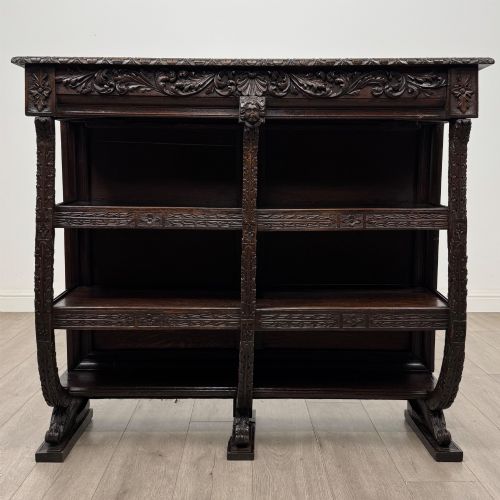
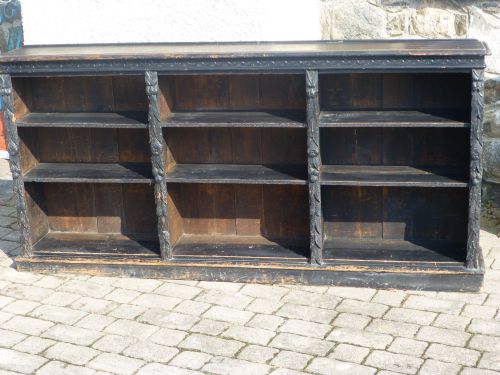


Gothic Open Bookcase
These gothic open bookcase examples bring architectural presence and linear display to a room, offering immediate access to volumes while anchoring a study.
Gothic Open Bookcase
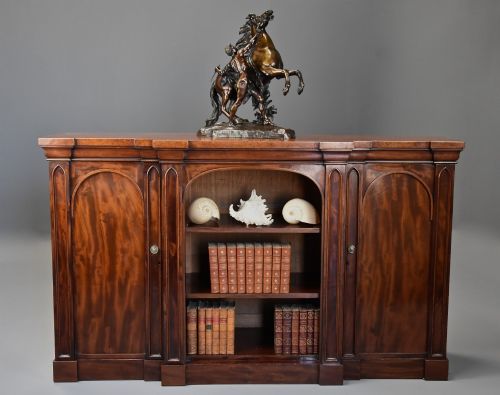
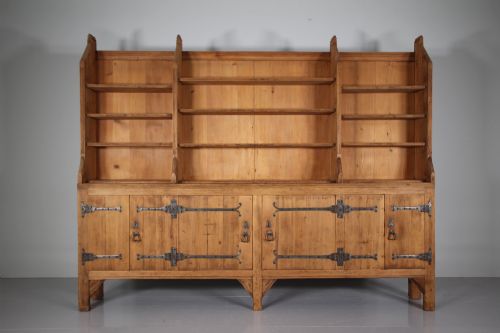
When searching for a gothic open bookcase, buyers encounter sturdy architectural storage pieces primarily originating from the nineteenth century, including the Victorian period and specific decades such as eighteen eighty and eighteen fifty. These items range from low dwarf shelves to tall breakfront forms, frequently displaying distinct Gothic Revival, Reformed Gothic, or Arts and Crafts stylistic influences.
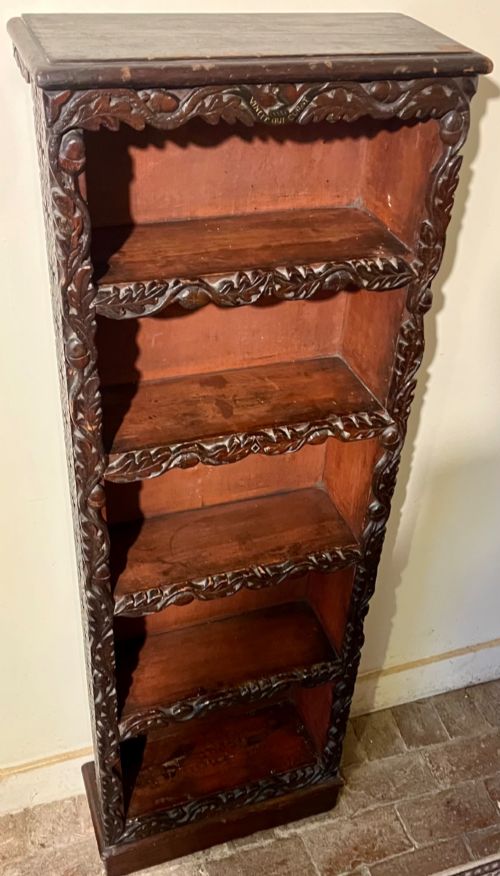
The version most commonly met on this page is the Victorian carved oak open bookcase, often fitted with adjustable shelves. Pieces emerge in various configurations, including double widths, architectural cabinets, and wall-hanging shelves, reflecting the diverse domestic needs of their original nineteenth-century owners.
Materials and construction methods
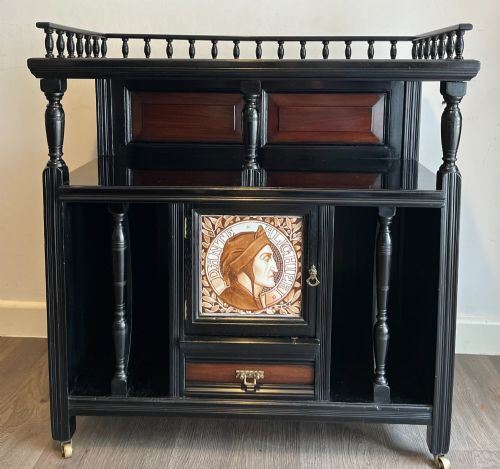
Carpenters relied heavily on solid oak, golden oak, and dark oak, occasionally utilising mahogany, walnut, pitch pine, and ebonised wood or timber to achieve the desired tone. Structural stability was paramount, supporting substantial volumes through thick timber boards and sturdy back panels.
Carving and joinery define the aesthetic, with workshops employing detailed relief work such as green man motifs, architectural tracery, and inlaid elements. Brass hardware sometimes accompanies these assemblies, particularly on adjustable shelf mechanisms and associated cabinetry.
Gothic Open Bookcase Retail Price Guide 2026
Typical asking prices for gothic open bookcase among the pieces listed under this phrase on Sellingantiques today, from the lower quarter to the upper quarter. They describe what is for sale here now, not the wider market.
Several Victorian bookcases hide leafy green man faces amongst their carved foliage, watching silently over the library shelves.
Distinguishing quality in construction and ornament
Depth and crispness of carved ornament separate standard items from finer examples, particularly where architectural elements like pointed arches and green man masks are rendered with distinct individual character. The choice of timber grain, whether figured oak or rich mahogany, dictates the visual weight of the piece.
Engineering touches such as smoothly functioning adjustable shelf systems and solid timber backing boards indicate superior cabinet-making. Original surface patination and integrity of the timber joints further separate accomplished workshop output from utilitarian alternatives.
George Edmund Street·Richard Bridgens·Gillows
The Gothic Open Bookcase Glossary
- Gothic Revival
- An architectural and decorative style drawing inspiration from medieval design, featuring pointed arches and structural tracery. It experienced a major resurgence during the nineteenth century.
- Breakfront
- A cabinet or bookcase configuration where the central section projects forward from the flanking wings. This layout creates visual depth in larger library furniture.
- Green Man
- A sculptural motif depicting a human face entwined with or emerging from foliage and vines. It appears frequently in carved wood ornamentation on nineteenth-century revival furniture.
- Ebonised
- Wood treated with a chemical finish or stain to imitate the deep, dark appearance of ebony. This technique gained popularity during the Victorian and Aesthetic periods.
- Adjustable shelves
- Movable interior horizontal boards resting on pins, ratchets, or saw-tooth supports. This mechanism allows owners to alter shelf heights for varying book sizes.
Gothic Open Bookcase: Frequently Asked Questions
How do I style a gothic open bookcase?
Pair the dark timber tones with neutral walls to let the architectural carved details stand out clearly in the room. Mix collected volumes with simple ceramic objects to balance the heavy visual weight of the nineteenth-century woodwork.
Keep surrounding furniture understated so the bookcase acts as a singular focal point rather than competing for attention. Ensure the room receives adequate natural light to highlight the grain of the oak or mahogany.
Were these bookcases meant for home libraries?
These pieces served multiple domestic spaces, from formal Victorian libraries and studies to parlours and hallways where books required accessible storage. Lower dwarf variations often doubled as display surfaces for decorative objects alongside working collections.
Taller breakfront and double versions accommodated substantial private bookholdings amassed by nineteenth-century readers. Hanging variants offered space-saving shelving solutions for smaller rooms without occupying floor area.
How can I tell the difference between periods?
Mid-nineteenth-century examples often lean towards heavier proportions and classic architectural revival motifs derived from ecclesiastical buildings. Later nineteenth-century pieces from the eighteen eighties frequently incorporate lighter oak tones and elements associated with the Arts and Crafts movement.
Look for shifts in carving style, where earlier Victorian work displays deep, formal relief while later Reformed Gothic items favour geometric austerity and linear panels. Ebonised finishes and multi-wood construction frequently point towards specific aesthetic tastes of the eighteen seventies and eighties.
Do adjustable shelves mean a piece is modern?
Makers of nineteenth-century bookcases frequently incorporated adjustable shelf systems using wooden ratchets, brass pins, or saw-tooth tracks to accommodate varying volumes. These mechanical solutions are entirely period-correct and indicate thoughtful cabinet-making rather than later alteration.
Examine the interior uprights for the original housing slots or peg holes to confirm period authenticity. The presence of these functional mechanisms actually signals higher quality construction in antique library furniture.