






Gothic Oil Painting
These gothic oil painting works capture ecclesiastical architecture, devotional scenes and ancient landscapes in rich pigment on canvas and panel.
Gothic Oil Painting
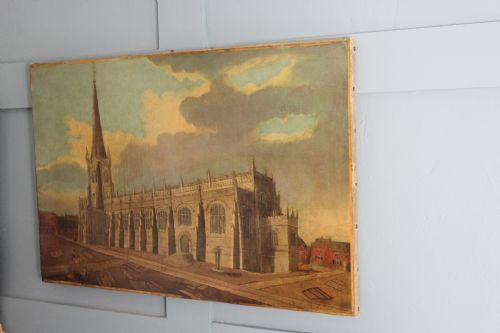
When you search for a gothic oil painting, you encounter works spanning from the late seventeenth century through the Victorian era and into the twentieth century. The selections available encompass cathedral scenes, ruined abbeys, Bavarian castles and devotional subjects rendered in oil paint on canvas, board and wood panel. These pieces reflect diverse stylistic movements including Gothic Revival, Baroque, Post-Impressionism and nineteenth-century Romanticism.
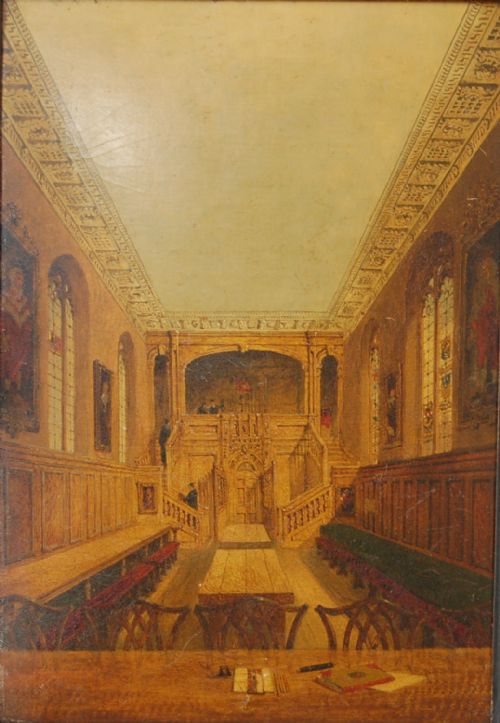
You are most likely to meet nineteenth-century interpretations alongside works from the seventeen-hundreds depicting ecclesiastical architecture and atmospheric religious subjects. Artists frequently utilised canvas and wood panel to capture the moody illumination of moonlight on stone facades, churchyards and formal academic halls. The physical presentation relies heavily on period wood frames that complement the sombre and historic mood of the imagery.
Materials and construction
The primary medium across these works consists of oil paint applied to prepared canvas, wooden boards or wood panels. Painters built up rich layers of pigment to achieve deep shadows and luminous architectural details, particularly when depicting moonlit churches and ancient monastic ruins.
Surviving examples frequently retain their original wood framing, which provides structural integrity and defines the visual boundary of the composition. Support materials range from stretched fabric canvas to rigid wooden panels, each dictating the specific handling of the oil medium by the artist.
Gothic Oil Painting Retail Price Guide 2026
Typical asking prices for gothic oil painting among the pieces listed under this phrase on Sellingantiques today, from the lower quarter to the upper quarter. They describe what is for sale here now, not the wider market.
One particularly atmospheric canvas captures a gathering of noticeably creepy kids standing outdoors without the benefit of a frame.
Distinctions in quality
The sophistication of architectural perspective and atmospheric control separates standard decorative works from compelling artistic statements. Superior examples demonstrate a confident handling of light and shadow, particularly in the rendering of stone textures, nocturnal illumination and complex church interiors.
The fidelity of the historical context, the strength of provenance through known circles or followers of established painters, and the integrity of the original wood frame influence the standing of an individual piece. Works that convincingly evoke the romantic melancholy of medieval architecture without lapsing into rigid pastiche command greater attention.
Jozef Janssens·Joan Gillchrest·Karl Herrle·Walter Meegan·John Cawthorn·William Marlow·Joseph Murray Ince
The Gothic Oil Painting Glossary
- Canvas
- A heavy woven fabric stretched across a wooden frame to serve as a support for oil painting. It provides a slightly flexible surface that absorbs pigment layers effectively.
- Panel
- A rigid wooden support used by artists instead of canvas for applying oil paint. Panels were particularly common in earlier periods and offer a smooth, stable ground.
- Gothic Revival
- An architectural and artistic movement reviving medieval forms, pointed arches and ecclesiastical motifs. This style heavily influences the romantic landscapes and church scenes in this selection.
- Provenance
- The documented history of ownership and attribution surrounding an artwork. It establishes the authenticity and origin of the piece.
- Post-Impressionism
- An art movement extending Impressionism while rejecting its limitations, incorporating expressive forms and heavier brushwork. Works in this vein offer a modern interpretation of traditional architectural subjects.
Gothic Oil Painting: Frequently Asked Questions
What periods do these paintings date from?
The selection spans several centuries, starting from late seventeenth-century works through eighteenth-century topographical views and nineteenth-century romantic interpretations. Twentieth-century pieces also appear, demonstrating the enduring appeal of ecclesiastical subjects.
Buyers encounter a mix of Victorian Gothic Revival pieces and earlier academic compositions, reflecting how artists across different eras interpreted ancient architecture and religious themes.
What surfaces are these paintings created on?
Artists used a variety of supports including traditional woven canvas, rigid wooden panels and prepared boards. Each material influences how the oil paint ages and how the brushwork reads.
Wood panels and boards often provide a stable ground for detailed architectural studies, while larger canvases allow for expansive landscape and cathedral compositions.
How should I display a gothic oil painting?
These works suit traditional interiors, libraries or studies where their dramatic lighting and historic subject matter can be appreciated up close. Pairing them with period wood frames enhances their historic character.
Ensure the hanging location avoids direct sunlight and excessive moisture fluctuations to protect both the oil pigment and the wooden support structure over time.
Are these works signed by the artists?
Some pieces feature clear signatures and dates from the creators, while others are attributed to specific schools, circles or followers of well-known painters. Unsigned works are evaluated through stylistic analysis and historical context.
Documentation in the title often indicates whether an artist is directly named or linked through attribution to a broader workshop or tradition.