


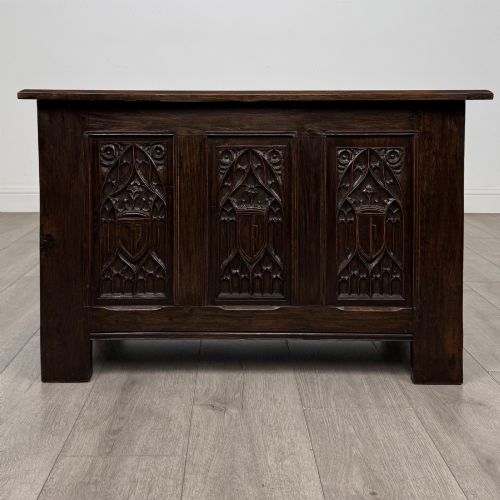
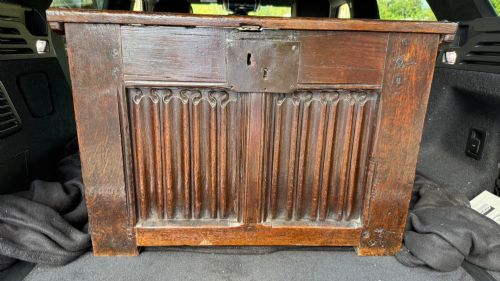
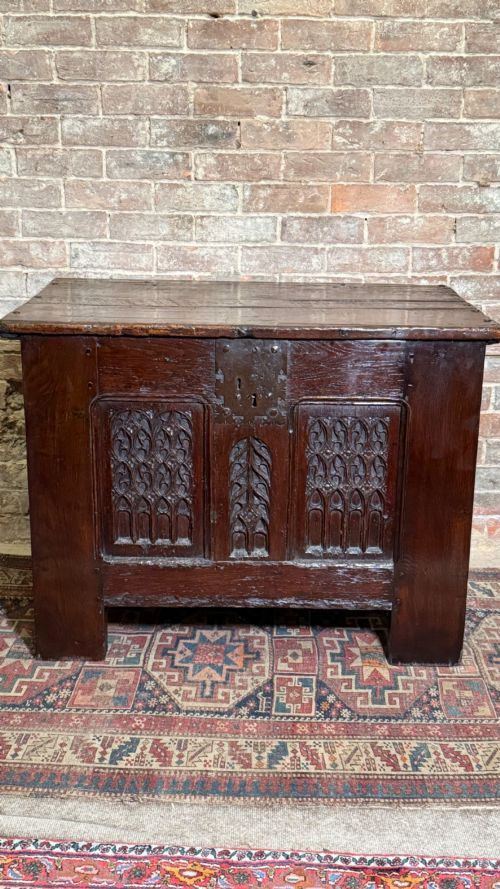
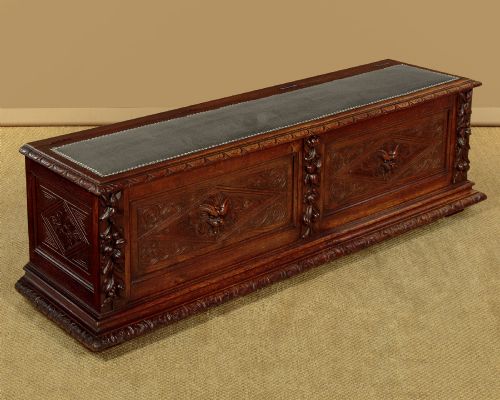



Gothic Oak Coffer Chest
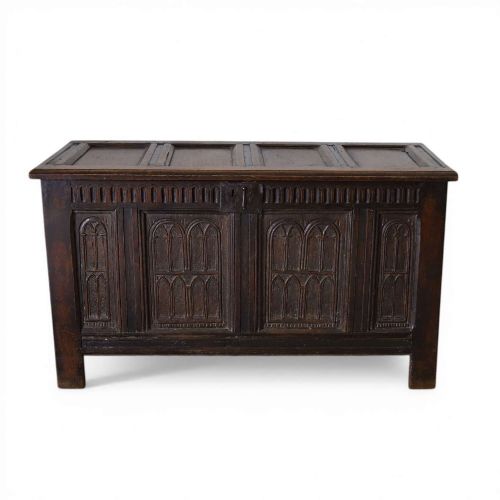
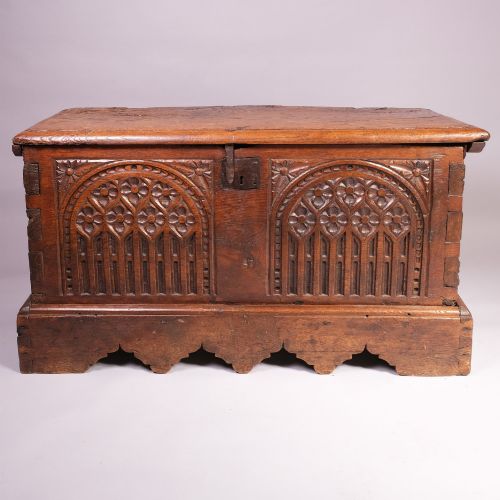
These gothic oak coffer chest examples offer solid timber storage with centuries of carved detail, built for the medieval interior.
Gothic Oak Coffer Chest
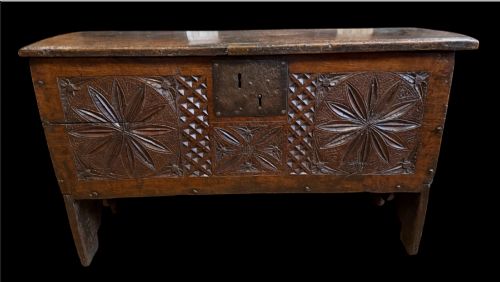
A gothic oak coffer chest represents heavy domestic and ecclesiastical storage, emerging in forms ranging from primitive plank constructions to ornate carved receptacles. When you search for this phrase, you encounter heavy timber boxes designed originally for valuables, documents, or vestments.
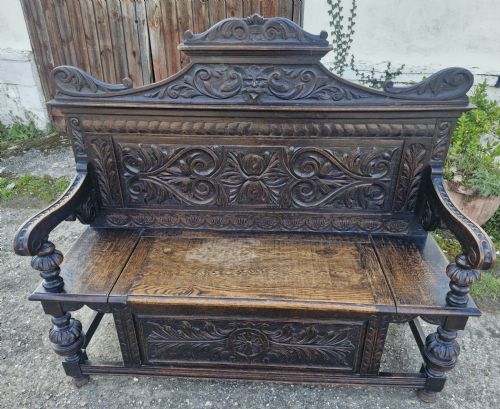
The pieces on this page span from pre-sixteenth century medieval examples to later Victorian revivals and Arts and Crafts interpretations. Most items adhere to traditional forms such as coffers, mule chests, and hall benches, utilising durable hardwoods shaped by centuries of use.
How They Were Made
Construction relies heavily on thick oak boards joined with pegged mortise and tenon frames, or constructed as robust plank chests held together by durable ironwork. Blacksmiths forged wrought iron straps, hinges, and heavy locks to secure the lids against theft.
Carvers employed chip carving, linenfold panels, and Gothic tracery directly into the timber face, sometimes combining oak with elm, chestnut, or pollard oak for interior panels and secondary woods.
Gothic Oak Coffer Chest Retail Price Guide 2026
Typical asking prices for gothic oak coffer chest among the pieces listed under this phrase on Sellingantiques today, from the lower quarter to the upper quarter. They describe what is for sale here now, not the wider market.
What Varies in Quality
The distinction between ordinary and exceptional pieces lies in the crispness of the Gothic carving and the proportion of original timber retained throughout the structure. Hand-forged ironwork and untouched surface patination elevate an ordinary storage box into a piece of significant historical interest.
Later Victorian revivals and twentieth-century interpretations demonstrate varying degrees of joinery skill, where authentic period wear contrasts with decorative modern reproduction work.
Jack Grimble
The Gothic Oak Coffer Chest Glossary
- Coffer
- A heavy wooden chest used for storing valuables, documents, or church vestments. These pieces typically feature flat lids and sturdy sides.
- Linenfold
- A style of wood carving that mimics folded linen cloth, frequently seen on Tudor panels. This decorative technique adds vertical texture to the front of a chest.
- Tracery
- Architectural stonework patterns translated into woodwork, particularly associated with Gothic design. It often frames saints or geometric motifs on panel fronts.
- Wrought iron
- Iron beaten into shape by a blacksmith, used for hinges, straps, and corner brackets on early storage boxes. This material provides both structural reinforcement and decorative contrast.
- Plank chest
- An early form of storage built from thick boards joined at the edges without complex framing. These simple containers represent some of the oldest surviving domestic woodwork.
Gothic Oak Coffer Chest: Frequently Asked Questions
How do I spot a true medieval coffer?
Look for heavy adze marks on the interior boards and simple plank construction secured by hand-wrought iron straps. Early pieces often lack sophisticated internal framing.
Examine the locks and hinges for signs of ancient blacksmithing rather than modern machine-made screws or cast iron substitutes.
Where were these chests used?
Original examples served churches for holding vestments and parish records, or wealthy households for transporting and storing precious textiles and coin.
Later Victorian revivals found homes in hallways and libraries as decorative seating and practical storage.
How should I care for old oak?
Keep timber pieces away from direct heat sources and sudden temperature changes to prevent the ancient wood from splitting. Feed the surface occasionally with traditional wax to maintain the natural finish.
Avoid modern liquid polishes that can sink into open grain and dull the centuries-old patination.
Can I use a coffer as a coffee table?
Many solid examples function well as low tables provided the lid remains flat and stable enough to support books or trays. Ensure the internal structure is sound before placing heavy items on top.
Protect the antique timber surface with discreet coasters or glass tops if daily usage risks marking the wood.