


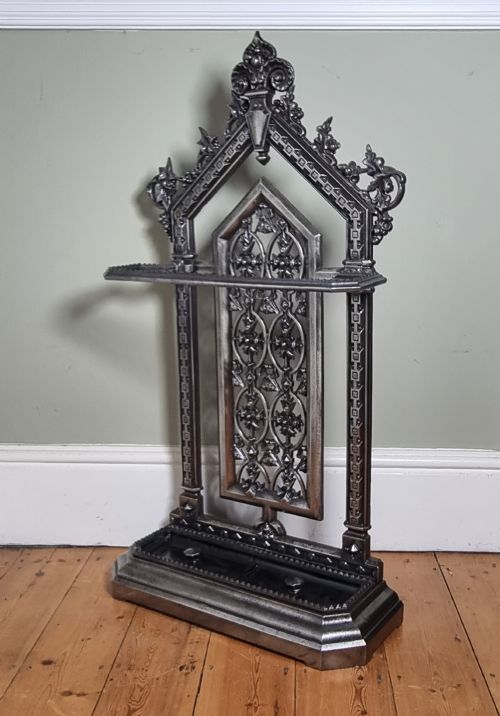
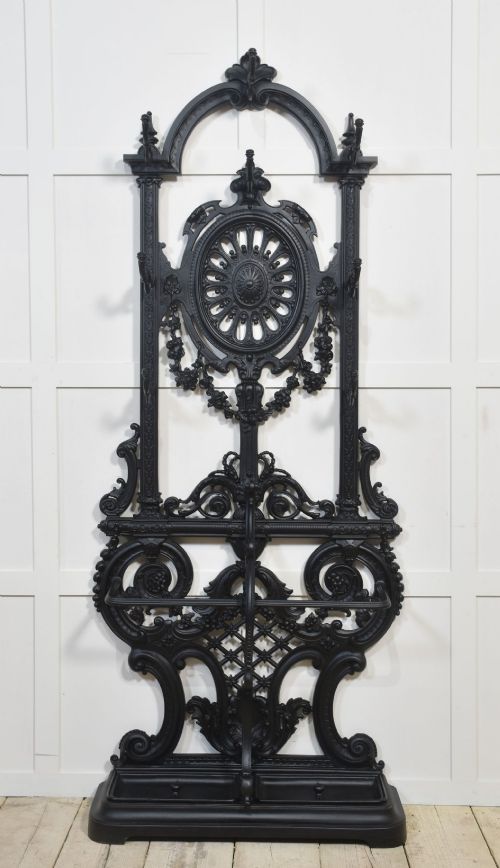
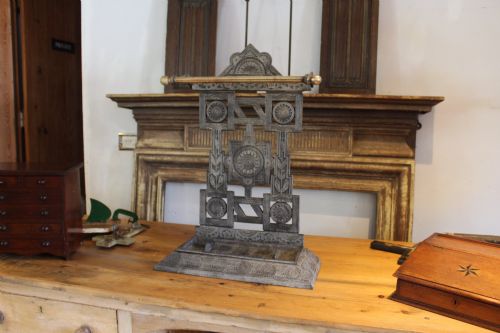


Gothic Iron Umbrella Stand
These gothic iron umbrella stand examples are heavy hallway survivors from the Victorian era, offering gothic tracery and structural heft that organise wet walking gear.
Gothic Iron Umbrella Stand
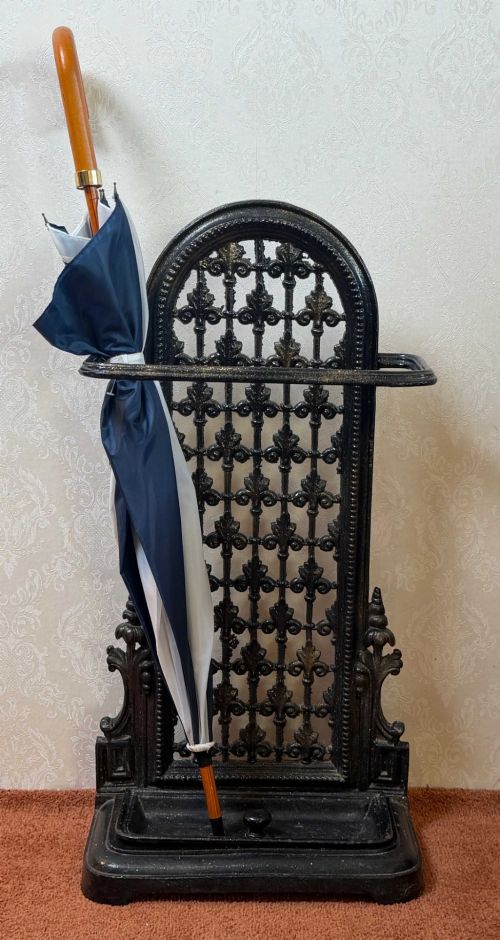
A gothic iron umbrella stand is a functional piece of hallway furniture designed to hold walking sticks, canes and wet umbrellas. You will most commonly encounter these items cast in robust iron, taking the form of dedicated stick stands or larger hall stands that incorporate umbrella racks.
The pieces on this page span the Victorian period, with dates clustering around the mid to late nineteenth century, specifically the 1860s, 1870s and 1880s alongside some later 1900 examples. Alongside standard Victorian styling, the designs draw heavily on Gothic Revival, Aesthetic Movement and Arts and Crafts traditions.
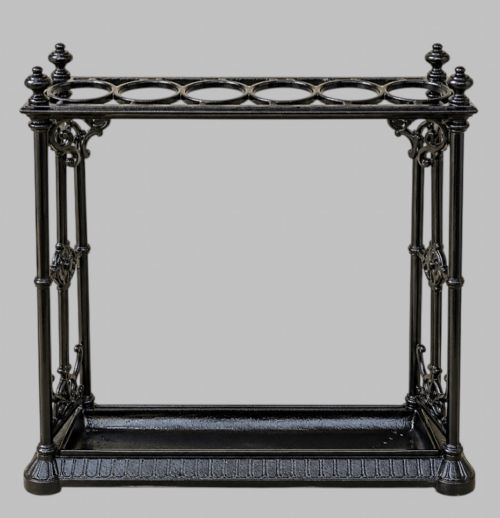
Forms vary from compact twenty-four ring models up to substantial thirty-six hole country house pieces and towering hallway racks. Makers such as Coalbrookdale and the Falkirk Foundry dominate the recorded output, often producing marked or attributable foundry work.
How they were made
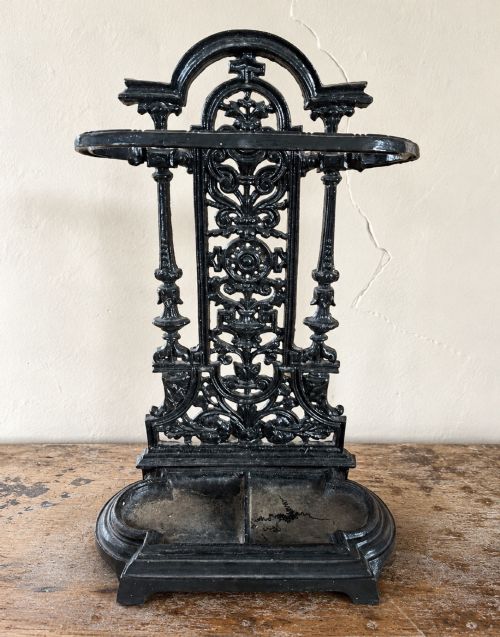
Foundries utilised sand casting to produce the intricate openwork frames characteristic of these pieces. Molten iron poured into moulds created the rigid structural members, drip pans and repeating gothic arches.
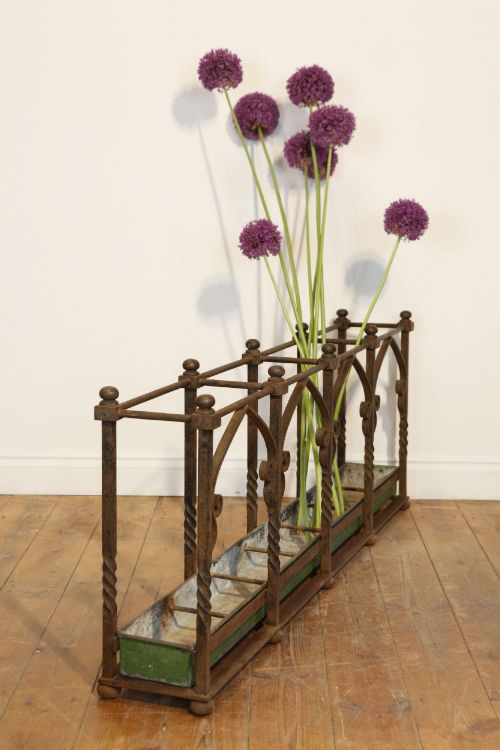
Makers integrated mixed media where function required it, pairing heavy cast iron frames with brass fittings, sheet metal, copper accents, marble bases and glass inserts. Paint finishes applied over the bare metal protected the iron and added surface colour.
Gothic Iron Umbrella Stand Retail Price Guide 2026
Typical asking prices for gothic iron umbrella stand among the pieces listed under this phrase on Sellingantiques today, from the lower quarter to the upper quarter. They describe what is for sale here now, not the wider market.
Some stands offer up to thirty-six ring holes, proving the Victorians took their umbrella collections very seriously indeed.
What varies in quality
Quality rests in the crispness of the foundry casting and the depth of the gothic detail. Top tier pieces display sharply rendered tracery without blurring, whereas lower quality examples show softened edges from worn moulds.
Maker attribution elevates a piece, with documented foundry marks from Coalbrookdale or Thomas Jeckyll demonstrating superior design ambition. The inclusion of secondary materials like brass or copper also separates standard utilitarian stands from ambitious architectural designs.
Coalbrookdale·Thomas Jeckyll·Falkirk Foundry
The Gothic Iron Umbrella Stand Glossary
- Cast iron
- A strong, hard iron-carbon alloy poured into moulds in a molten state. It forms the heavy load-bearing frames of these hallway stands.
- Gothic Revival
- An architectural and decorative style drawing inspiration from medieval forms. It manifests here in pointed arches, trefoils and structural tracery.
- Drip pan
- A shallow tray positioned at the base of the stand to catch water running off wet umbrellas. These are often removable for cleaning.
- Hall stand
- A larger piece of hallway furniture combining a stick stand with coat hooks, a mirror or a glove box. It shares the same iron construction as dedicated umbrella racks.
- Aesthetic Movement
- A late nineteenth century design movement prioritising visual beauty over narrative function. Pieces from this context display refined geometry and stylized botanical motifs.
Gothic Iron Umbrella Stand: Frequently Asked Questions
What is a gothic iron umbrella stand?
A gothic iron umbrella stand is a heavy Victorian hallway accessory built to store wet umbrellas and walking sticks. These pieces use cast iron frames decorated with medieval architectural motifs like pointed arches and tracery.
Foundries produced them in various sizes, ranging from small domestic ring stands to massive thirty-six hole racks for country houses. Their primary purpose remained practical, but the decorative ironwork turned a utilitarian item into a focal point for the entrance hall.
How do I identify a Coalbrookdale stand?
Coalbrookdale pieces often feature crisp casting quality and distinct registry or pattern numbers stamped into the iron. Some carry the foundry name directly on the frame.
Stylistic cues also help, as these stands frequently employ sophisticated Gothic Revival or Aesthetic Movement patterns. Comparing the piece to recorded catalogue designs confirms the attribution.
Are these stands suitable for daily use?
Cast iron is exceptionally durable and handles the weight of wet umbrellas and heavy walking sticks with ease. The integrated drip pans protect your floors from moisture.
You should ensure the drip pan is present and undamaged to prevent water pooling on wooden flooring. Otherwise, these robust Victorian items require very little maintenance in a modern hallway.
How do I date a cast iron stand?
Dating relies on stylistic movements, foundry marks and occasional date stamps found on the iron. Most examples date from the Victorian era between the 1860s and the end of the nineteenth century.
Gothic Revival and Arts and Crafts design cues help narrow the manufacturing window. Foundry records and registration marks provide the most precise chronological placement.