




Gothic Hall Stand
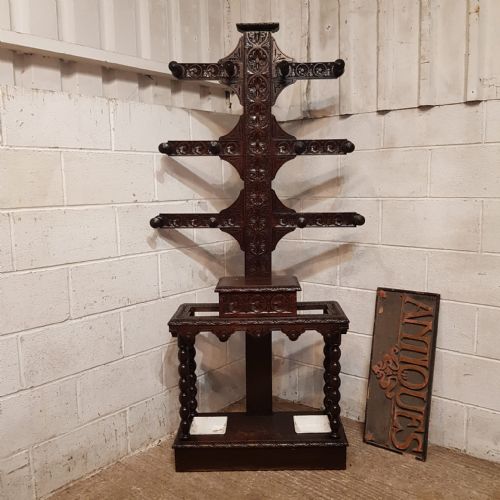
A gothic hall stand greets visitors with pointed arches, heavy timber, and dark metalwork that set a dramatic tone for a Victorian interior.
Gothic Hall Stand
A gothic hall stand provides an impressive entranceway fixture designed to hold coats, hats, sticks, and umbrellas in nineteenth-century homes. These pieces emerge predominantly from the Victorian period, drawing upon revival styles that favoured medieval architectural motifs.
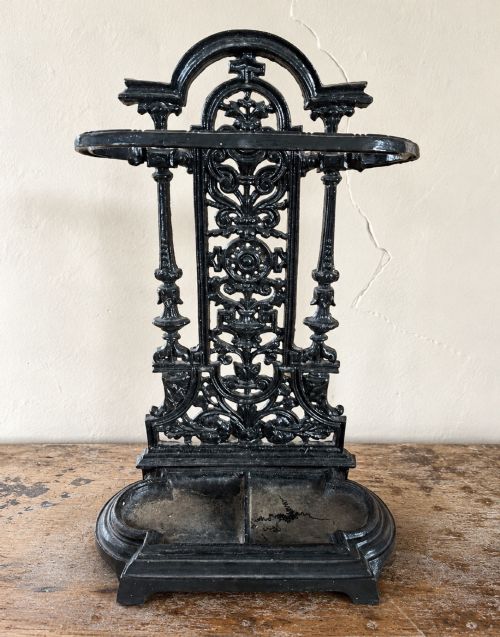
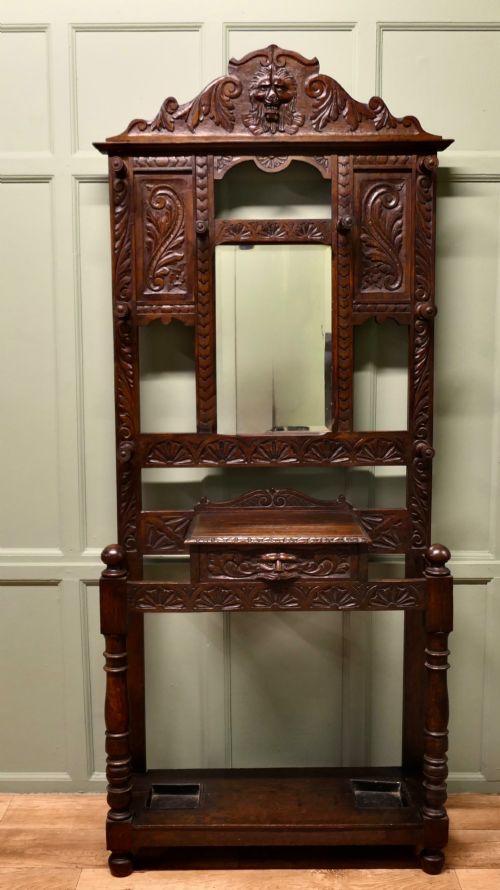
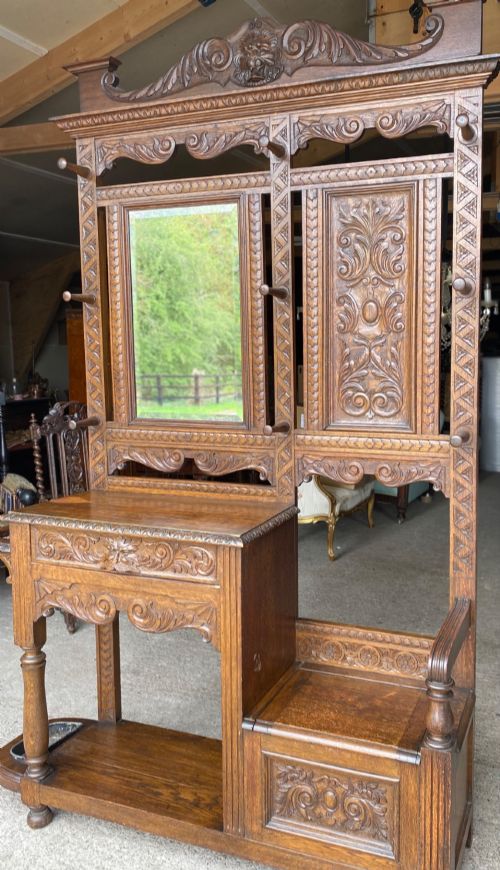
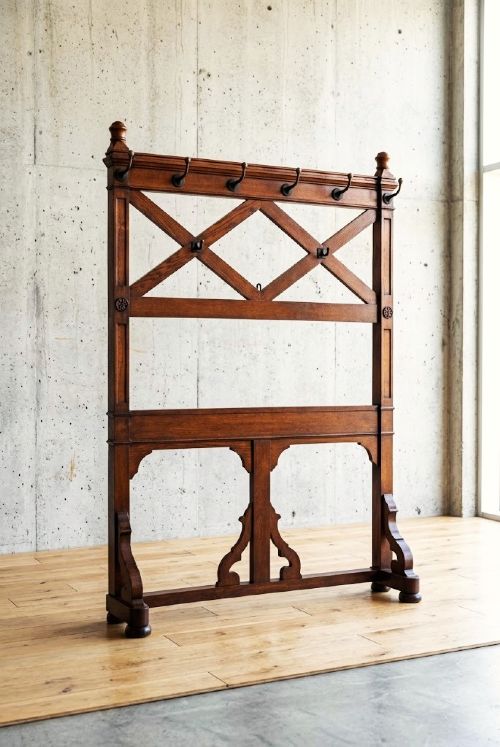
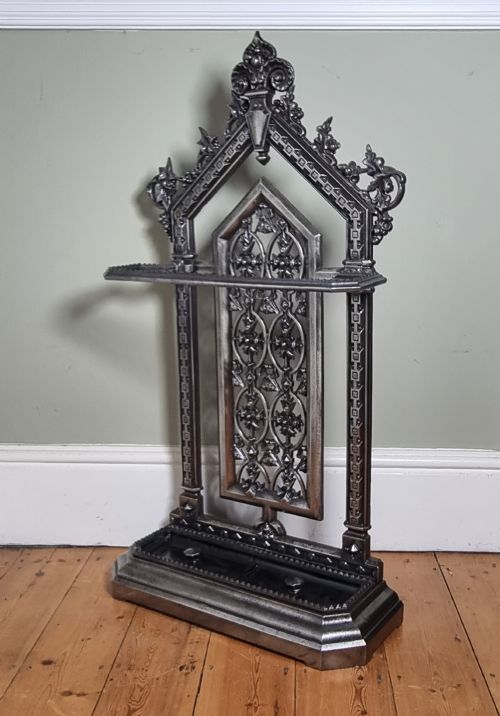
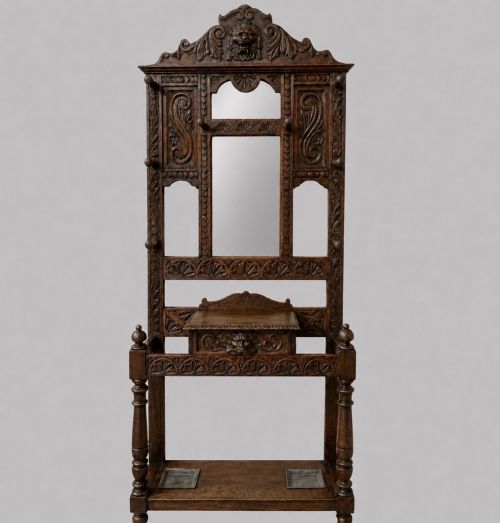
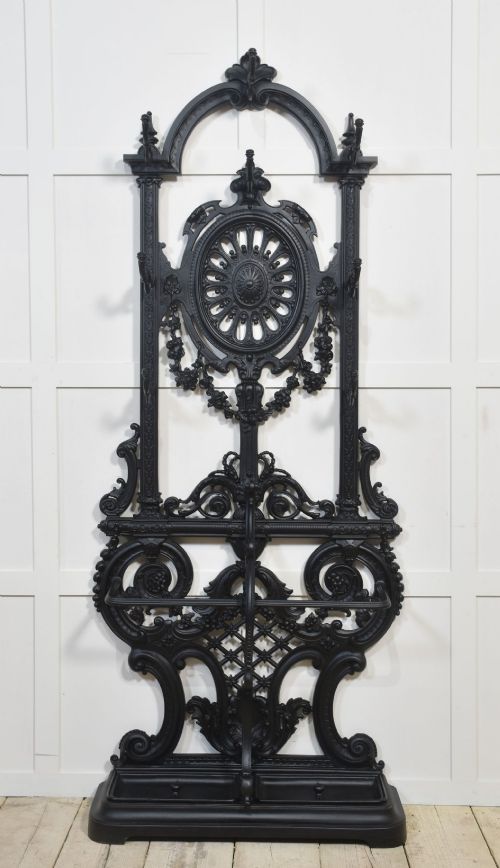
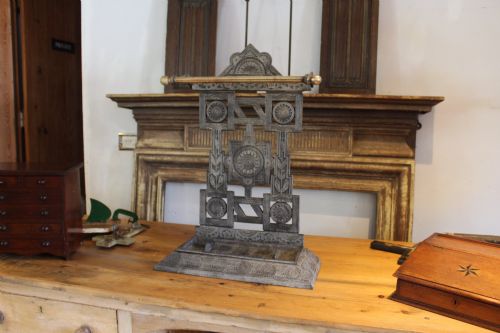
The most common examples encountered on this page combine carved oak framework with structural iron components or mirrored backings. Pieces range from upright umbrella and stick stands cast in metal to large timber items incorporating storage cupboards and bench seating.
Makers often integrated side tables, umbrella racks, and hat hooks into a single unified piece of hall furniture. The stylistic vocabulary borrows heavily from ecclesiastical architecture, featuring pointed arches, tracery, and occasionally grotesque carvings like the green man.
Materials and Construction
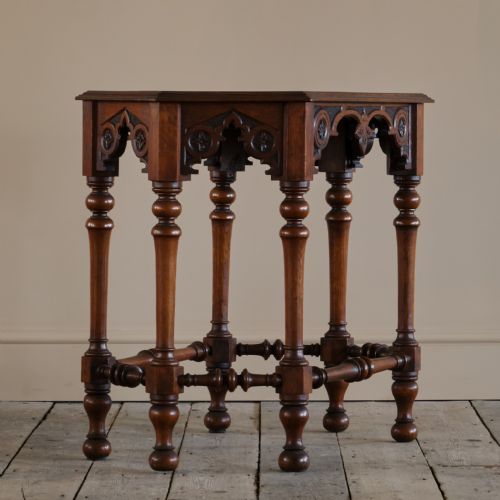
Solid oak serves as the primary timber, shaped through heavy carving, panel construction, and joinery typical of Victorian revival workshops. Cabinetmakers utilised barley twist legs, raised panels, and applied mouldings to build robust timber frameworks.
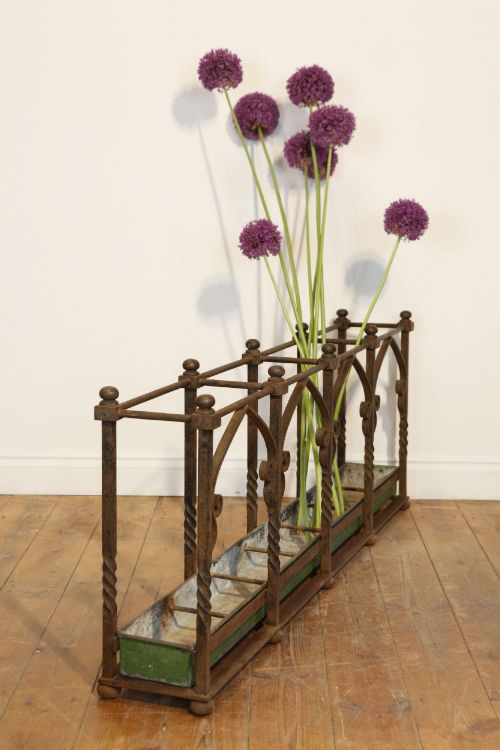
Cast iron and metal components provide the structural rigidity needed for umbrella and stick compartments, frequently utilising openwork scrolling and drip pans. Foundries poured molten iron into intricate moulds to produce repetitive botanical patterns and architectural cresting.
Secondary materials such as brass hooks, inset mirrors, and occasional marble elements add functional contrast to the dark wood and metal surfaces. Zinc liners are also utilised inside base trays to catch rainwater from wet umbrellas without rotting the surrounding timber.
Gothic Hall Stand Retail Price Guide 2026
Typical asking prices for gothic hall stand among the pieces listed under this phrase on Sellingantiques today, from the lower quarter to the upper quarter. They describe what is for sale here now, not the wider market.
Listings feature a strong presence of Victorian cast iron stick stands alongside heavily carved oak hall cupboards and umbrella racks.
Judging Quality and Execution
The distinction between ordinary and superior pieces rests upon the depth and sharpness of the timber carving. Master carvers produced crisp foliage, well-defined facial expressions on green man masks, and balanced proportions that elevate a hall stand beyond standard mass production.
Foundry work dictates the merit of metal examples, where clean casting lines and intricate openwork distinguish better pieces from crude reproductions. Heavier gauge iron and substantial brass hardware indicate a higher standard of manufacture from established foundries.
Thomas Jeckyll·Falkirk Foundry
The Gothic Hall Stand Glossary
- Gothic Revival
- An architectural and decorative style popular during the nineteenth century that revived medieval forms such as pointed arches and trefoils. This aesthetic heavily influences the ornamentation found on Victorian hall furniture.
- Green Man
- A sculptural motif depicting a human face surrounded by or sprouting from foliage. It appears frequently as a carved detail on Victorian oak hall furniture.
- Barley Twist
- A turned column or leg carved in a spiral shape resembling twisted barley sugar. Makers commonly applied this decorative turning to the upright supports of tables and stands.
- Drip Pan
- A shallow metal tray placed at the base of stick and umbrella stands to catch moisture. These pans protect wooden flooring and lower framing from water damage.
Gothic Hall Stand: Frequently Asked Questions
What is a gothic hall stand?
A gothic hall stand is a functional entryway furnishing designed during the nineteenth century to store outdoor garments and walking accessories. It combines structural woodwork with metal framework, incorporating hooks, mirrors, and umbrella holders into a single architectural unit.
These pieces reflect the Victorian taste for medieval revival design, utilising dark carved timber and pointed arches to create an imposing first impression in a hallway.
How were these hall stands used?
Families used these pieces daily to manage coats, hats, scarves, and walking sticks upon entering the home. The integrated hooks held heavier outerwear, while the lower ring sections kept wet umbrellas contained.
Many designs also included central ledges for gloves or card trays, and built-in mirrors allowed residents to check their appearance before stepping back outside.
Where should I place a hall stand?
A hall stand requires a dedicated position in an entrance hall or large corridor where its depth and height will not obstruct movement. Because many examples incorporate mirrors and tall timber backs, positioning them against a sturdy wall is essential.
Ensure there is sufficient clearance around the base for umbrellas and that the piece receives even indoor humidity away from direct heat sources.
How do I care for antique oak?
Maintaining antique oak involves keeping the timber nourished with appropriate wax polishes while avoiding excessive moisture or direct sunlight. Regular dusting with a soft cloth prevents grime buildup in the deep carved recesses.
Metal components such as cast iron frames and brass hooks benefit from dry cleaning to prevent oxidation, while removable drip pans should be emptied and dried regularly.