

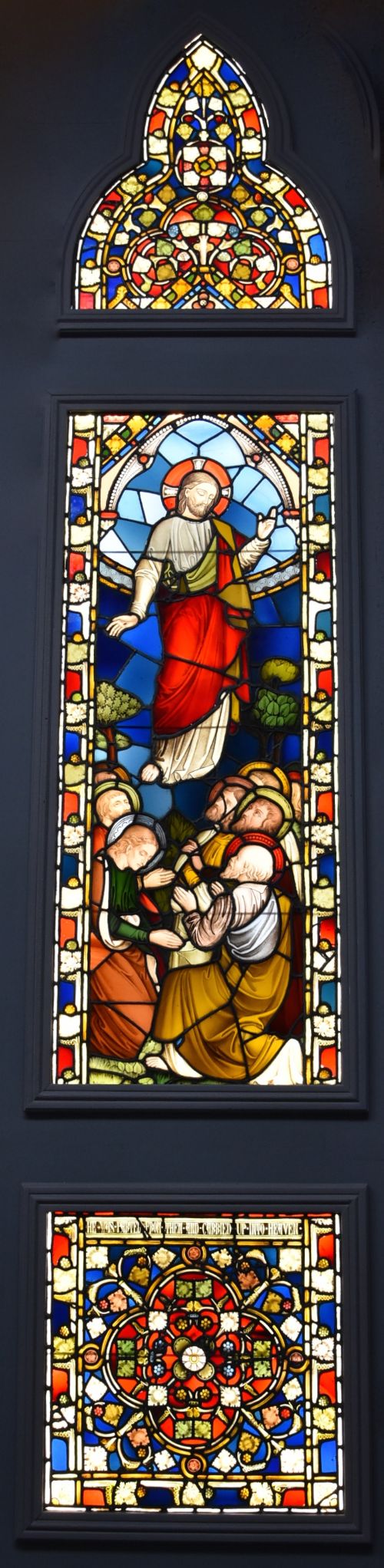


Gothic Glass Window
These gothic glass window pieces are rich architectural salvages and stained glass panels that bring historic ecclesiastical character into domestic spaces.
Gothic Glass Window
A gothic glass window represents a striking piece of architectural history, often salvaged from religious or secular buildings of the nineteenth century. These panels and windows feature pointed arches, leaded framework, and intricate religious or symbolic imagery that define the Gothic Revival style.
Buyers will most frequently encounter nineteenth century church windows and stained glass panels on this page. These pieces range from arched top church windows with square or diamond panes to triptychs and painted religious scenes.
Beyond structural windows, the category extends to related forms such as gothic revival mirrors and decorative items incorporating stained glass. Each piece carries the distinct aesthetic of the Victorian era, utilising traditional methods of leading and painting.
How they were made
The construction of these windows relies on pieces of coloured and painted glass held together by flexible lead came. Craftsmen soldered the lead joints to form sturdy lattices supporting the intricate pictorial designs.
Many examples incorporate hand painting and enamel work directly onto the glass surface, subsequently fired in a kiln to permanently fuse the pigment. Wood frames frequently surround these panels to provide structural support for architectural installation.
Gothic Glass Window Retail Price Guide 2026
Typical asking prices for gothic glass window among the pieces listed under this phrase on Sellingantiques today, from the lower quarter to the upper quarter. They describe what is for sale here now, not the wider market.
Listings incorporate nineteenth century periods alongside Victorian and Edwardian dates, spanning from eighteen fifty to nineteen thirty.
What varies in quality
Quality in these pieces rests primarily upon the artistry of the glass painting and the complexity of the original design. Superior examples exhibit expressive detail in figures, such as hand painted knights or religious iconography, alongside sophisticated mastery of colour.
The integrity of the leadwork and the original condition of the glass panes also influence the stature of a piece. Intact nineteenth century leading and well preserved enamel work elevate an item above simpler, plain paned configurations.
Sir Edward Burne Jones
The Gothic Glass Window Glossary
- Gothic Revival
- An architectural and decorative style popular during the nineteenth century that revived medieval forms like pointed arches and tracery. It heavily influenced church design and domestic ornamentation.
- Stained Glass
- Glass coloured by the addition of metallic salts during its manufacture, traditionally assembled using lead strips. It is utilised extensively in religious windows to depict narratives and saints.
- Lead Came
- The slender grooved rods of lead used to hold pieces of glass together in a window. It forms the geometric grid pattern characteristic of traditional leaded lights.
- Architectural Salvage
- Building components rescued from demolition or renovation for reuse. This includes church windows, panels, and mirrors preserved from older structures.
- Triptych
- A picture or relief carving on three panels, hinged together or side by side. In glass windows, this format is used to present a central religious scene flanked by two complementary panels.
Gothic Glass Window: Frequently Asked Questions
How do I hang a heavy glass window?
Hanging these substantial architectural pieces requires securing them into structural wall studs or mounting them within a custom wooden window frame that supports their weight.
Many buyers install them directly in front of existing light sources or backlighting to properly illuminate the coloured glass.
What is the difference between diamond and square panes?
Diamond panes feature leading arranged in a diagonal lattice formation, which creates a classic historic texture often seen in gothic revival architecture.
Square panes utilise a straightforward orthogonal grid, offering a clearer view through the glass while maintaining the proportions of nineteenth century church windows.
Can these windows be cleaned safely?
Cleaning requires mild, non abrasive solutions applied gently with a soft cloth to protect fragile painted surfaces and aged enamel.
Harsh chemical cleaners should be avoided entirely, as they can damage both the historic glass and the soft lead cames holding the panel together.