
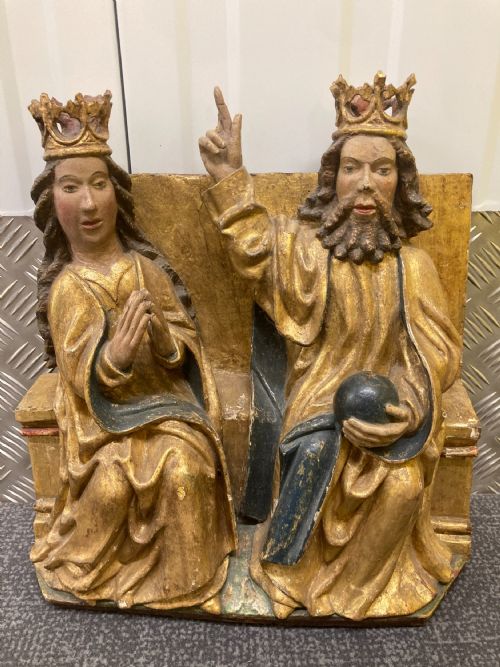


Gothic Church Figure
These gothic church figure examples bring tangible devotion into modern rooms through centuries of carved timber and pigment.
Gothic Church Figure
When you search for a gothic church figure, you encounter carved timber sculptures originating from ecclesiastical settings, spanning epochs from pre-sixteenth century medieval workshops through nineteenth-century revivals. The listings here present saints, madonnas, angels, and donors carved for devotional spaces, reflecting both Late Medieval piety and later historicist revivals.
You meet continental European examples most frequently on this page, particularly from French, German, and Flemish traditions. These range from substantial oak saints and limewood groups to nineteenth-century plaster interpretations and painted pine archangels.
How they were made
Carvers shaped these pieces primarily from dense timbers such as oak, limewood, and pine, working with chisels and gouges to build deep relief and three-dimensional form. Artisans applied gesso to prepare wooden surfaces for subsequent layers of paint, polychrome, and gold leaf.
Surviving polychrome paint and gilding often sit directly over original preparation layers, though many pieces display the stripped grain of subsequent centuries. Plaster and cast materials appear in later nineteenth and early twentieth-century interpretations.
Listings on this site span the sixteenth century through the twentieth century, focusing primarily on carved wood, oak, and polychrome paint.
What varies in quality
The distinction between ordinary and exceptional work rests on the dexterity of the carver's hand in drapery folds, facial expression, and anatomical proportion. Master carvers of the fifteenth and sixteenth centuries invested figures with lifelike weight and movement, whereas lesser workshop output tends toward stiffness and repetitive chisel marks.
The survival of original polychrome paint and gold leaf elevates a piece, as does the clarity of continental regional carving styles, such as Upper Rhine or Flemish traditions.
Rouillard Angers
The Gothic Church Figure Glossary
- Polychrome paint
- Pigments applied to sculpture, often over a gesso ground, to render garments and flesh tones lifelike. Surviving traces indicate original devotional appearance.
- Gesso
- A plaster or chalk-based mixture applied to wood surfaces to provide a smooth base for gilding and painting. It underpins the decorated surfaces of medieval carvings.
- Donor figure
- A sculpture depicting the patron or donor of a religious artwork, often shown kneeling in prayer alongside saints. These figures provide social context for ecclesiastical commissions.
- Pieta
- A representation of the Virgin Mary mourning over the dead body of Christ. This subject appears in medieval wood sculpture with high emotional expression.
- Giltwood
- Timber decorated with thin sheets of gold leaf applied over a prepared surface. It catches candlelight within religious interiors.
Gothic Church Figure: Frequently Asked Questions
What is a gothic church figure?
A gothic church figure is a carved or moulded representation of a saint, angel, or biblical personage originally made for a chapel, church, or domestic devotional setting. These works capture the spiritual focus of medieval and revivalist eras.
Materials range from heavy carved oak and limewood to painted pine, gesso, and later plaster, reflecting the changing tastes of European workshops across hundreds of years.
How were these figures used?
These sculptures stood upon altars, within architectural niches, or functioned as wall sculptures and architectural carvings inside sacred spaces. They directed the thoughts of worshippers toward prayer and contemplation.
Many pieces served as focal points for private devotion in homes or smaller chantries before finding their way into secular collections.
How do I live with one?
Living with a gothic church figure involves placing it away from direct heat sources and sudden humidity changes to protect old timber, gesso, and paint. A stable interior environment preserves the dry wood and delicate surface pigment.
Pair these statues with simple backgrounds that allow their carved forms and traces of old polychrome to stand out without visual competition.
How do I tell periods apart?
Early pieces from the fifteenth and sixteenth centuries display deep, dynamic chisel work in oak or limewood, often retaining remnants of original polychrome paint and gesso. Their forms reflect medieval and Renaissance stylistic conventions.
Nineteenth-century Gothic Revival pieces often utilise softer pine, distinct plaster casting techniques, or cleaner mechanical cuts that imitate earlier medieval aesthetics without the same organic wear.