



Gothic Ceiling Lamp
These gothic ceiling lamp pieces combine medieval ecclesiastical forms with period lighting utility, offering an atmospheric focal point for period interiors.
Gothic Ceiling Lamp
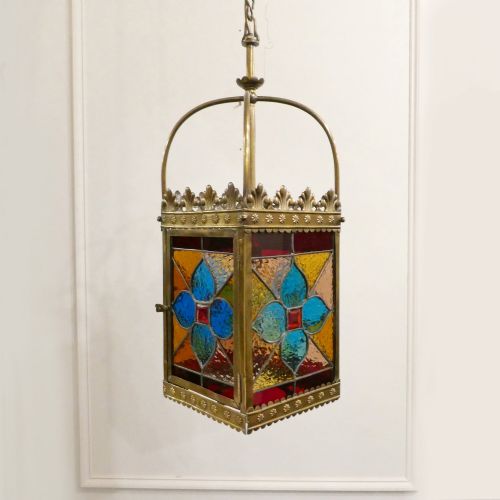
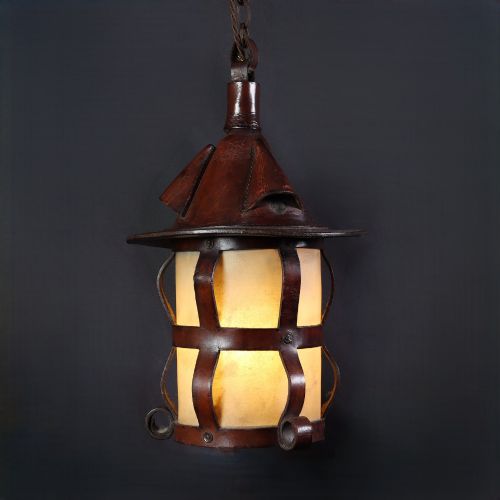
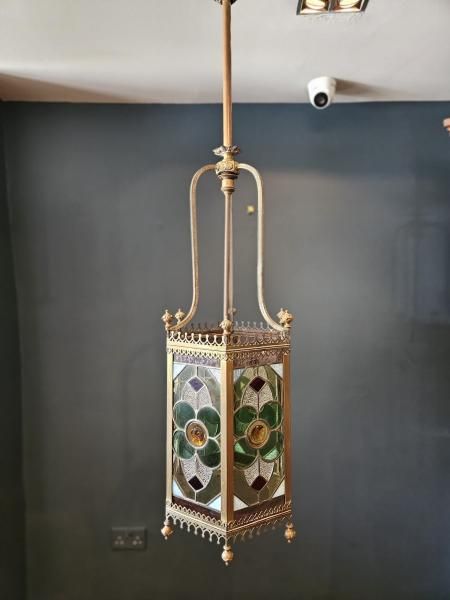
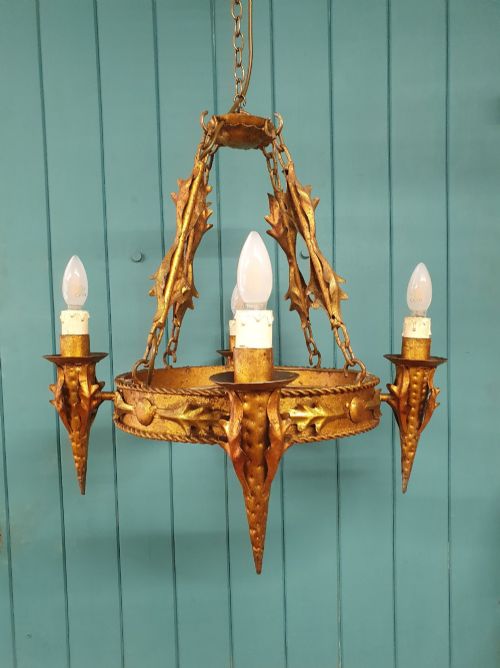
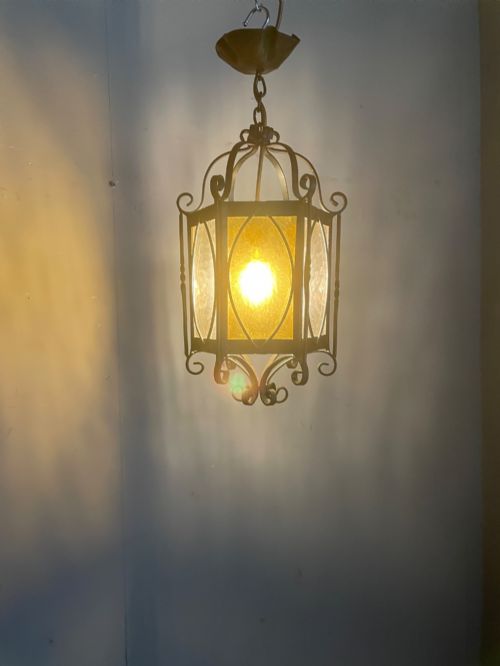
A gothic ceiling lamp encompasses pendant lights, hall lanterns, and chandeliers drawing upon Victorian Gothic, Arts and Crafts, and French Gothic Revival styles. These overhead fixtures illuminate spaces while evoking medieval architecture through pointed arches, heavy metalwork, and lantern forms.
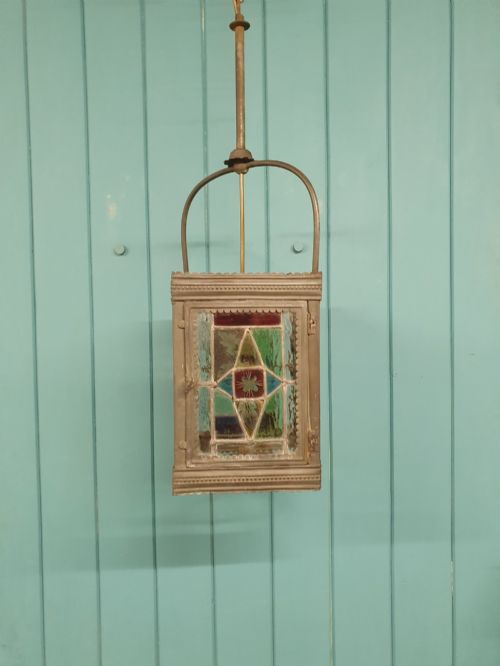
The versions most commonly met on this page range from Victorian brass and leaded glass designs to early twentieth century Arts and Crafts copper and leather lanterns. Pieces originate across the nineteenth and twentieth centuries, spanning periods from eighteen eighty to nineteen thirty.
Forms vary from hexagonal hall lanterns and star lanterns to multi-branched chandeliers and ceiling roses. Each object hangs from ceilings to provide architectural presence in entrance halls, landings, and principal rooms.
Distinctions in quality
Quality separates through the integrity of the metalwork, whether hand stitched leather and vellum panels, beaten copper, or blacksmith made cast iron show careful execution. Superior pieces demonstrate crisp detailing in frames and secure joinery across multi-lantern chandeliers.
Glass selection and assembly dictate upper ranges, seen in leaded glass, stained glass, and coloured glass panels fitted precisely within their metal channels. Lesser examples lack the refined proportions and depth of material found in French Chateau or Arts and Crafts Gothic designs.
Gothic Ceiling Lamp Retail Price Guide 2026
Typical asking prices for gothic ceiling lamp among the pieces listed under this phrase on Sellingantiques today, from the lower quarter to the upper quarter. They describe what is for sale here now, not the wider market.
Listings feature works from the Victorian era up to nineteen thirty, encompassing wrought iron, leaded glass, leather, and vellum.
The Gothic Ceiling Lamp Glossary
- Leaded glass
- Glass panels held together by lead cames to form geometric or decorative patterns. This technique provides structural rigidity while allowing coloured or clear segments to form lantern walls.
- Hall lantern
- An enclosed ceiling fixture designed specifically for entrance halls and corridors. These pieces typically feature glazed sides and metal frames to direct illumination downwards.
- Vellum
- A fine parchment prepared from calfskin used as a translucent panel material. In period lanterns, it softens interior light diffusion.
- Ceiling rose
- An ornamental plaster or cast metal disc fixed to the ceiling from which a pendant light hangs. It often incorporates decorative foliage or gothic motifs.
Gothic Ceiling Lamp: Frequently Asked Questions
Where should I hang a gothic ceiling lamp?
These lamps suit entrance halls, high ceiling stairwells, and principal reception rooms where their architectural presence can be fully appreciated. Their hanging height needs careful adjustment to clear walkways while maintaining visual impact.
Ensure the ceiling structure supports the weight of iron and brass frames. Matching the scale of the lantern to the proportions of the room prevents the piece from overwhelming the space.
How do I date a gothic ceiling lamp?
Dating relies on identifying material combinations and stylistic cues associated with periods from the nineteenth century through nineteen thirty. Victorian examples often utilise cast brass and coloured glass, whereas Arts and Crafts pieces favour beaten copper and hand stitched leather.
Construction marks, such as blacksmith made cast iron or leaded glass techniques, offer further clues to the era of manufacture. Comparing the stylistic influence, whether French Gothic Revival or early twentieth century Arts and Crafts, narrows the timeline.
Are these lamps wired for modern electricity?
Many surviving pieces have been adapted for modern electrical standards while retaining their original frames and lanterns. Some listings note fully working conditions, though buyers should consult qualified electricians for installation.
Internal wiring can be updated discreetly to preserve the visual integrity of historical glass, vellum, and metalwork. This ensures both safety and historical fidelity when living with period lighting.
How do I clean and maintain metal and glass lanterns?
Maintenance involves gentle dusting of metal frames and glass panels using soft cloths without abrasive chemicals. Wrought iron, brass, and copper benefit from preserving natural patinas rather than aggressive polishing.
Leather and vellum panels require dry conditions and careful handling to prevent moisture damage. Regular checks of ceiling fixings ensure the safe suspension of heavier cast iron and multi-branched chandeliers.