

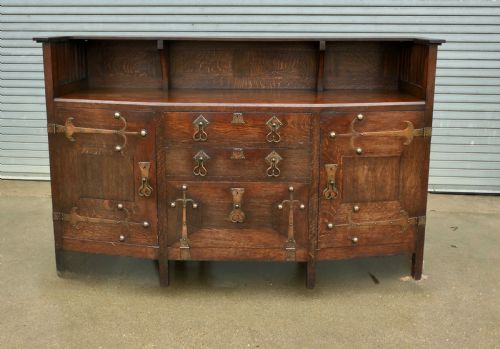


Gothic Buffet Cabinet
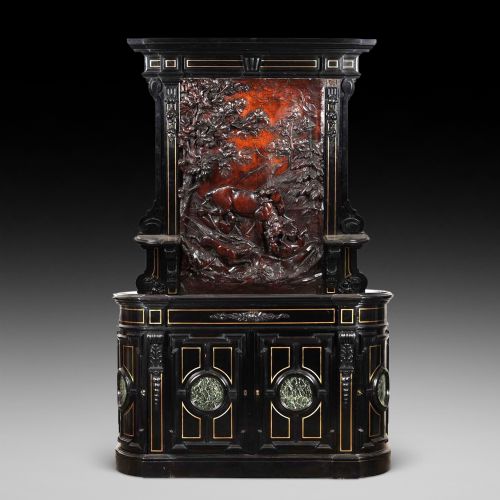
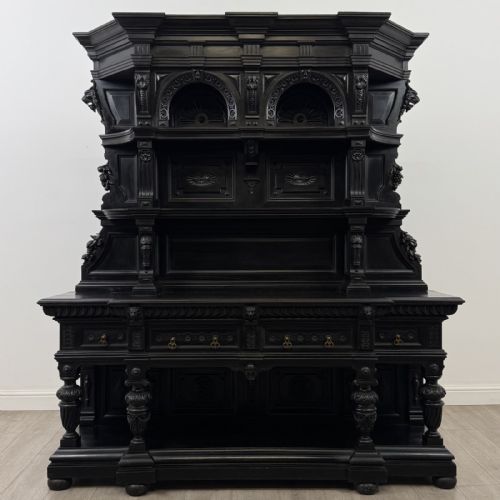
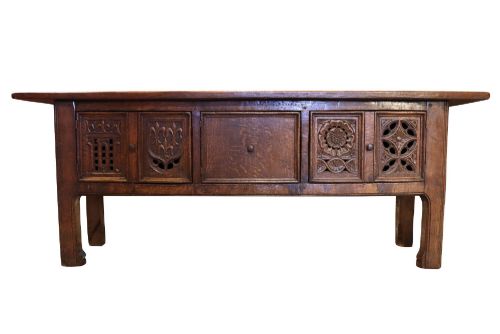
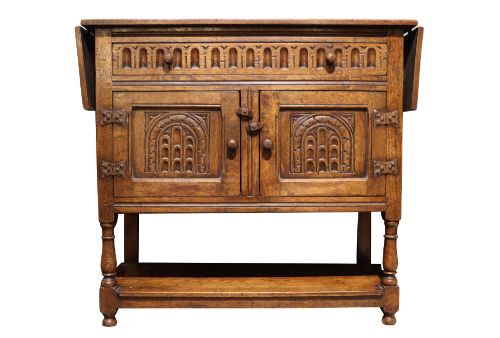
A gothic buffet cabinet brings heavy architectural presence and deep historical carving into a dining space.
Gothic Buffet Cabinet
A gothic buffet cabinet combines storage capacity with the dramatic pointed arches, tracery, and robust timber forms characteristic of medieval architecture revived in later centuries. When searching this phrase, buyers encounter substantial storage pieces primarily built as sideboards, server units, and enclosed cupboards.
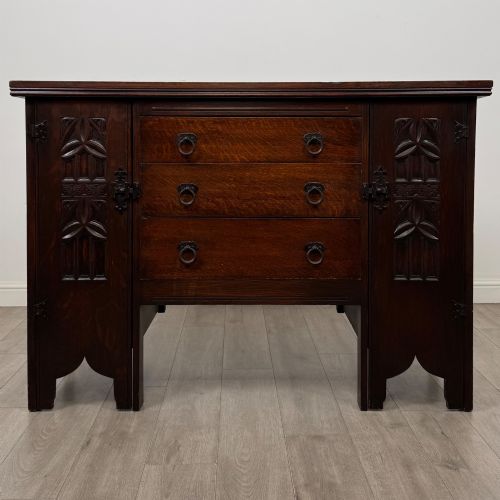
The pieces appearing on this page span from the mid nineteenth century through the early twentieth century, taking shape predominantly during the Victorian era and the Edwardian period. Alongside core Victorian Gothic Revival items, examples exhibit stylistic overlaps with Jacobean Revival, Renaissance Revival, and Arts and Crafts design.
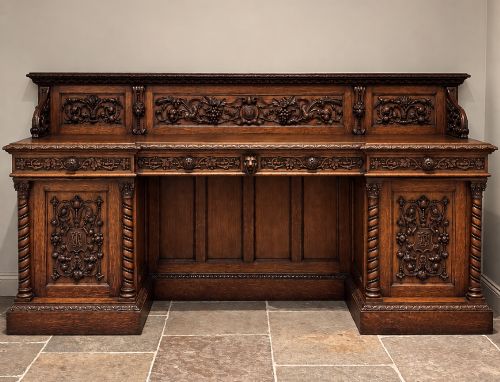
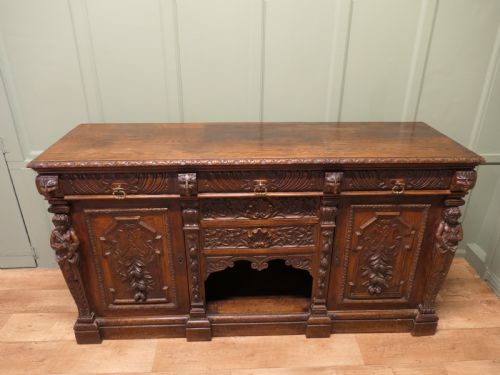
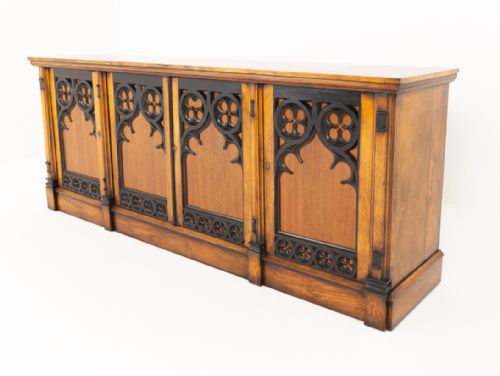
Most entries function practically as server units or sideboards featuring drawers, bottle racks, and cupboard doors. These domestic storage items often incorporate secular architectural motifs adapted from ecclesiastical buildings, such as linenfold panels and pointed arch glazing.
How they were made
Solid oak serves as the foundational timber across the vast majority of these pieces, selected for its density and suitability for deep relief carving. Cabinetmakers also utilised ebonised hardwoods and exotic woods like padouk and pollard oak to create tonal contrast in specific decorative elements.
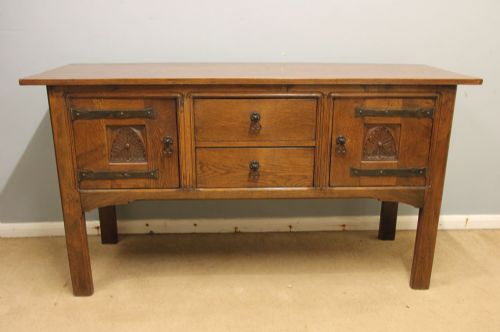
Joinery techniques relied on traditional pegged mortise and tenon construction to support the heavy weight of stone-look timber lintels and projecting cornices. Metalwork details, including brass handles, iron hinges, and wrought iron strapwork, reinforce the structural joints while echoing medieval hardware.
Gothic Buffet Cabinet Retail Price Guide 2026
Typical asking prices for gothic buffet cabinet among the pieces listed under this phrase on Sellingantiques today, from the lower quarter to the upper quarter. They describe what is for sale here now, not the wider market.
The listings on this page span from the sixteenth century through the Edwardian period, with Victorian examples forming the core.
What varies in quality
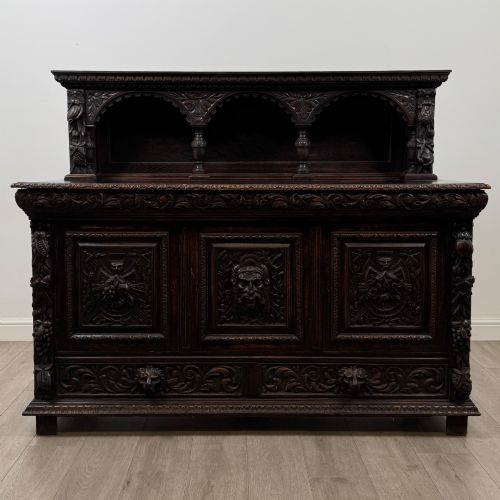
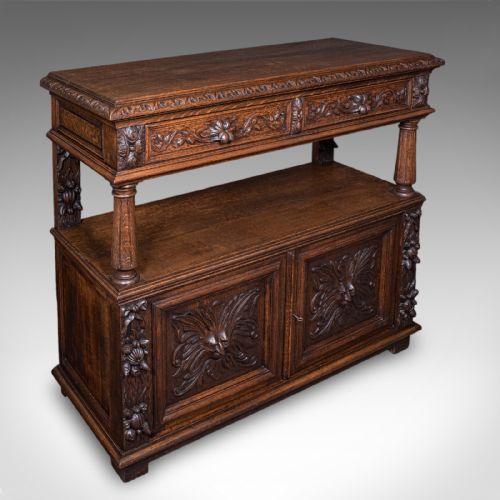
The depth and execution of the carved ornamentation define the upper tier of these pieces, distinguishing crisp hand-chiselled Green Man masks and lion motifs from shallow, mechanical factory shaping. Superior examples maintain proportional harmony across large dimensions, avoiding heavy-handed bulk in favour of architectural rhythm.
Leonard Wyburd
The Gothic Buffet Cabinet Glossary
- Gothic Revival
- An architectural and decorative movement reviving medieval structural forms, pointed arches, and ornate stone-carving motifs in nineteenth-century furniture. This style draws heavily on ecclesiastical aesthetics adapted for domestic interiors.
- Green Man
- A sculptural motif depicting a human face emerging from or entwined with foliage and vines, symbolising rebirth. It appears frequently as a central carved detail on nineteenth-century oak furniture.
- Dresser Base
- An open or enclosed low cabinet traditionally used for food preparation and serving in large dining halls. These pieces often feature drawers above lower cupboards or stretcher bases.
- Linenfold
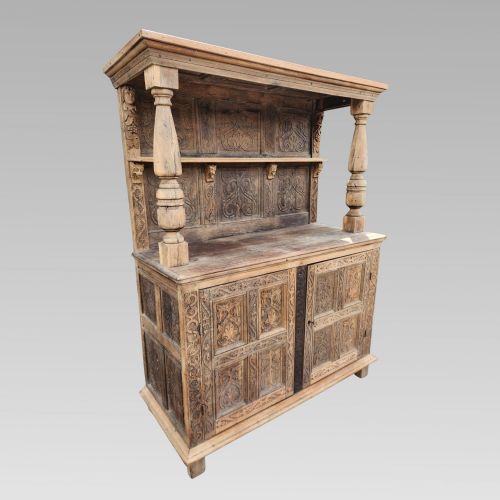
- A style of wood carving that mimics vertical folds of folded fabric, commonly seen on Tudor and revival cabinet panels. This technique adds texture and linear movement to flat wooden doors.
- Stretcher Base
- Horizontal wooden members connecting the lower legs of a table or cabinet to provide structural stability. On larger storage pieces, these stretchers often feature carved mouldings or central supports.
Gothic Buffet Cabinet: Frequently Asked Questions
What is a gothic buffet cabinet?
A gothic buffet cabinet is a heavy timber storage unit designed for dining rooms, featuring architectural details like pointed arches, tracery, and deep relief carvings. These pieces function as sideboards, servers, or cupboards that combine display space with enclosed storage.
Originating mostly from the Victorian era and later revival periods, they adapt medieval cathedral aesthetics into functional domestic furniture. Their robust proportions and dark woods make them focal points in traditional interior schemes.
How were these cabinets used?
These cabinets served primarily in dining rooms to store serving dishes, cutlery, and glassware while providing a surface to lay out food during meals. Some variations included built-in bottle racks, narrow proportions for smaller halls, or upper display shelves for fine ceramics.
Beyond dining spaces, larger examples acted as hallway credenzas or general storage cupboards in substantial period homes. Their sturdy construction allowed them to bear heavy loads of silver and pewter.
How do I live with a gothic buffet cabinet?
Living with a substantial oak cabinet requires balancing its dark timber and heavy presence with lighter surrounding walls and neutral textiles. Allowing adequate floor space ensures the projecting cornices and deep carvings remain visually balanced within the room.
Regular polishing with appropriate wax maintains the dark grain of the oak without building up a sticky residue. Treating the wood gently preserves the antique patina and protects the intricate hand-carved details from accidental impacts.
How do I tell the periods apart?
Mid nineteenth-century pieces often display strict architectural proportions and crisp, deep ecclesiastical carvings rooted in early Gothic Revival principles. Later nineteenth and early twentieth-century examples frequently blend these gothic elements with Renaissance Revival or Arts and Crafts influences, introducing softer decorative lines.
Hardware changes also offer chronological clues, where hand-forged ironwork tends to appear on earlier or strictly revivalist items, while mass-produced brass fittings align with Edwardian production. Examining the secondary timbers inside drawers and backboards helps confirm whether a piece dates to the Victorian era or later revival workshops.