



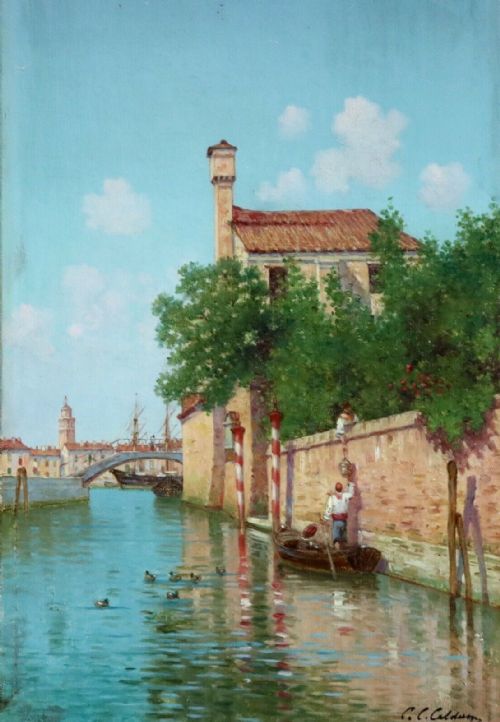


Gondola on Canal Painting
These gondola on canal painting works capture Venetian waterways through oils, watercolours and pastels across the nineteenth and twentieth centuries.
Gondola on Canal Painting
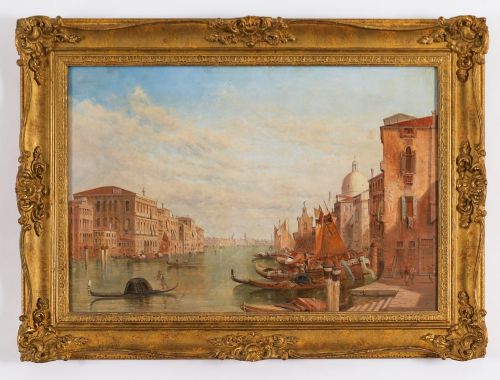
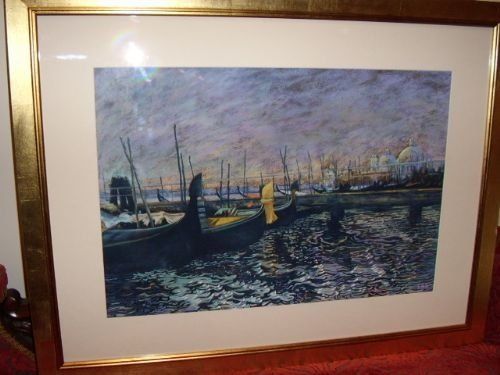
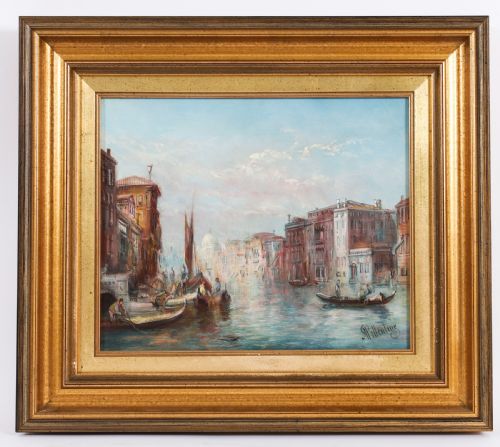
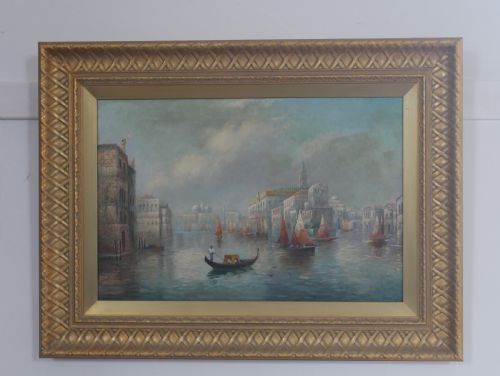
A gondola on canal painting depicts the famous waterways and architecture of Venice, ranging from nineteenth-century romanticism to mid-century impressionism. Buyers encounter framed oil paintings on canvas and delicate watercolours on paper showing landmarks like the Grand Canal and the Bridge of Sighs.
The works span multiple eras, including Victorian pieces, 1930s cityscapes and 1960s post-impressionist interpretations. Most examples focus on specific sights such as the Ducal Palace, San Giorgio Island and Santa Maria della Salute.
Common formats include traditional oil on canvas and transparent watercolours, alongside occasional pastels, gouache and ink drawings. These depictions vary from broad atmospheric strokes to detailed architectural views.
What separates the work
The handling of light and water distinguishes the finest compositions, particularly where artists capture the reflection of gondolas and palaces. Skill in draughtsmanship determines how accurately architectural landmarks and perspective are rendered.
The presence of a recognised hand, such as Alfred Pollentine, Antoine Bouvard Senior or Hercules Brabazon Brabazon, elevates the standing of a piece within the market. Material execution, from the richness of the oil paint to the preservation of paper watercolours, further defines each example.
Gondola on Canal Painting Retail Price Guide 2026
Typical asking prices for gondola on canal painting among the pieces listed under this phrase on Sellingantiques today, from the lower quarter to the upper quarter. They describe what is for sale here now, not the wider market.
Listings feature canvases and watercolours from the nineteenth century, the 1930s and the 1960s, executed in wood, canvas, oil paint and gilt.
Alfred Pollentine·Antonio DeVity·Marc Aldine·Jane Vivian·Vittore Zanetti Zilla·Hercules Brabazon Brabazon·Wilfred Knox·Henry Wimbush·Charles Clement Calderon·Alberto Trevisan
The Gondola on Canal Painting Glossary
- Giltwood
- Wood carved and coated with gold leaf or a gold-coloured finish. It is commonly found on traditional frames surrounding Victorian and nineteenth-century canvases.
- Watercolour
- A paint method where pigments are suspended in a water-based solution on paper. This medium provides translucent washes suited to capturing Venetian mists and canals.
- Impressionism
- An art style characterised by relatively small, thin yet visible brush strokes and an open composition. It emphasises accurate depiction of light in its changing qualities.
- Gouache
- A water-based paint consisting of pigment and other inert material designed to be opaque. It is frequently combined with pastels and ink in works depicting Venetian evening scenes.
- Post-Impressionism
- A predominantly French art movement that developed from impressionism. It extends impressionism while rejecting its limitations, often using vivid colours and distinct brushwork.
Gondola on Canal Painting: Frequently Asked Questions
What periods do these paintings cover?
The available works extend from the Victorian era and nineteenth-century romanticism through early twentieth-century pieces up to the 1960s.
Most dated items cluster around the late nineteenth century and the decades leading to the mid-twentieth century.
Which materials are used most often?
Oil paint on canvas and watercolours on paper form the majority of the surviving examples. Giltwood frames frequently house these works.
Less common mediums include pastel, gouache, ink drawings and oil on copper.
Where were these scenes typically painted?
Artists focused heavily on iconic Venetian locations, including the Grand Canal, the Bridge of Sighs and San Giorgio Island. Many compositions feature gondolas passing beneath bridges or moored near palaces.
Specific landmarks such as the Ducal Palace and Santa Maria della Salute appear repeatedly across different decades.