




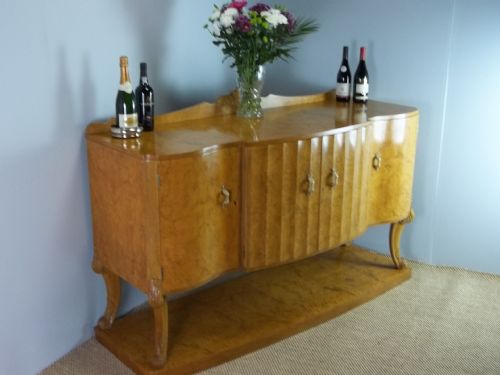
Golden Burr Walnut Buffet
A golden burr walnut buffet brings deep figured timber and commanding presence to a room, offering both extensive storage and high decorative impact.
Golden Burr Walnut Buffet
A golden burr walnut buffet encompasses substantial serving pieces, sideboards, credenzas, and cabinets designed for dining rooms and principal living spaces. These forms provide deep interior storage behind panelled doors alongside broad surface tops for display and service.
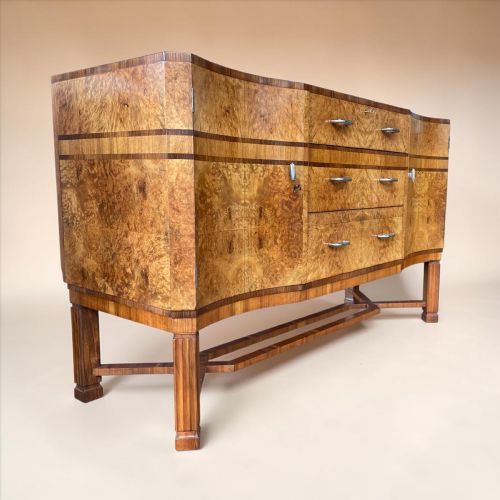
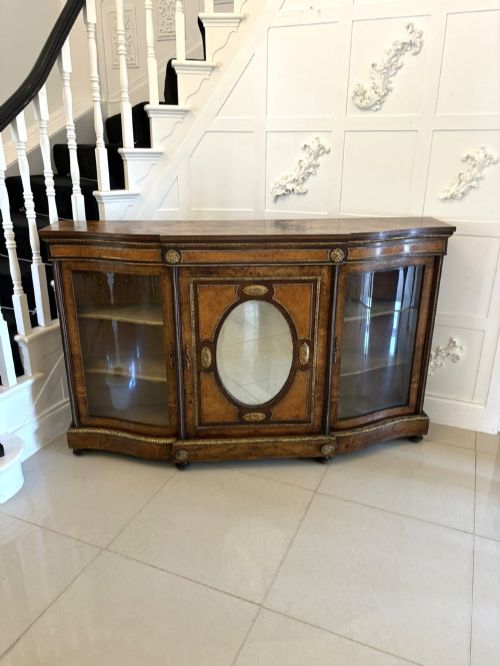
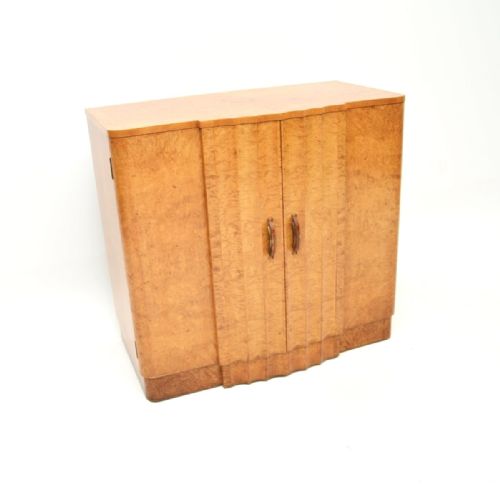
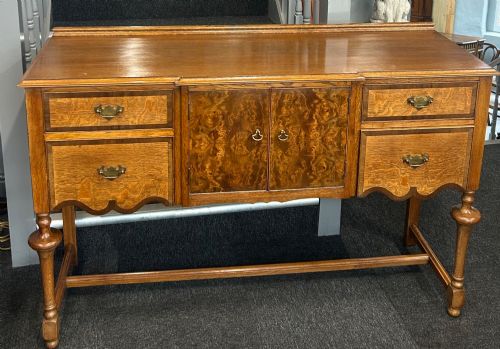
The pieces appearing on this page span several distinct periods, running from Victorian and nineteenth century examples through Edwardian revivals to the bolder geometries of nineteen-thirty Art Deco. Buyers seeking a golden burr walnut buffet will most frequently encounter nineteen-thirty Art Deco designs alongside nineteenth century credenzas and dresser bases.
Makers such as Harry and Lou Epstein dominate the Art Deco offerings, whilst earlier centuries contribute credenzas and cabinets featuring mounts of ormolu and brass. Forms range from sleek, curved nineteen-thirty sideboards to heavily figured Victorian credenzas inlaid with amboyna.
How they were made
Makers utilised burr walnut and burr walnut veneer over solid timber carcases to achieve the swirling, highly decorative grain patterns prized by collectors. This distinctive veneer was carefully selected and laid to create symmetrical patterns across large cabinet doors and drawer fronts.
Construction frequently incorporated secondary timbers such as oak alongside decorative metalwork, with brass handles, hinges, and gilt ormolu mounts adding functional and visual contrast. Glass panels and bakelite details appear on later twentieth century pieces, reflecting the shift in materials during the Art Deco period.
Golden Burr Walnut Buffet Retail Price Guide 2026
Typical asking prices for golden burr walnut buffet among the pieces listed under this phrase on Sellingantiques today, from the lower quarter to the upper quarter. They describe what is for sale here now, not the wider market.
Listings span nineteen-thirty Art Deco, Victorian, and Edwardian periods, showcasing sideboards, credenzas, and dresser bases in burr walnut, oak, ormolu, and glass.
What varies in quality
The selection and bookmatching of the burr walnut veneer dictate much of the visual success of a piece, with continuous, flowing grain patterns marking out superior work. Lesser examples display disjointed grain matching or heavy handling wear to the polished surface.
The integration of mounts, such as cast ormolu on Victorian credenzas or the precision of cabinet joinery on Epstein sideboards, separates standard production from exceptional studio output. Heavier carcase construction and the use of contrasting timbers like amboyna further distinguish the more ambitious designs.
Harry and Lou Epstein
The Golden Burr Walnut Buffet Glossary
- Burr walnut
- A prized wood harvested from the wart-like growths on walnut trees, yielding intricate, swirling grain patterns. It is almost exclusively used as a veneer due to its irregular growth and beauty.
- Credenza
- A low cabinet or sideboard, frequently featuring glass doors and decorative mounts. Originating in Italy, it gained immense popularity in Victorian drawing rooms for display and storage.
- Ormolu
- Gilt bronze mounted onto furniture as decorative feet, handles, or corner accents. This technique imparts a rich metallic highlight against dark or figured wood.
- Art Deco
- A design style flourishing in the nineteen-thirties characterised by streamlined curves, geometric symmetry, and luxurious materials. Pieces from this era often feature dramatic waterfall edges and bold veneers.
- Bookmatching
- A veneer technique where adjacent slices of wood are opened like a book to mirror each other. This creates symmetrical, repeating patterns across wide cabinet doors.
Golden Burr Walnut Buffet: Frequently Asked Questions
What is a burr walnut buffet?
A burr walnut buffet is a large storage and serving piece surfaced with highly figured burr walnut veneer. These items function as sideboards, credenzas, or serving tables in dining and living spaces.
They combine practical interior shelving and cupboards with decorative surfaces that showcase complex, swirling wood grain patterns.
How do I date a walnut sideboard?
Dating relies on observing the overall style, construction methods, and secondary materials used within the carcase. Victorian pieces often feature heavy ormolu mounts and amboyna banding, whereas nineteen-thirty examples display smooth Art Deco curves.
Cabinet hardware, glass types, and specific maker attributions also help narrow down the period of production.
Where should I place a credenza?
Credenzas suit dining rooms, grand hallways, and spacious living rooms where their length and decorative presence can be appreciated. They work well against long, unbroken walls as a focal point.
Avoid placing them in direct sunlight, which can fade the delicate tones of the walnut veneer over time.
Are Epstein sideboards Art Deco?
Epstein sideboards from the nineteen-thirties embody the distinctive luxury of the Art Deco movement. They make extensive use of golden burr walnut and feature sweeping, curved silhouettes.
Their substantial scale and bold veneer work mark them out as high-end examples of twentieth century British cabinet making.