
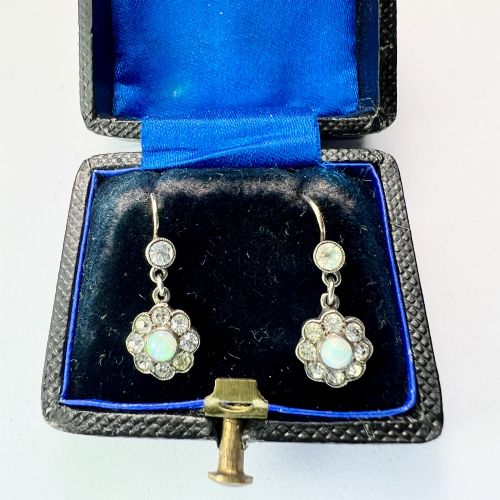


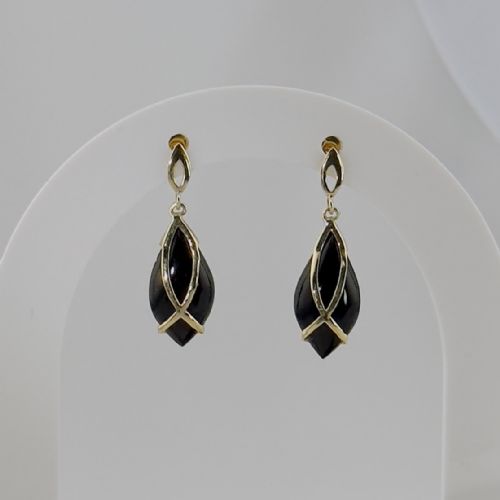

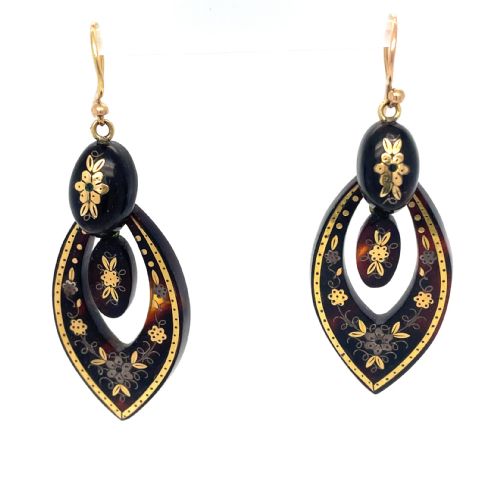


Gold Wire Drop Earrings
Gold wire drop earrings are graceful historic jewels featuring swinging drops suspended on precious metal loops, prized for their delicate movement and timeless elegance.
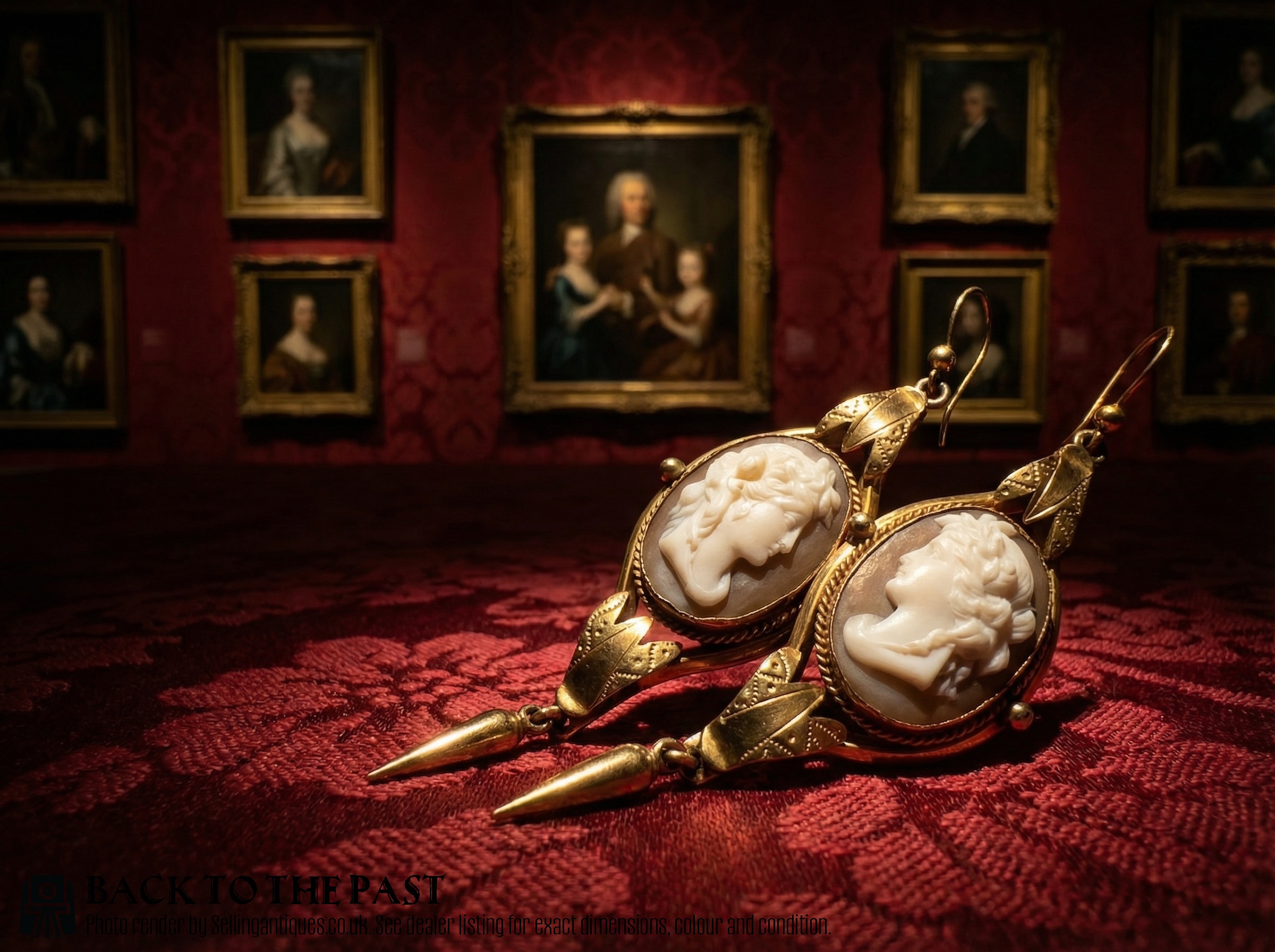
Gold Wire Drop Earrings
Gold wire drop earrings encompass a variety of historic designs ranging from nineteenth-century Victorian creations to twentieth-century iterations. These pieces are defined by suspended elements that catch the light with every turn of the head.
The selections available bring together natural materials and precious gemstones set into swinging formats. Buyers frequently encounter Victorian examples alongside mid-century interpretations.
Forms span from carved jet acorns and delicate cameos to colourful sapphire clusters and baroque pearls. Each pair demonstrates the distinctive aesthetic preferences of its respective period.

Materials and Construction
Construction relies heavily on nine-carat and fifteen-carat gold wires that support various dangling components. Artisans utilised fine metalwork techniques to secure stones and organic materials safely.
Materials integrated into these jewels include Whitby jet, natural coral, baroque pearls, blue and green sapphires, and cabochon garnets. Pinchbeck also appears as a historic metal alloy providing the rich appearance of gold.
Gold Wire Drop Earrings Retail Price Guide 2026
Typical asking prices for gold wire drop earrings among the pieces listed under this phrase on Sellingantiques today, from the lower quarter to the upper quarter. They describe what is for sale here now, not the wider market.
The listings on this page span the Victorian era, the nineteen-twenties, and the nineteen-sixties, incorporating both nine-carat and fifteen-carat gold.
Judging Quality and Craftsmanship
Quality rests upon the fineness of the metalwork and the selection of the set materials. Superior pairs display secure wire loops and well-matched natural stones with strong lustre.
Design complexity also distinguishes finer examples, particularly those employing intricate cannetille wirework or finely carved jet and cameos. The integrity of the suspended drops dictates the overall desirability.
The Gold Wire Drop Earrings Glossary
- Drop earrings
- Earrings designed to hang below the earlobe, moving independently as the wearer turns. This traditional form has remained popular across multiple centuries of jewellery design.
- Cannetille
- An ornate type of filigree metalwork resembling fine lace or embroidery, popular in nineteenth-century jewellery. Artisans soldered tiny gold wires and granules onto surfaces to create rich textures.
- Whitby jet
- A dense, fossilised wood derivative polished to a deep black shine, famously utilised in Victorian mourning jewellery. It provides a lightweight yet striking contrast against yellow gold wires.
- Pinchbeck
- An alloy of copper and zinc invented in the eighteenth century to imitate gold. It offers a warm golden hue without the high cost of precious metal.
- Cabochon
- A gemstone shaped and polished with a smooth, rounded dome rather than faceted edges. This cut highlights the natural depth and colour of stones like garnet.
Gold Wire Drop Earrings: Frequently Asked Questions
How do I clean antique gold wire earrings?
Clean these delicate items gently with a soft, dry microfibre cloth to remove surface dust. Avoid harsh chemical dips or ultrasonic cleaners, especially when dealing with organic materials like pearls, coral, and jet.
Store each pair separately in a lined box to prevent the fine gold wires from bending or tangling with other jewellery pieces.
Are these earrings comfortable for daily wear?
Most historic drop earrings feature lightweight components that sit comfortably on the earlobe despite their visual impact. The slender wire fixings are designed for ease of insertion and movement.
Care should be taken during dressing to ensure the wire hooks do not catch on scarves or high-collared garments.
How can I tell a Victorian pair from a later one?
Victorian examples often feature distinctive motifs such as carved jet acorns, cameos, or intricate cannetille wirework. The materials and construction methods reflect the specific decorative arts of the nineteenth century.
Later twentieth-century pieces tend to feature cleaner lines and different stone combinations, such as mixed sapphire clusters, while retaining the classic drop format.