


Gold Sapphire Cluster Earrings
Gold sapphire cluster earrings bring together a central gemstone and surrounding stones in designs spanning the Edwardian period to the late twentieth century.
Gold Sapphire Cluster Earrings
Gold sapphire cluster earrings combine a central sapphire framed by accent stones, most commonly diamonds, mounted on studs, drops, or screws. These pieces originate from periods including the Edwardian era, the nineteen-thirties, and mid-century decades up to the nineteen-sixties.
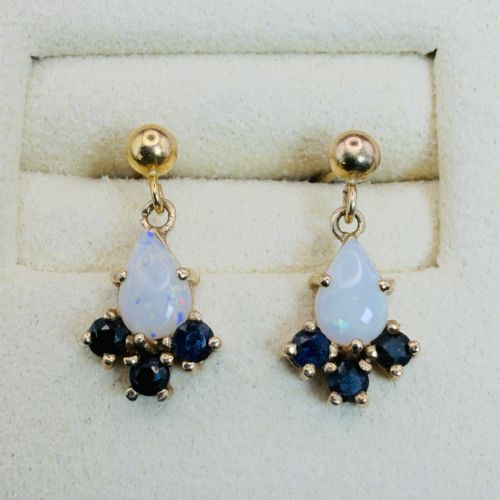
The most common examples on this page utilise nine-carat yellow gold or eighteen-carat white gold settings. Configurations range from simple circular flower clusters to complex drop earrings featuring pear, marquis, or cabochon cuts.
Materials and Techniques
Makers set stones into nine-carat yellow gold, eighteen-carat gold, or eighteen-carat white gold, occasionally incorporating silver in older examples. Sapphires appear alongside diamonds, pearls, rubies, emeralds, and peridots.
Construction techniques include claw settings, hinge backs, screw backs, and post backs to secure the cluster arrangements. Stones are cut in various profiles, from standard round facets to marquis, pear, and cabochon shapes.
Listings feature items from the Edwardian period through the nineteen-thirties, nineteen-fifties, and nineteen-sixties using nine-carat and eighteen-carat gold.
Markers of Distinction
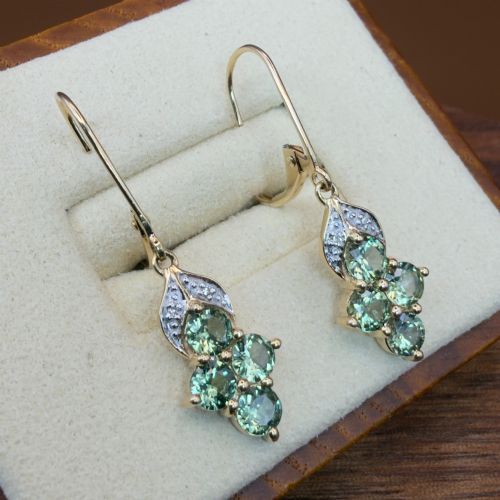
The selection of materials dictates the baseline of quality, with heavier eighteen-carat gold and high-carat diamond entourages occupying the upper tier. Stone selection also plays a part, distinguishing standard blue sapphires from cornflower varieties, padparadscha sapphires, or teal green stones.
Execution of the cluster setting separates fine examples from standard production, visible in the symmetry of the stone arrangement and the integration of the mount. The choice between cast mounts and intricate hand-finished basket settings influences the overall character.
The Gold Sapphire Cluster Earrings Glossary
- Cluster earring
- A design arrangement where a central stone is encircled by a border of smaller accent stones, typically diamonds. This layout creates a concentrated area of colour and sparkle on the lobe.
- Cabochon
- A gemstone cut with a smooth, rounded, convex upper surface rather than faceted planes. This style highlights the natural tone and internal characteristics of the sapphire.
- Cornflower sapphire
- A term describing stones with a specific medium-light, vivid blue hue reminiscent of the flower. These specimens are prized for their bright coloration.
- Screw back
- A mechanical fastener utilising a threaded post and a small nut that turns down against the earlobe. This mechanism provides adjustable pressure for non-pierced ears.
Gold Sapphire Cluster Earrings: Frequently Asked Questions
How do I date these earrings?
Dating relies on hallmarks, metal types, and the specific geometry of the cluster. Edwardian pieces often combine silver and gold, while nineteen-fifties and sixties items frequently utilise nine-carat yellow gold or eighteen-carat white gold.
Settings and fastening types also indicate the era. Screw backs and hinge backs point towards specific mid-century manufacturing methods, whereas floral motifs appear across multiple decades.
Are all sapphires blue?
Sapphires occur in a wide spectrum beyond traditional blue. The evidence includes pink, teal green, padparadscha, and cornflower varieties.
Each colour variant influences the visual balance of the cluster when paired with diamonds or contrasting accent stones like peridot and garnet.
What is a cluster setting?
A cluster setting groups a prominent centre stone with a ring of smaller surrounding gems. This arrangement maximises the visual impact of the primary sapphire.
In these listings, diamond borders are most common, though pearls and secondary coloured gems also form the outer frame.
How do I wear drop cluster earrings?
Drop cluster earrings suspend the main gemstone arrangement below the earlobe using hinges, posts, or dangles. They add movement to the cluster format.
Choosing between studs and drops depends on personal preference for how the piece sits and moves against the wearer's neck.