
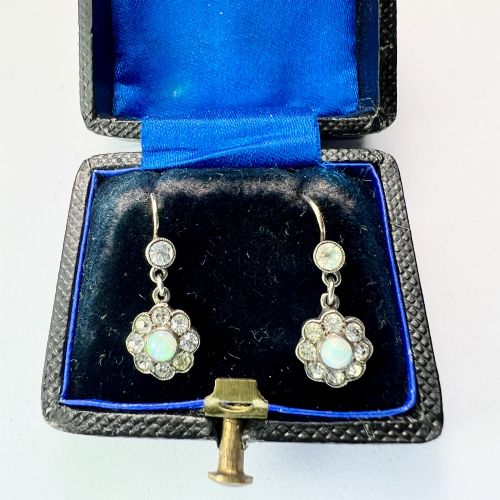


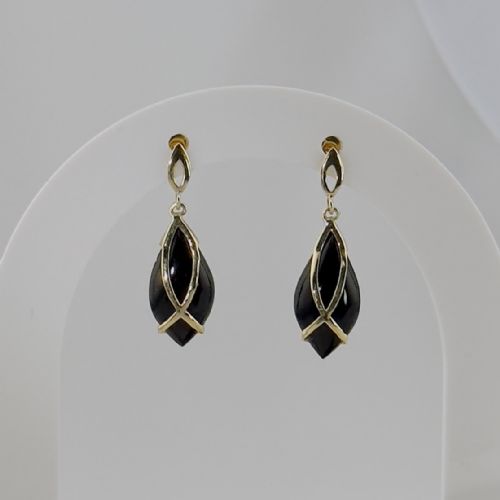

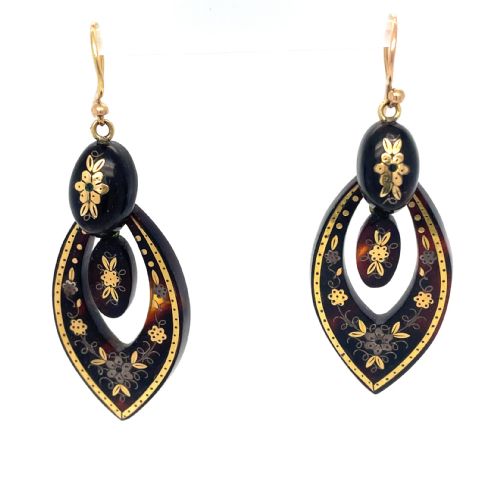


Antique Gold Wire Earrings
Antique gold wire earrings bring together precious metals and stones across Victorian, Edwardian, and Art Deco periods, offering enduring elegance.
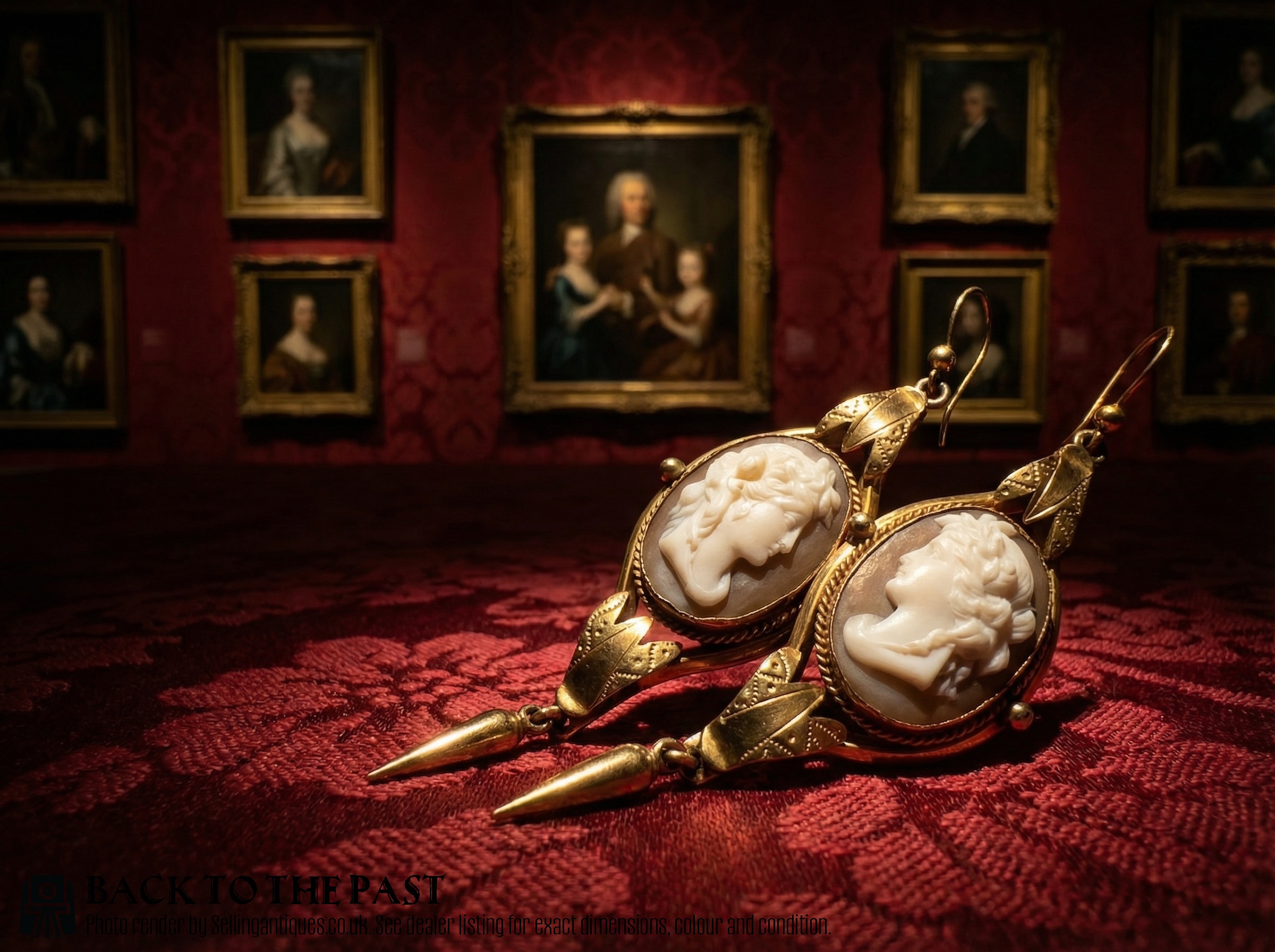
Antique Gold Wire Earrings
When you search for antique gold wire earrings, you find drop earrings, cluster earrings, and circle drop earrings mounted on gold wires. The selection includes Victorian, Edwardian, and 1930s examples featuring gemstones and organic materials.
You are most likely to meet Victorian pieces, alongside items from the 1920s, 1930s, and 1960s. These vary from simple coral and Whitby jet to complex sapphire and garnet clusters.
The styles span early Victorian, Victorian Pique, Art Deco, and later 20th century designs. Each era brings distinct motifs like ivy leaves, acorns, and bamboo shapes.
How they were made
The pieces utilise 9ct gold, 15ct gold, and 18ct white gold alongside silver and silver gilt. Wires support drops made from carved coral, Baltic amber, and Whitby jet.
Gemstones such as amethyst, garnet, rose de France amethyst, sapphire, and zircon are set into the metal frames. Organic materials like tortoiseshell, baroque pearl, and rock crystal appear frequently alongside paste diamonds and marcasite.
Acorns carved from Whitality jet dangle faithfully from 9ct gold wires, ready for a Victorian woodland stroll.
What varies in quality
Quality rests in the precision of the metalwork and the selection of the materials. Fine examples combine substantial gold content with carefully carved natural coral, high-grade garnets, or matched sapphires.
The distinction between standard production and finer work lies in the execution of detailed motifs like ivy leaves and bamboo designs. Superior pieces maintain integrity in both the wire suspension and the primary drop.
Knoll & Pregizer
The Antique Gold Wire Earrings Glossary
- Pinchbeck
- A form of brass made from copper and zinc used to imitate gold. It appears in Victorian jewellery alongside gold wires.
- Whitby jet
- A dense, black fossilised wood form used extensively in Victorian mourning jewellery. It is carved into objects like acorn drops.
- Marcasite
- Small faceted pyrite stones set into silver or gold to provide sparkle. They are typical of Art Deco designs.
- Micromosaic
- Tiny glass tesserae assembled into pictorial designs. These feature in archival pieces on gold wires.
- Cabochon
- A gemstone shaped and polished rather than faceted. This cut highlights the rich red of natural garnets.
Antique Gold Wire Earrings: Frequently Asked Questions
What periods do these earrings come from?
The pieces span the Regency, Victorian, Edwardian, and Art Deco periods, extending into the mid-twentieth century.
Victorian and Edwardian examples dominate the selection, accompanied by 1920s, 1930s, and 1960s designs.
What materials are used in the drops?
Makers utilised various stones including garnet, amethyst, sapphire, zircon, and rock crystal. Organic materials like coral, Whitby jet, Baltic amber, baroque pearl, and tortoiseshell also appear.
Precious metals include 9ct yellow gold, 15ct gold, 18ct white gold, and silver gilt.
How do I care for antique gold wire earrings?
Store them carefully to protect delicate elements like coral, Whitby jet, and amber from impact. Avoid exposing organic materials and paste stones to water or harsh cleaning chemicals.
Clean the gold wires gently with a soft cloth to preserve the antique finish.
Are all the wires made of solid gold?
Listings record 9ct gold, 15ct gold, and 9ct yellow gold wires supporting the drops. Some historical pieces combine silver gilt or silver settings with gold suspension wires.