




Coral and Gold Jewellery
Coral and gold jewellery brings together warm organic tones and rich precious metal, offering lasting elegance for daily wear.
Coral and Gold Jewellery
Victorian examples dominate the selection, showcasing characteristic motifs such as snakes, flies, cameos, and floral clusters. Buyers are most likely to meet detailed brooches, cluster rings, and graduated bead necklaces reflecting these historical periods.
Materials and construction methods
Makers utilised various grades of gold, predominantly recording nine-carat, fifteen-carat, and eighteen-carat yellow gold alongside fourteen-carat variations. Metalwork techniques involve filigree wire, hollow-formed elements, and cast mountings designed to secure organic gemstones.
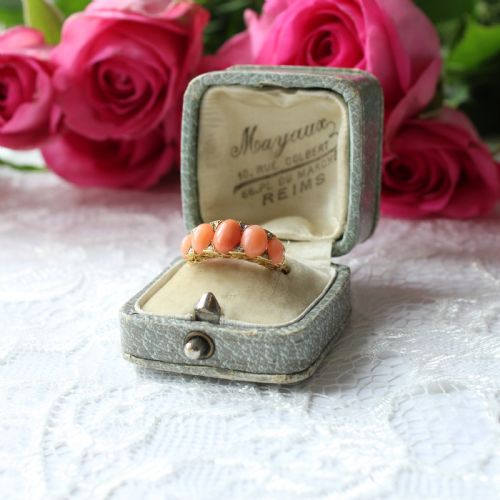
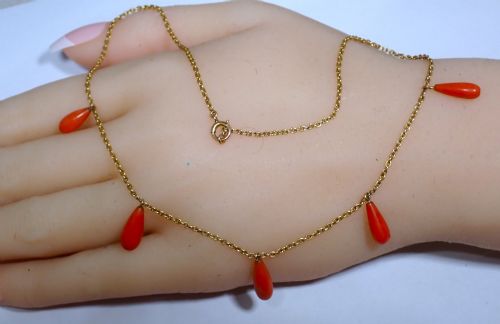
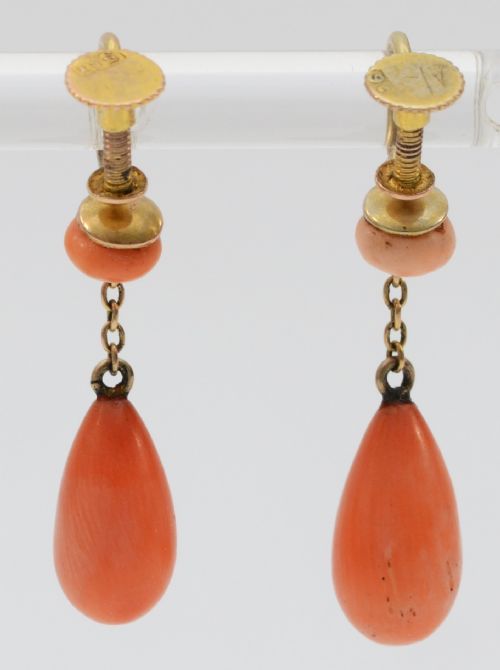
Coral components appear as smooth polished beads, carved cameos, baroque formations, and natural un-dyed branches. Artisans frequently combined these organic coral elements with supplementary seed pearls and diamonds to enhance visual depth.
Structural integrity relied upon traditional jeweller joints, pin stems, and secure bezel or prong settings. Structural mounts accommodated the softer nature of coral while maintaining the structural demands of daily adornment.
Victorian designers turned to nature for inspiration, translating garden insects and climbing serpents into wearable coral and gold masterpieces.
Evaluating craftsmanship and condition
Quality rests upon the depth of the gold carats and the precision of the metalwork, distinguishing robust mountings from lighter commercial output. Superior examples demonstrate meticulous hand-carving in the coral and secure, integrated stone settings.
The consistency of the coral material itself dictates value, with uniform natural colour and minimal surface blemishes marking superior production. Integrated components like seed pearls and secondary gems must show matching quality and secure placement within the overall design.
The Coral and Gold Jewellery Glossary
- Cameo
- A gemstone or shell carved in relief to project from a background. In these pieces, coral is frequently carved with portrait profiles or floral motifs.
- Seed pearl
- A very small, natural or cultured pearl often used in Victorian jewellery as a delicate accent surrounding central gemstones.
- Filigree
- Ornamental work consisting of fine wire twisted and soldered together. This technique creates lace-like patterns in gold mounts.
- Cluster ring
- A ring featuring a central stone surrounded by a border of smaller gems. In this category, coral central elements are often encircled by pearls or diamonds.
- Baroque pearl
- A pearl with an irregular, non-spherical shape. These organic forms provide textural contrast to polished gold and coral.
Coral and Gold Jewellery: Frequently Asked Questions
How do I date coral and gold jewellery?
Dating relies upon examining the mounting styles, metal purity marks, and fastener types used by period artisans. Georgian and Victorian pieces often display closed-backed settings and hand-carved details characteristic of their eras.
Later mid-century items introduce different clasp mechanisms and varying gold alloy standards. Comparing the overarching design motif to established historical periods helps confirm the approximate age.
Is natural coral fragile to wear?
Coral is a softer organic material compared to traditional gemstones, rating lower on the hardness scale. Daily wear requires care to avoid sharp impacts and harsh chemicals.
Owners should store pieces separately in lined boxes to prevent surface scratching. Gentle cleaning with a soft, dry cloth preserves the polished finish without damaging the material.
What gold purities appear in these pieces?
The listings record several gold standards, including nine-carat, fourteen-carat, fifteen-carat, and eighteen-carat yellow gold. Fifteen-carat gold is particularly characteristic of Victorian British manufacturing before the standard was discontinued.
Lower and higher karatages reflect different regional origins and changing legal standards over time. Each purity offers a distinct yellow hue that complements the warm tones of the coral.
How should I clean antique coral?
Antique coral requires minimal moisture to prevent degradation of the organic structure and any internal stringing material. A soft, dry microfiber cloth safely removes surface dust and oils.
Submerging coral pieces in water or ultrasonic cleaners must be strictly avoided. Professional jewellers can provide specialist maintenance if deeper cleaning becomes necessary.