




Gold Wedding Anniversary Band
A gold wedding anniversary band marks enduring commitment through polished precious metals and channel- or claw-set stones.
Gold Wedding Anniversary Band
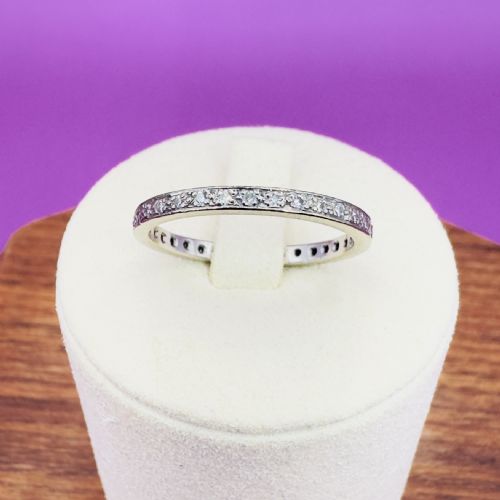
A gold wedding anniversary band primarily appears on this page in the form of eternity rings, half eternity rings, and multi-stone rings dating from the 1920s through to the 1960s. These rings are designed to celebrate significant marital milestones by encircling or partially banding the finger with diamonds and coloured gemstones.
Buyers will encounter distinct stylistic phases ranging from geometric Art Deco pieces of the 1920s and 1930s to mid-century vintage designs from the 1950s and 1960s. The selection spans robust yellow gold settings alongside cooler white gold and platinum alternatives that reflect mid-century modern classic tastes.
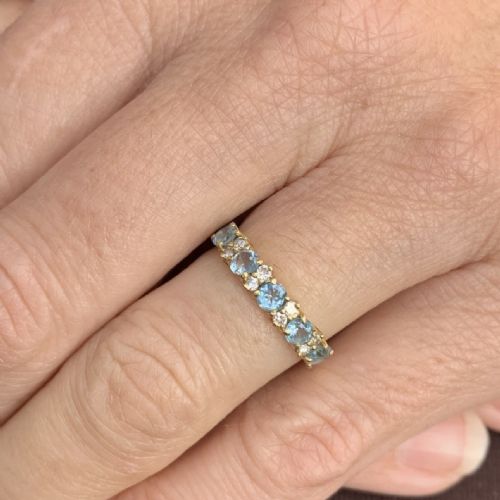
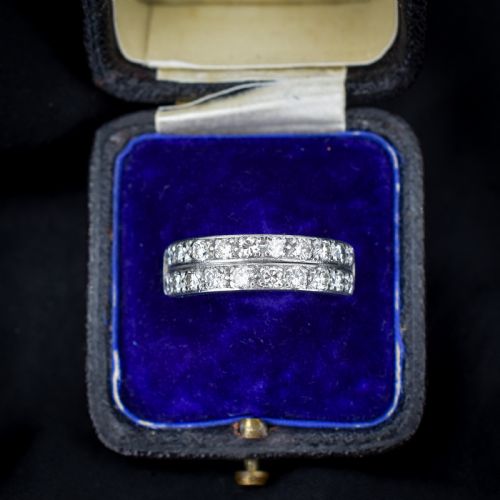
The configurations vary from classic single rows of diamonds to double rows and mixed gemstone layouts incorporating blue spinel and sapphire. Most examples function as daily wear pieces intended to complement traditional wedding and engagement rings.
Materials and construction methods
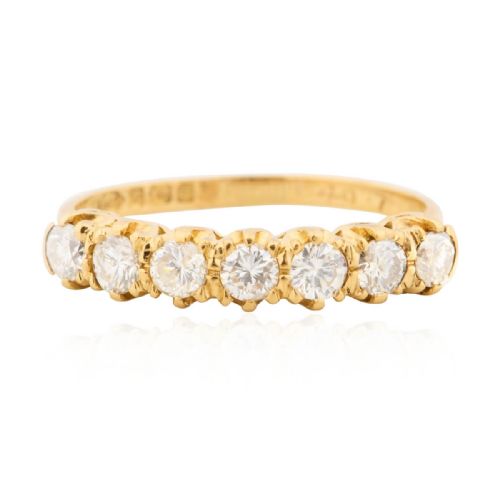
Craftsmen shaped these bands from 9ct and 18ct yellow and white gold, alongside platinum, providing sturdy foundations for gemstone settings. The metal selection dictates the overall tone of the ring, with white gold and platinum offering a crisp backdrop for sparkling stones.
Goldsmiths set diamonds, sapphires, and spinels using traditional techniques that secure multiple stones in continuous half or full eternity lines. Older pieces from the 1930s frequently feature hand-cut old cut diamonds secured within delicate claw or channel settings.
Ring sizing letters like 'size V' remind us that past owners had wonderfully varied fingers.
Evaluating craftsmanship and stone selection
The distinction between tiers rests upon the total carat weight of the diamonds, the precision of the stone setting, and the purity of the gold or platinum used. Heavier carat weights and well-matched stone sizes elevate an ordinary band into a finer specimen.
The integrity of the metal work around each claw or channel directly impacts longevity, particularly in full eternity rings where stones experience regular contact. Consistent colour matching among the set diamonds and vibrant saturation in accompanying sapphires or spinels signal superior initial selection by the maker.
The Gold Wedding Anniversary Band Glossary
- Eternity ring
- A band set continuously with gemstones symbolising endless love. These can feature stones running halfway or fully around the circumference.
- Spinel
- A durable natural gemstone often mistaken for sapphire or ruby. Blue varieties appear alongside diamonds in mid-century cluster and half eternity bands.
- Platinum
- A dense, naturally white precious metal used for high-end jewellery settings. It holds small claw work securely without losing structural integrity over decades of wear.
Gold Wedding Anniversary Band: Frequently Asked Questions
Can I wear an eternity ring every day?
These rings are structurally suited for daily wear when paired carefully with existing bands. Regular use requires checking the security of individual stone settings.
Full eternity bands experience more surface contact because stones encircle the entire finger. Half eternity versions offer easier resizing options while protecting lower stones from knocks.
How do I identify a 1930s band from a 1950s one?
Pieces from the 1930s often display distinct Art Deco geometric influences and frequently utilise old cut diamonds. Platinum and white gold mountings were prominent during this era.
Fifties and sixties pieces lean towards structured modern classic designs with uniform brilliant cut stones. Yellow gold settings also make a strong return during these postwar decades.
Are coloured gemstones common in anniversary bands?
Coloured stones appear alongside diamonds in specific vintage designs. Sapphires and blue spinels add distinctive contrast within multi-stone configurations.
These mixed gemstone layouts provide an alternative to traditional all-diamond bands. They reflect specific mid-century preferences for varied palette combinations.