




Gold Channel Set Band
A gold channel set band offers a continuous line of stones held securely between metal walls, combining clean modern lines with enduring elegance.
Gold Channel Set Band
When you search for a gold channel set band, you encounter rings designed with flush-set stones held securely between parallel walls of metal rather than held by individual claws. These pieces span several decades, reaching from the 1920s through the mid-twentieth century and into contemporary designs.
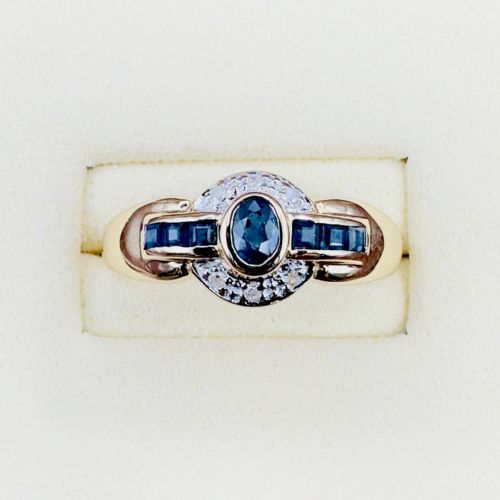
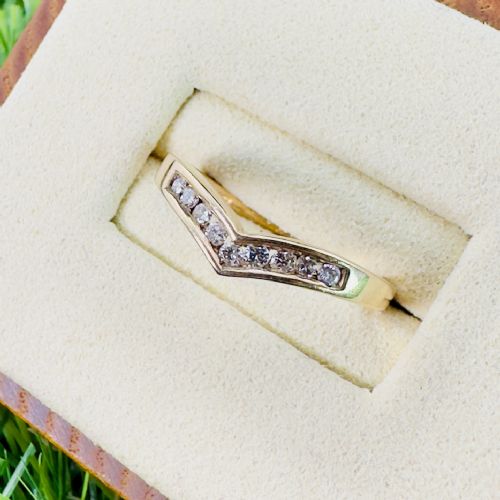
The stones set into these bands include diamonds, emeralds, sapphires, and rubies, often shaped as princess, oval, or square cuts. Pieces range from delicate 9ct gold wishbone rings to substantial diamond eternity bands from the 1930s.
How they were made
The construction of a gold channel set band relies on precision metalwork where a continuous groove is cut into the band to receive the stones. Goldsmiths slide each gemstone sequentially into this recessed track, ensuring the girdle of every stone sits flush against the next.
The metal walls bordering the channel are then gently pressed or hammered over the edges of the stones to lock them firmly in position. This technique creates a smooth, snag-free exterior surface characteristic of eternity and half eternity ring designs.
Some rings carry secrets in their symmetry, hiding tiny geometric cluster designs beneath classic lines that only reveal themselves on closer inspection.
What varies in quality
The distinction between tiers of execution rests upon the precision of the metal channel walls and the uniformity of the stone settings. Superior examples display exact alignment where the enclosing metal holds every gem with equal pressure.
Another measure of distinction involves the selection and matching of the stones themselves, whether diamonds, sapphires, emeralds, or rubies. Finer pieces demonstrate consistent colour, cut grading, and sizing along the entire circumference of the band.
The Gold Channel Set Band Glossary
- Channel set
- A method of mounting gemstones in a continuous row between two parallel walls of metal without individual prongs. This technique creates a smooth outer perimeter.
- Half eternity ring
- A ring featuring gemstones set along approximately half the circumference of the band. This design offers the visual appeal of an eternity ring with easier sizing adjustments.
- Full eternity ring
- A band encircled entirely by an unbroken sequence of gemstones symbolising unending affection. These rings require precise initial sizing as alteration is difficult.
- Tank ring
- A bold, stylised ring design originating from the Art Deco period, often combining yellow and white gold with geometric gemstone arrangements.
- Wishbone ring
- A band shaped in a distinct V-curve, frequently worn alongside engagement rings to nestle neatly against the main stone.
Gold Channel Set Band: Frequently Asked Questions
Can channel set rings be resized?
Resizing depends heavily on whether the channel stones extend halfway around the band or encircle the entire finger. Half eternity bands generally allow for minor adjustments by a skilled jeweller.
Full eternity bands containing stones all the way around cannot be resized easily without disrupting the channel walls and stone alignment.
Are these bands suitable for daily wear?
The recessed nature of the stones makes a gold channel set band well-suited for everyday use. Because the metal walls protect the edges of the gems, they catch less on clothing than traditional claw settings.
Regular inspection by a jeweller ensures the channel walls maintain their grip on the diamonds or coloured stones over decades of active wear.
What is the difference between half and full eternity?
A half eternity band places gemstones along the top visible half of the ring, leaving plain metal at the back of the band. This construction accommodates finger size changes more readily.
A full eternity band carries the continuous channel of stones around the complete circle of the finger, presenting an uninterrupted display from every angle.
How do I identify Art Deco pieces?
Art Deco rings from the 1920s and 1930s typically exhibit geometric motifs, strong vertical lines, and contrasting white and yellow gold elements. Emeralds, rubies, and diamonds feature prominently in these angular settings.
Examining the construction reveals characteristic period hand-finishing techniques that differ from later mass-produced twentieth-century jewellery.