


Gold Virgin Mary Medal
A gold virgin mary medal carries centuries of personal devotion, taking the form of delicate pendants crafted by French makers from the late nineteenth century onward.
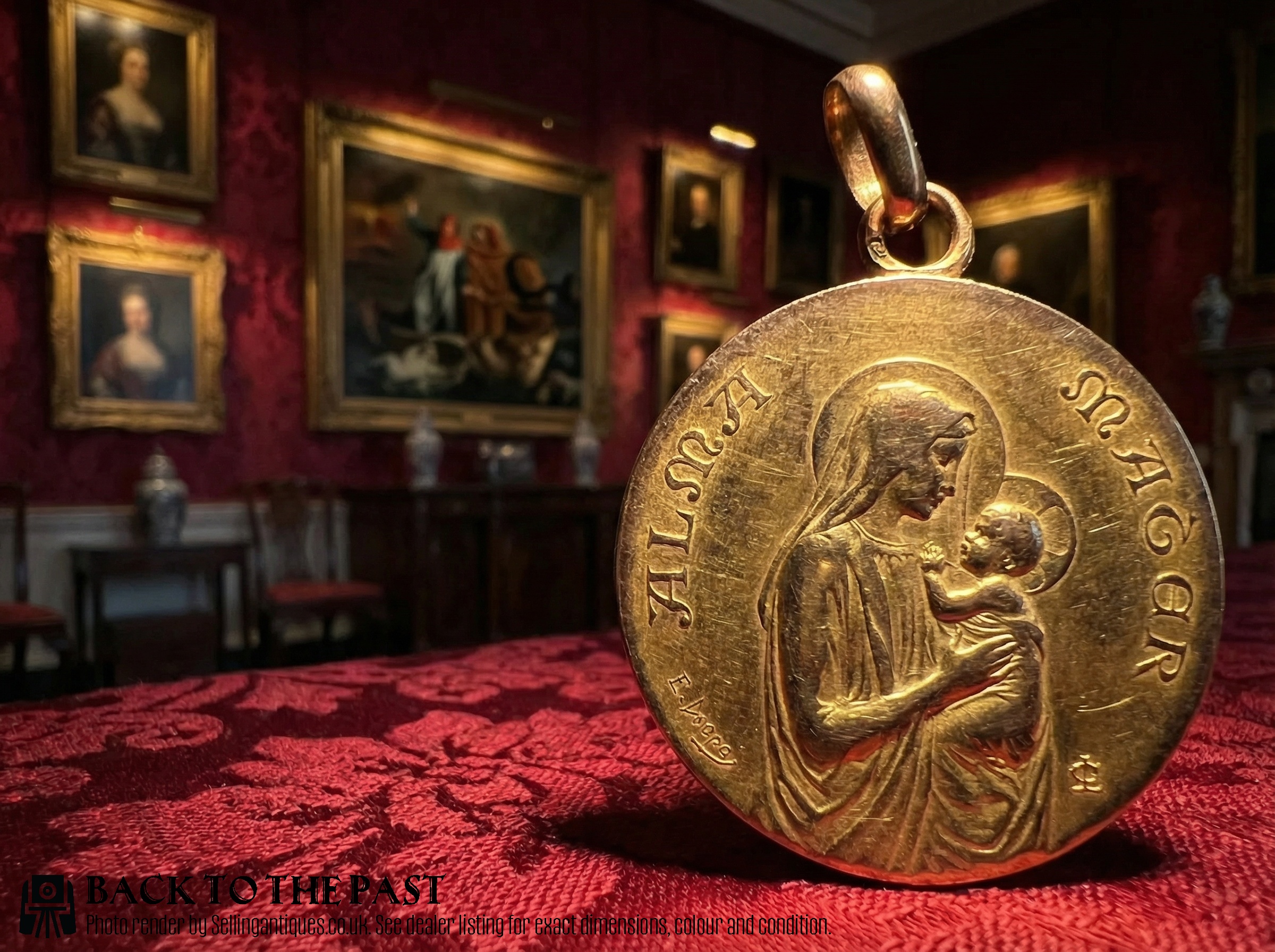
Gold Virgin Mary Medal
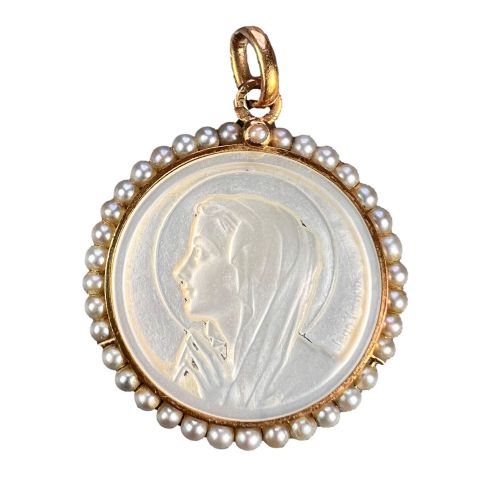
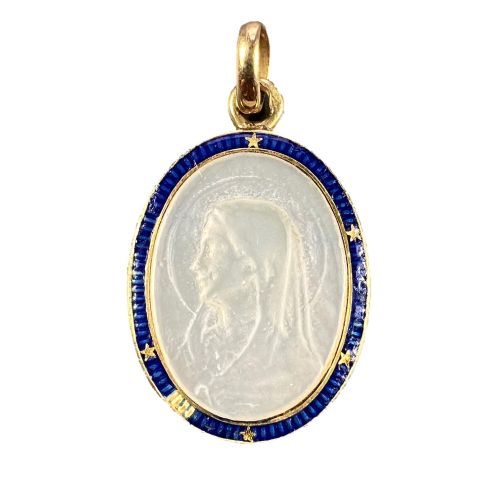
A gold virgin mary medal typically presents as a small pendant or charm designed for personal wear, often associated with French religious jewellery traditions from the late nineteenth and early twentieth centuries. These devotional objects portray the Madonna, sometimes with the Christ child, rendered in relief or framed by decorative borders.
The items most frequently encountered include oval or circular medals cast in yellow gold, frequently carrying signatures from prominent French medallists. Styles span from Victorian and Art Nouveau to mid-century devotional pieces, reflecting changing aesthetic preferences across several decades.
Materials and Techniques
Goldsmiths utilised 18ct yellow, rose, and white gold to form the structural bodies of these pendants, shaping the metal through casting and engraving. Many examples incorporate mother of pearl as a lustrous backing or ground for the central figure.
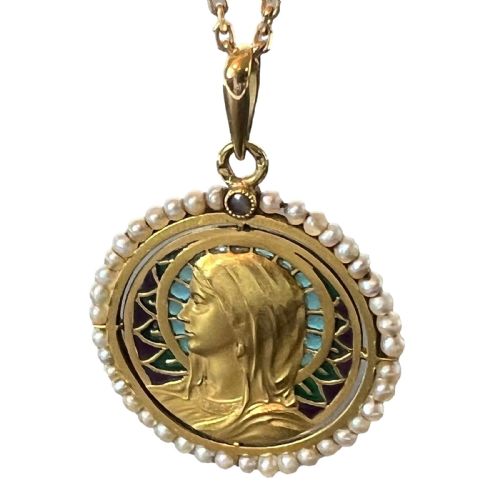
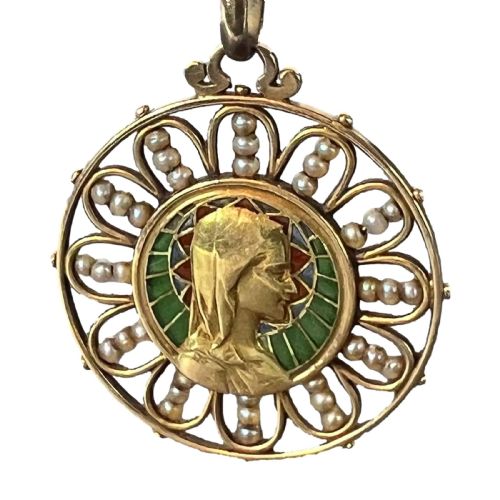
Artisans applied translucent plique-à-jour enamel to create stained-glass effects within the metal framework, while seed pearls were set along the borders to add textural contrast.
Gold Virgin Mary Medal Retail Price Guide 2026
Typical asking prices for gold virgin mary medal among the pieces listed under this phrase on Sellingantiques today, from the lower quarter to the upper quarter. They describe what is for sale here now, not the wider market.
Several makers clearly signed their miniature metal art with such enthusiasm that the tiny inscriptions outlive the personal prayers whispered over them.
Assessing Quality
The refinement of the engraving distinguishes finer examples, where facial expressions and folds of drapery exhibit sharp definition and careful hand-chasing. Superior pieces often feature complex enamel work, such as plique-à-jour, requiring high technical skill to suspend translucent enamel without a backing.
The integration of secondary materials like seed pearls and mother of pearl also elevates a piece, depending on the uniformity of the pearls and the iridescence of the shell background. Signed works by recognised medallists carry distinct artistic provenance that separates them from unsigned factory productions.
Emile Monier·Emile Dropsy·Mazzoni·Becker
The Gold Virgin Mary Medal Glossary
- Plique-a-jour
- An enamelling technique where enamel is applied in cells without a backing, allowing light to shine through the translucent material much like a stained-glass window. This method requires considerable skill from the artisan.
- Medallist
- An artist or sculptor who designs and produces medals, often stamping their signature or punch mark directly onto the metal surface.
- Seed Pearl
- Very small natural or cultured pearls, often drilled and threaded or set closely together to form decorative borders on nineteenth and early twentieth-century jewellery.
- Filigree
- Delicate ornamental work consisting of fine wire, usually gold, twisted and soldered into intricate openwork patterns.
Gold Virgin Mary Medal: Frequently Asked Questions
How were these medals worn originally?
These medals were typically suspended from thin gold chains as daily devotional pendants close to the heart. Many were given to mark significant personal milestones such as first communions, confirmations, or weddings.
Over time, owners added them to charm bracelets or combined them with other religious pendants. Their compact size made them suitable for continuous personal wear.
How do I identify the period of a medal?
Stylistic indicators provide the clearest guide to dating, with flowing natural motifs pointing to Art Nouveau and cleaner geometric framing suggesting later decades. Maker marks and assay stamps on the suspension ring also offer specific chronological markers.
Examining the manufacturing technique, such as the application of plique-à-jour enamel or the cut of mother of pearl backgrounds, helps narrow down the decade of production.
What is the significance of the Miraculous design?
The Miraculous design follows a traditional Marian apparition iconographic layout established in the nineteenth century. It typically displays specific symbolic imagery associated with intercession and protection.
These particular medals were widely distributed and produced by numerous French workshops, making them a common find in historical devotional collections.
Can I wear a vintage medal daily?
Gold medals from this era are generally durable enough for regular wear provided basic care is observed. The 18K gold alloy offers good resistance to everyday environmental factors.
Care should be taken with pieces featuring delicate enamel work or seed pearls, as these materials benefit from protection against hard knocks and harsh cleaning chemicals.