


Gold Virgin Mary Charm
A gold virgin mary charm offers delicate devotional artistry, bringing miniature French craftsmanship and religious iconography together in wearable form.
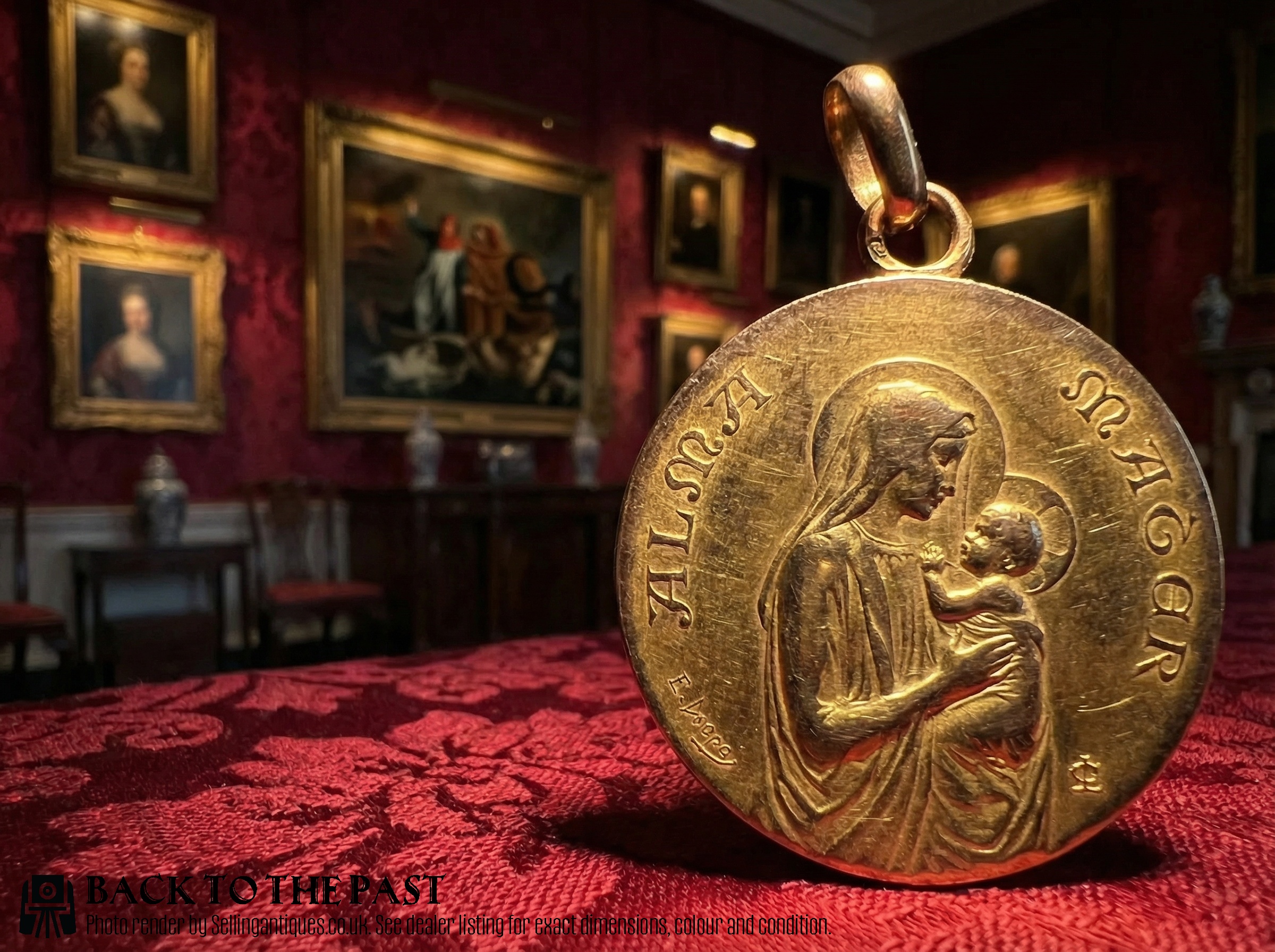
Gold Virgin Mary Charm
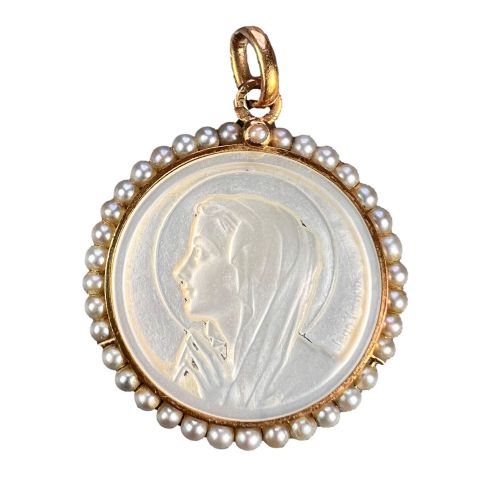
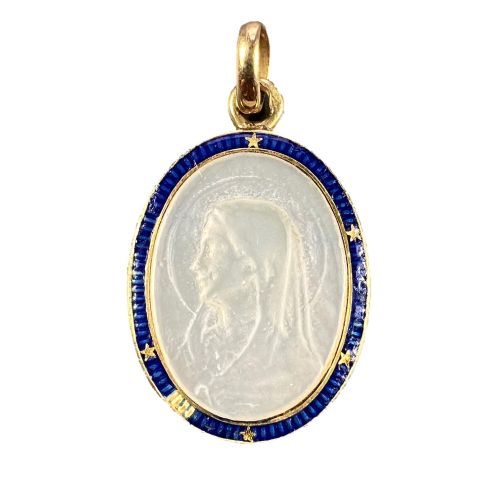
A gold virgin mary charm encompasses small devotional medals and pendants originating primarily from France during the early twentieth century. These pieces combine religious iconography with fine jewellery, functioning as wearable charms or pendant medals.
The items encountered most frequently on this page date from the nineteen tens, nineteen twenties, and nineteen thirties. They appear in styles ranging from Art Nouveau and French Belle Epoque to French Mid-Century and French Devotional.
Makers such as Sellier, Dropsy, Augis, and Serraz produced these medals, utilising distinct workshop signatures on yellow gold, rose gold, and occasionally mother of pearl or seed pearls.
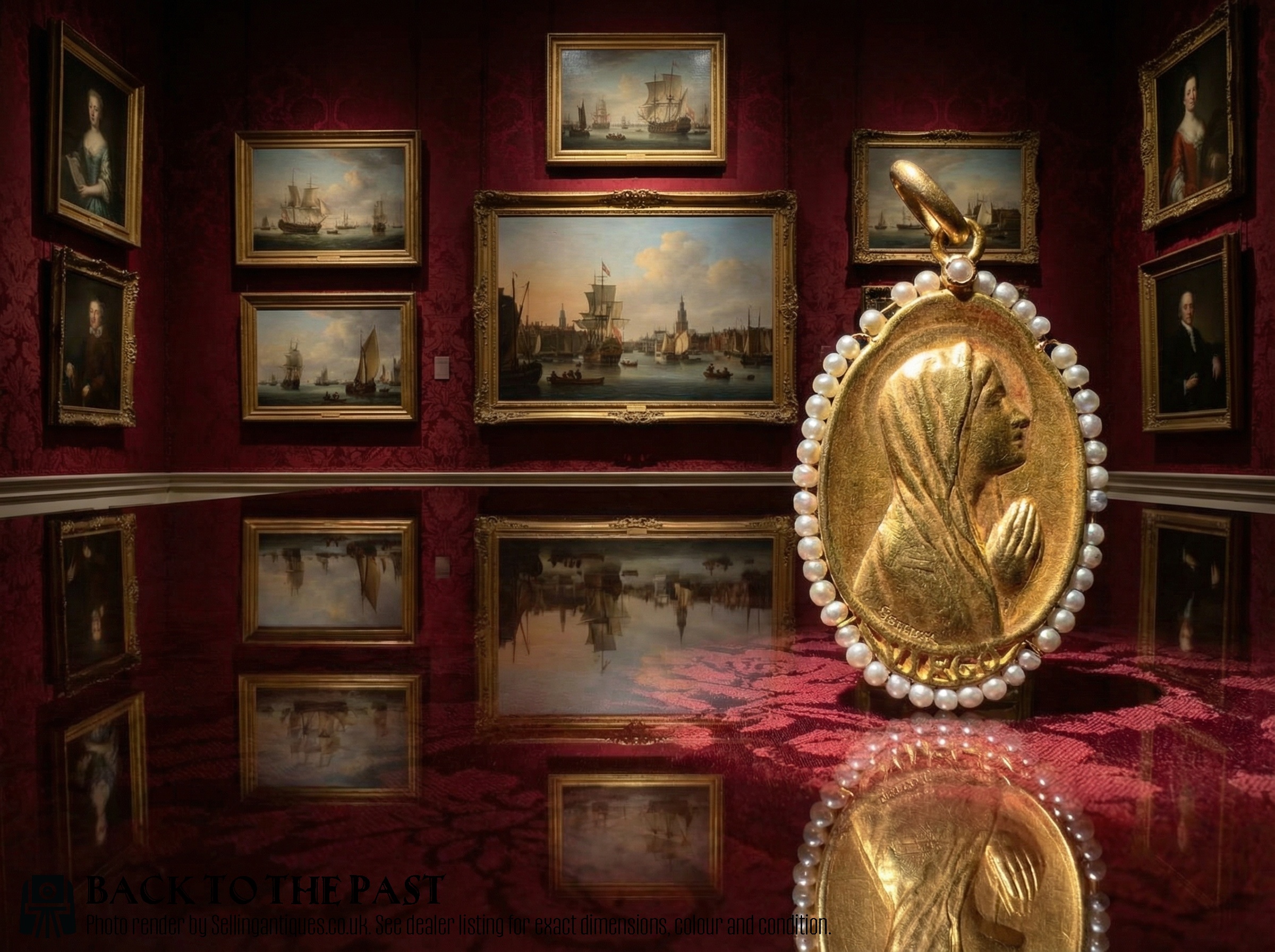
Manufacturing and materials
These pieces are constructed predominantly from 18 carat yellow gold, alongside occasional examples in 18 carat rose gold. The metal provides a warm foundation for intricate relief work and detailed piercing.
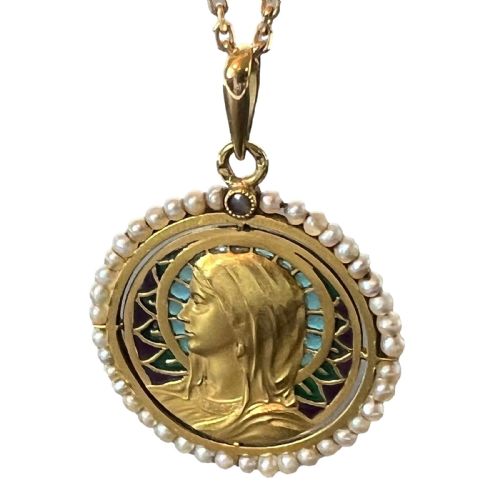
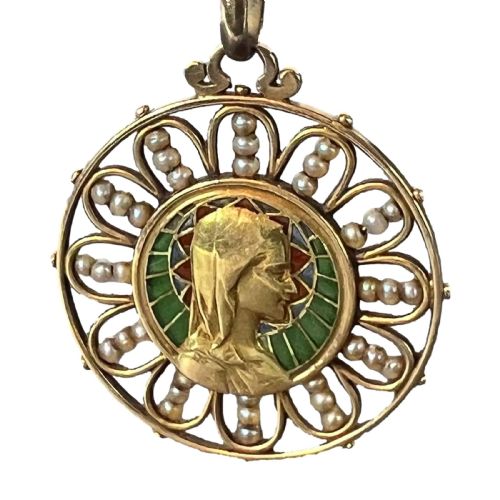
Decoration often incorporates plique-à-jour enamel, which creates stained-glass effects by suspending translucent enamel within gold wire cells without a backing. Additional ornamentation relies on seed pearls and mother of pearl set directly into the gold frames.
Gold Virgin Mary Charm Retail Price Guide 2026
Typical asking prices for gold virgin mary charm among the pieces listed under this phrase on Sellingantiques today, from the lower quarter to the upper quarter. They describe what is for sale here now, not the wider market.
Listings feature 18ct yellow gold and 18ct rose gold combined with seed pearls, mother of pearl, and enamel.
Distinctions in quality
The integration of specialist techniques like plique-à-jour enamel separates standard production from exceptional work. Intact translucent enamel without fractures demonstrates superior thermal control during the firing process.
Sellier·Emile Dropsy·Augis·Serraz
The Gold Virgin Mary Charm Glossary
- Plique-a-jour enamel
- An enamelling technique where translucent enamel is applied to open cells in a metal framework, allowing light to pass through like stained glass. This method requires great skill to avoid cracking during cooling.
- Seed pearl
- A very small, naturally occurring pearl, often fractionally drilled and sewn or set onto jewellery. These tiny pearls accent borders and halos on devotional medals.
- Medal pendant
- A devotional medallion fitted with a suspension loop to be worn on a chain or attached to a bracelet. These items serve a dual purpose as both personal ornaments and religious tokens.
- Art Nouveau
- An international style of art and architecture prominent between eighteen ninety and the First World War, characterised by serpentine lines and inspired by natural forms. This aesthetic influences the flowing borders and floral motifs found on early twentieth-century charms.
Gold Virgin Mary Charm: Frequently Asked Questions
What periods do these charms come from?
The pieces span the early decades of the twentieth century, specifically appearing across the nineteen tens, nineteen twenties, and nineteen thirties. French workshops dominated this era of devotional jewellery production.
Most items reflect the transition from Art Nouveau curves to cleaner mid-century devotional designs while maintaining traditional iconography.
How were these medals worn originally?
Owners typically suspended them from fine gold chains around the neck or attached them to charm bracelets. Their dual classification as pendants and charms allowed versatile daily wear.
Many retain their original suspension rings, designed to withstand frequent movement while remaining secure.
What is plique-a-jour enamel?
Plique-a-jour is an enamelling method resembling miniature stained glass, where transparent coloured glass paste is fired within open gold wire outlines. Because there is no backing metal, light shines straight through the design.
This technique appears on select pieces to create luminous haloes or floral backdrops behind the Virgin Mary.
How do I identify a maker's mark?
French gold items of this period generally feature tiny punch marks known as hallmarks, often shaped as eagles heads for 18 carat gold. Maker stamps appear nearby in small lozenge-shaped cartouches.
Examining the metal surfaces with a loupe reveals these miniature signatures left by workshops like Dropsy or Augis.